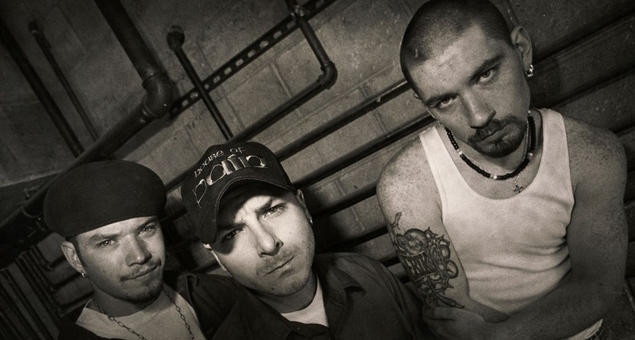
 House of Pain was not the first rap group I was into when I was a teenager, but they were certainly the one that made the biggest impression on me. They were tough and they were Irish street hooligans. They were the Dropkick Murphys of the hip hop game. Their first album was such a success that they inspired later rappers like Slaine, Lordz of Brooklyn, Limp Bizkit, and Atmosphere. HOP came to me toward the end of my freshman year, when I was jamming to Black Sheep, Das EFX, and A Tribe Called Quest. HOP brought something new that I could certainly relate to, being a hip hop junkie suburban white kid.
 In early 1994, the group headed back to the studio. I was really into the NBA at the time, and there was a monthly publication called Slam Magazine. I first heard, or saw, the news of their new album in the Spring of 1994 in a full-page ad in the magazine. I remember I went home, tore out the album cover art ad, and quickly posted it on the wall of my bedroom in giddy anticipation of what the group had next in store.
When I went in the record shop that summer to buy the new album, Same As It Ever Was, I saw a poster advertising for it on the shop wall. Everlast had grown out his hair and Danny Boy had dyed his blonde. They looked like a rock band in the guise of impressive rappers, Lethal constantly playing the background role with his Russian/Latvian descent.
The first track is the best on the album. In the two years away from their first album, rumors began to swirl about Everlast's fatal overdosing. On the first track to the new album, he squashed all the false reports with "Back From the Dead," a heavy, thundering, old school horn-driven track in which Everlast was definitely back with a gruffer voice. Muggs again showed crate-digging expertise on the tune, just as he did throughout the entirety of the record. Lethal was still a protege to Muggs and produced tracks on his own like "All That" and "Where I'm From." Muggs' style was still immediately recognizable, boasting old guitar riffs and a roaring horn section. Their first and only single from the album, which was wholly less successful than the debut, was "On Point," a solid video but an ultimately ineffective effort that never could rouse the public like "Jump Around."
After Same As It Ever Was, the group contributed a couple of tracks to a couple of soundtracks, namely "Beef Jerky" to The Jerky Boys movie and "Punch Drunk" to the Eddie movie. Both movies were silly duds, but the tracks were something to look forward to in lieu of an upcoming album, which would certainly drop in 1996. I was reading through a hip hop magazine one day and came across an interview with B-Real from Cypress Hill. I liked Cypress, but I thought maybe since he was part of the Soul Assassins, he might mention something about the new House of Pain record. Boy, did he ever. He mentioned that Everlast and the boys were no longer members of the Soul Assassins. Muggs had kicked them out for Danny Boy's creative direction of dyed hair and leather pants and Harley Davidsons, claiming it wasn't hip hop enough. Just a few year later, Muggs produced guitar-driven tracks for both Cypress and other projects, so I think it was a hasty decision. With Muggs no longer at the helm of production, the task was left up to Lethal on House of Pain's 3rd and final album, Truth Crushed to the Earth Shall Rise Again.
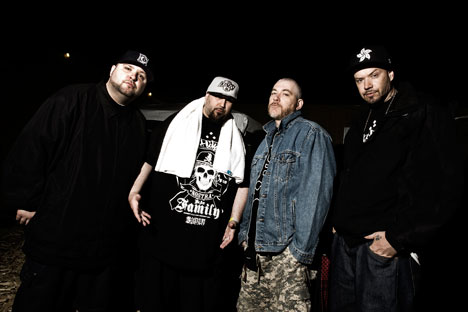 La Coka Nostra was a group who dropped on the scene in 2004, consisting of Everlast, Danny Boy, Lethal, fellow Irish-American rapper Slaine, and Ill Bill. While I was excited to see a resurgence of the original HOP lineup, I wasn't crazy about the name, as it lent a reference to cocaine - something I felt that the old crew was better than. Whether they indulged or not, it was not the House of Pain I knew. I appreciated the subtle reference to La Cosa Nostra, but Italian and Italian-American organized crime syndicate. I dealt with the other other aspect as well as I could, listening to wild tales of street fights, cash-stacking, and allusions to old school House of Pain. Everlast was back, with a few new members to throw at the crowd of devoted fans. Like most of the House of Pain records, Danny Boy rapped intermittently, focusing mainly on logo design, branding, and distribution.
 The members of House of Pain left their impact on the music industry. Everlast was the most successful, the most paramount figure of the group throughout its tenure, going on to solo careers and resurrecting the rap group with a slight twist. To the common hip hop head, House of Pain is synonymous with "Jump Around." If one were to ask how many albums the group put out, there would probably be a lot of shoulder shrugging. They fell further and further into obscurity in the years after the hit single faded, doing what they could in a rap game that they changed forever with their Irish-American street tough style.

No comments:
Post a Comment