Saturday, November 25, 2017

Top 10 Rap Albums

A lot of seminal rap albums fail to make this list, which basically goes to show that there's a certain type of production and gimmick-led antics that I prefer when it comes to the genre. While the likes of Public Enemy, NWA, and KRS-One should probably show their face on this all-time list, they alas do not. I salute their works, sure, but they failed to make their lasting impressions on me like their noted counterparts below did.


10. GZA - "Liquid Swords" (1995)
Following in the footsteps of crew mates Raekwon and Ghostface Killer, GZA was the next member of the Wu-Tang Clan to find autonomous fame. On his first solo album, "Liquid Swords," GZA rhymes his way across 13 tracks that explore the nuances of Kung-Fu stand offs and random street violence throughout the projects of Staten Island, NY. Produced by DJ and Wu-Tang helmsman, RZA, "Liquid Swords" is riddled with intros and interludes, samples of old Shaw Brothers, dubbed over Kung Fu classics that I grew up on, like Five Deadly Venoms and The Kid With the Golden Arm. Wu-Tang generally loves to equate Kung-Fu movies to street life, shady deals, and unpredictable violence. GZA's lyrics are metaphorical and brainy, melding intelligent snaps with popular culture, drug references, and lyrical sword fights. Kung-Fu flicks are also an influence on a few of the song titles, including "Liquid Swords," "Duel of the Iron Mic," "4th Chamber," and "Swordsman."


9. Atmosphere - "Seven's Travels" (2003)
In the picture above, Atmosphere's Slug and Ant look more like mobbed-up mafia knock-around guys than successful, ultra-talented indie rap artists. "Seven's Travels" was my first exposure to Atmosphere, as I caught the standout track, "Trying to Find a Balance" on an indie rock station one night. I proceeded to go buy the record to find that Atmosphere was something akin to the Beastie Boys' goofy, indie sensibilities and Gang Starr's two-man, street edge prowess. The Minneapolis, MN native, Slug, raps throughout the duration of the record, while Ant remains silent as the group's DJ and producer. The girls who have crossed Slug seem to be a major theme of "Seven's Travels," and he's angry at them on "Bird Sings Why the Caged I Know," and they're mad at him on "Suicidegirls." The rest of the tracks seem to be about Slug himself, and about obscure, larger-than-life anomolies like "Cats Van Bags" and Liquor Lyle on "Liquor Lyles Cool July." Slug gets goofy on "In My Continental," but shifts the focus to a more visceral, dramatic experience on "Always Coming Back Home to You."


8. Sole - "Selling Live Water" (2003)

It's hard to be considered a true indie hip hop artist if you're not part of the Anticon record label. Greats like Jel, Alias, and Why? have been spawned from this netherworld of underground rap artists, and Sole is among their brightest and best. "Selling Live Water" was produced by label mate Alias, who put out a stellar hip hop record or two himself. Sole, aka Tim Holland, looks more like your favorite drinking buddy than an intelligent, socially-conscious rapper. My first exposure to Sole came on an Anticon sampler, so I then made a dash to download as many of his tracks as I could, finding that the best ones came from "Selling Live Water." My brother-in-law and I also recorded some hip hop CDs for each other, and "Selling Live Water" was one we shared in common without even knowing it. Sole is a mouthpiece for the disenfranchised, and for the avid Bernie supporter. Through cynical metaphors and scathing comparisons, Sole dips into a whole slew of rants and raves on the topics of income inequality and white privilege and Indian removal. Highlights on the social apt whirlwind include "Da Baddest Poet," "Shoot the Messenger," "Selling Live Water," and "Teepee on a Highway Blues."


7. The Society of Invisibles - "The Society of Invisibles" (2006)

TSOI are such an interesting act. Though their self-titled debut album came out in 2006, they wear their influences blatantly on their sleeves. Their overall style and smorgasbord of characters harkin back to the days of Wu-Tang Clan. The Society is basically a supergroup, with three or four different rap groups melding together like Voltron for an earth-shattering contribution to the underground hip hop scene. The key protagonists, or antagonists, depending on how you look at them, are Gutta, Indrid Cold, Joey Baggs, and the enigmatic, ultra-talented but wholly demented Sunn Sunn Szizzorhandz. If the rest of the group channels Wu-Tang, Sunn Sunn channels Gravediggaz, with his maniacal stylings and horrorcore lyrics. The Arizona super team should be heard and taken at face value for their old school delivery, street tough fervor, and crafty trappings of hip hop mastery.


6. Lordz of Brooklyn - "All in the Family" (1995)
House of Pain burst on the rap scene in 1992 to bring a new flavor of Irish-American hooliganism. Hot off the heels of HOP came the Lordz of Brooklyn. If The Godfather and Goodfellas had an official house band, it would certainly be the Lordz. They were a four-man crew, boasting rappers Kaves, Admoney, and Scottie Edge, along with producer and DJ, Pauly Two Times. The Lordz were a crew of Italian-American street toughs from Brooklyn who constantly gave shout-outs to social clubs, mafioso activity, and the Verrazano Bridge. The Lordz also made frequent references to Mack the Knife (Sinatra) and the laudded gang movie, The Warriors, in which Kaves beckons to the listener on "LOB Sound," "Lordz, come out to plaaay." LOB immediately makes their presence felt on "Saturday Night Fever," where the boys channel rowdy nights at the social club, where you need to "bring your boys and your bat 'cause it's a bar fight." The act is a little campy, but it worked for the time, when other ethnic groups were trying to make their way into the rap game. The Lordz did an ultra-gritty track with Everlast from House of Pain called "Lake of Fire."


5. Gravediggaz - "6 Feet Deep" (1994)

Horrorcore hit the rap scene right around '93 and '94, and while Brotha Lynch Hung seems to get most of the credit for flourishing in the genre, Gravediggaz carved out a small niche using their ties with Wu-Tang. The creator of the group, Wu-Tang mastermind RZA, sought to explore the darker side of street life, melding it with horror anthems and monstrous melodies. He even took gold teeth a step further, wearing custom-made gold fangs in his mouth when performing with Gravediggaz. "6 Feet Deep" was group's first, and best, effort. Later studio efforts would see them decrease in their Gothic overtones, never once again reaching their zenith, the torch-bearing "Diary of a Madman." "Constant Elevation" conjured images of a visit to the mortuary, "2 Cups of Blood" is menacing and macabre, and "Bang Your Head" serves up metallic flavorings melded with grungy hip hop. Because of Wu-Tang, and because of Gravediggaz, I now make the attempt to follow the always-innovative RZA into any project he's part of, be it music or movies.


4. Macklemore & Ryan Lewis - "The Heist" (2012)

Macklemore & Ryan Lewis, took conscious hip hop to brand new heights with the release of their major label debut, "The Heist." One of the hits from the album, "Thrift Shop," turned the world of hip hop upside down, delivering a message of finding self-comfort in the old rags and vintage flavors of your local Goodwill. In a rap game so concerned with gold chains and stacks of cash, Macklemore encouraged us to save our money and pop some tags with the 20 in our pocket. The tune was jovial and fun-loving, and it was a breath of fresh air in the slightly redundant modern world of rap. From there, Ben tackles personal relationships with females on "Thin Line," same-sex rights in "Same Love," alcoholism and substance abuse in "Neon Cathedral" and "Starting Over," and the lies and shadiness of record execs on the blatant diss track, "Jimmy Iovine." One of my favorites on the album is track 1, "Ten Thousand Hours," in which Macklemore encourages the listener not to give up on their dreams, the chorus belting out, "Ten Thousand hours felt like ten thousand hands, ten thousand hands, they carry me."


3. Cypress Hill - "Cypress Hill" (1991)
Cypress Hill was an innovative rap trio coming out of 1991, blistering the radio stations and the Juice movie soundtrack with watershed hit, "How I Could Just Kill a Man." Frontman B-Real has a very distinctive vocal tone, especially in the hip hop genre, nasally and seedy and delinquent. Subsidiary member member Sen Dog keeps his bars to a minimum, usually adding background barks to B-Reals clever choruses. DJ/producer Muggs deserves as much recognition as any other in the genre, with his loops and samples of feral shrieks and old, peaked-out guitars. He uses a slow, deadly bongo beat on "Latin Lingo," and old school classic rock riffs for album opener, "Pigs." Muggs' beats, and B-Real's vocals, are highly distinctive in the genre, and for a hip hop group, Cypress has had a nice, respectable longevity.


2. House of Pain - "Same As it Ever Was" (1994)
House of Pain came out of nowhere to change the rap world in 1992. Never before had Irish-American hooligans been cast as hip hop heroes. Members Everlast, the aptly-named Danny Boy, and DJ Lethal brought a familiarity to white inner-city and suburban Irish-American kids looking to unleash their pent up angst. Loud and brutish, House still managed to tread lightly, never disrespecting or trying to completely overtake the occupied rap genre they'd infringed upon. HOP's debut album dropped and dropped hard 1992, and while the group lost some of their initial footing in the 1994 sophomore effort, "Same As it Ever Was," it's actually the more preferred of their albums for me. Before their debut in '92, along with Cypress Hill and Funkdoobiest, House of Pain formed a clique called the Soul Assassins. Every group in the Soul Assassins had their music and beats produced by the revolutionary DJ Muggs. He did a fantastic job of distinguishing beats of the Soul Assassins recordings. He made "Same As it Ever Was" a very horn and classic guitar-heavy endeavor, giving the album a very old world, old school Irish feel to it. The beats of "Back From the Dead," "On Point," and "Keep It Comin'" conjure images of black and white photos in the back of some Irish pub, it's walls littered with shamrocks and Celtic crosses. In "On Point," Everlast even strengthens that image, going off with "Back in the days there were Irish ways, and Irish laws, stand up for the cause." He also goes on to tout his support for Sinn Fein, the Irish Republican government, who's long waged a war with the British occupation of predominately Protestant Northern Ireland. "Same As it Ever Was" is a true Irish-American experience, a little more subtle than the 1992 debut, in which the group had to keep reminding the listener that they were Irish.


1. Wu-Tang Clan - "Enter the Wu-Tang" (1993)
I was living in Alabama when I discovered Wu-Tang Clan. When I came home to SC, all my friends, and their friends, were stricken by Wu-Tang's fiery blend of lyrical mysticism and genre-bending antics. They floored me with their rural Chinese meets inner-city cultural meshing. They successfully weaved traditional Chinese music into their first single, "Da Mystery of Chessboxin.'" In the video, integral members Raekwon The Chef, Inspector Dek, Ghostface Killer, Masta Killer, and Ol' Dirty Bastard are introduced in full glory. On later album tracks, we're given Method Man and GZA, who went on to become popular solo artists. Much like GZA's debut, "Enter the Wu-Tang" is peppered with Kung-Fu movie samples, equating life in Shaolin to life in the group's native Staten Island. The album was groundbreaking, spawning hits like "C.R.E.A.M.," Method Man," and mentioned before, "Da Mystery of Chessboxin.'" Of course, the whole concept of the group and its image was perpetuated by RZA, who went to produce further Wu-Tang efforts, the Gravediggaz albums, his own solo albums under the moniker, Bobby Digital, movie scores, and films. This album launched the careers of Raekwon, Ghostface, Method Man, and GZA, making "Enter the Wu-Tang" a watershed moment in the burgeoning world of hip hop. Another thing that stands out about Wu is their incredibly intelligent lyrics, which are raw and full of allegories and metaphors.

Tuesday, August 8, 2017

Rites of Passage


This is my first solitary album review, and since this is one of my personal favorites, I figured it good enough to start with. Though Passage came out in 2012, I didn't discover it until 2015 (thank you, Spotify). I was already familiar with front woman Aleksa Palladino, who I'd seen on TV shows like Boardwalk Empire and Rogue. Little did I know, she fronted a band in an underrated genre of music. Exitmusic fit in nicely with other genre favorites Beach House, Daughter, and Lanterns On the Lake. 

There was a particular point in my life when Sigur Ros and Denali were favorites of mine. Exitmusic's Passage does the job of encapsulating the best sounds of both. Palladino and her husband, guitar player Devon Church, spearhead the effort to create layers of mournful moans, delayed guitars, and somber piano licks. Palladino waxes poet with her lyrics, crooning, "If the stars can align all of man with night sky, then why can't my heart mend the break/but I'll love you same because it's only a dream and the dreamer is bound to awake." It's comparable to something straight off the pages of some obscure, forgotten Keats poem on the complexities of dreaming and unrequited love.

The album begins with the best track, the ultra somber "Passage." It begins with a pensive piano, popping fireworks, and Palladino's layered vocal stylings, stamping a mood of spectral angst. Not to be cliche, but her voice is truly incomparable. She comes off a bit like a damaged, wounded widow. Her voice is not perfect or dainty. It's all about raw emotion, and sometimes, that doesn't come off perfect or dainty. Her voice is grounded and gritty and unpretentious - the new, cryptic soul at an AA meeting with an extraordinary story to tell. Her voice is unassuming, painting the soundscapes with sorrowful cries, lyrics likened to short stories laden with metaphors and ethereal delight. "Passage" is riddled with feral cries and highly emotive melodies that dare you to feel something.

The second track, "The Night," is the second best on the album. While "Passage" takes you for a ride amidst a dismal forest of specters, "The Night" is slightly more optimistic in tone, and Palladino's voice, while still emotive, is quite beautiful. Devon Church works his guitar minimalistically enough, though the chords work expertly for the melody Palladino has crafted with her voice. The quote from my first paragraph comes from this song, as does the hopeful chorus, "My aim is slightly high/in the silent night."


"The City," switches it up from somber and optimistic to a more aggressive effort, especially in the chorus. The band seems to take us on an visceral roller coaster ride, displaying every aspect of every emotion possible. The song remains calm and collected, though slightly volatile throughout the verse, only to explode in the chorus with pounding drums and guitar string lashings. The dark tune was actually used for the short-lived TV drama, Dracula, starring Irish actor Jonathan Rhys-Myers.

The 4th song on the record is another personal favorite. Much like Jeff Buckley's "Grace," Exitmusic often paint pictures and tell short stories with their lyrics. Palladino does just that with "White Noise," a sorrowful track that conjures the image of some departed soul pining for a return to their lover through the conduit of white noise. "I'm in the flesh of the lumbering few, I'm on the call trying to get back to you." The melodies are sweet and sad and evocative. In the chorus, Palladino wails, "I'm in charge of the coal and the fire." It comes off like a short story about a woman who's died, is put to work in the depths of hell, but often attempts to reunite with her lover, who's either still living, or who is already residing in some proverbial afterlife.

"Storms" is another tearful track with heartfelt melodies and guttural cries to supplement the album's theme of isolation. This theme seems to run throughout the entirety of the 10 tracks, though it varies enough to give each song it's own unique flavor. "The Wanting" is next, probably the most akin to Sigur Ros with its predominant falsetto wails throughout the chorus. It carries a Sigur Ros-like ambiance with it, which is really what glues each song to the next.


"Stars" is extremely ethereal, and much like "Storms," it carries a deeply emotional chorus with it. I can't begin to fit myself into the mind of Aleksa Palladino, but these songs seem to be penned by someone who has experienced a lot of sorrow and grief, wearing them like a badge throughout the album. "The Modern Age" is one of the band's more popular tunes, while "The Cold" reminds you that "you are alone/I read it in the paper." The delicate melody and the agonizing whines are enough to incite chills. The finale, "Sparks of Light," is the most similar to the songs featured on their 2007 debut, The Decline of the West.

Passage is a remarkable album from start to finish. I only wish that Palladino would place as much emphasis on Exitmusic as she did her acting career, though I understand that we live in a world where artists who want to keep their musical integrity are rendered starving. During a rough patch in my life, Sigur Ros' Agaetis Byrjun and Denali's self-titled album were there to comfort me. Exitmusic's Passage is a perfect culmination of the two, which is why I'm such a fan (that, and because of Palladino's soulful, poetic lyrics). Passage is entirely understated in the greater scope of indie music, so I'm glad a few of the songs featured on it have gotten enough attention to appear on shows such as Dracula and Showtime's Shameless. The band has a debut album, an EP, which was actually more like a preview of the songs on Passage, and then Passage itself. They collaborated with labelmates Mister Lies for the electronic track "Hounded," and composed a cover Bowie's "Space Oddity," which I personally think is better than the original (Oh yes, I said it). The material on Passage is dark in more ways than one, but it's the wistful kind that makes you appreciate the beauty in sadness.

Sunday, August 6, 2017

A Viking Hell

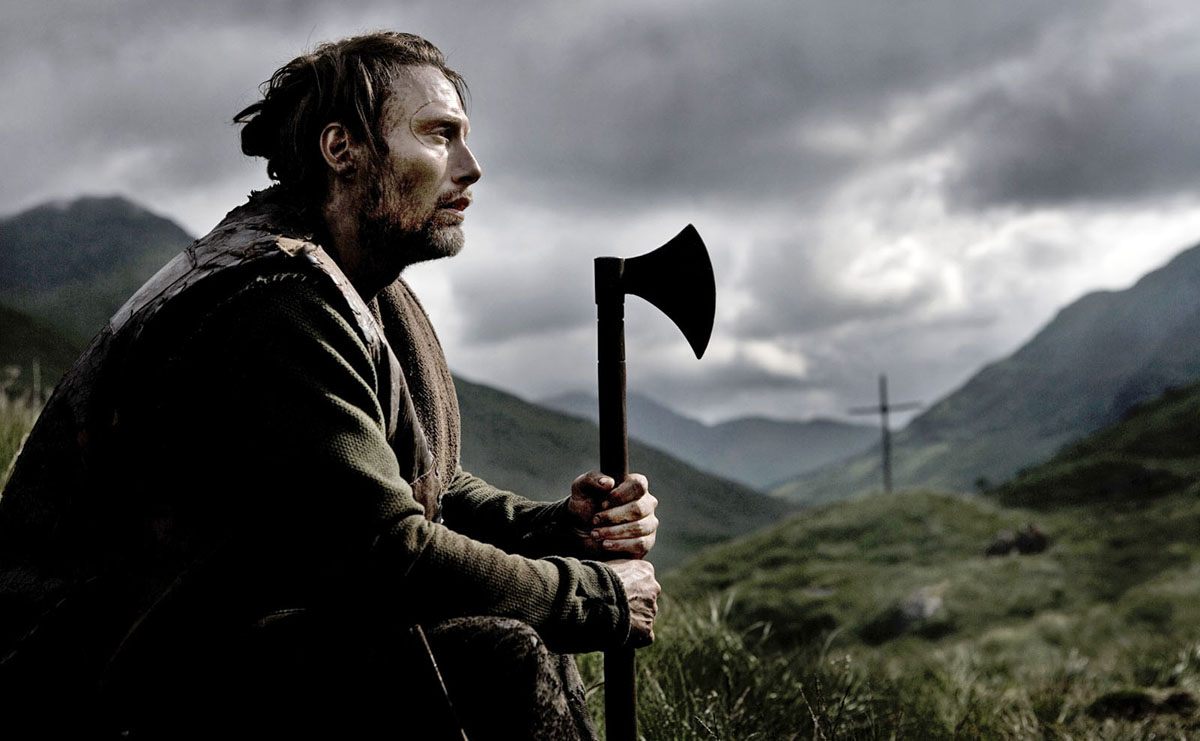
Valhalla Rising is a movie that's really unlike any other. Directed by the man who helmed Drive, a personal favorite of mine, Nicholas Winding Renf directs a film that comes off at time more like a anxiety-ridden, old world music video, laden heavily with metaphors and glimpses into what hell of earth could possibly look like. It comes off a little like a Viking sword-fest, though it is unmistakably not. It's more of a trippy, blood-drenched journey from dismal to degradation - less in the Roman sense, and more in the Dante's Inferno sense. It certainly takes patience, and a willingness to watch something different, in every sense of the word.

The film stars Danish actor Mads Mikkelsen, who's in another one of my personal favorites, Charlie Countryman. He plays a mute slave in Scandinavian Scotland. In the 8th century, Vikings colonized parts of the UK, Ireland, and Scotland. The movie begins in Sutherland in Northern Scotland, descendants of Vikings trading coin to the utter brutality of their slaves. The film is dark, grimy, and gritty in every sense of the word, with lots of Scandinavian and Scottish actors staring pensively into the mountainous landscape that surrounds them.

Mikkelsen plays One-Eye, named by a Viking youth because he only has one eye, and because he simply can't tell anyone his name, as he's a mute. He's a thrall, or a slave, forced to fight in the highlands of Scandinavian Scotland by the Viking chieftain who's holding him hostage. He's apparently not such a great guy, making wagers on his muddy brawlers and muttering cryptic messages of One-Eye's more vengeful tendencies.

One fateful day when One-Eye is bathing in a mountain brook, he ducks under the water and comes, rather ironically, across an arrowhead. This particular finding plays a part a later in his personal travails, but at the moment of his initial discovery, it helps him find his freedom. He kills the chieftain and his soldiers, one in a pretty sadistic fashion. The chieftain tells us earlier that One-Eye is a man driven by hate, and it certainly appears this way as he takes out all his pent up frustrations on the Viking men. He then mounts the chieftain's severed head on a pike before grabbing the nearest ax and literally heading for the hills.


Alongside One-Eye is a blond boy who is never really named, presumably the son of one of the slain, or perhaps a slave himself. In any case, he fed and tended to One-Eye when he was a captive, and therefore, in the aftermath of the silent warrior's murder-fest, he allows the boy to live. The boy then follows at a safe distance to find their next adventure together. When they come across a band of newly-converted Christian Vikings about to set sail for Jerusalem (for the Crusades), the boy does the talking for his new comrade, and indirectly accepts the invitation to head for the holy war.

This seems to be when group descend into a hellish world of fog and pestilence, a few of the holy warriors blaming One-Eye and boy for delivering to them a curse. This is when One-Eye shows his loyalty to his pint-sized compadre, killing a guy on board the ship who conspired to kill the boy as he slept.

With the voyage along troubled waters, writer and director Refn seems to be inspired by Romantic poet Samuel Taylor Coleridge's long-verse poem, "The Rime of the Ancient Mariner," about an ill-fated sailor who kills an innocent albatross and damns his entire crew with a slew of bad omens. Valhalla Rising will give us calm enough scenes, but then instantly shift to visions of One-Eye drenched in red, hinting toward his pent up hate that he unleashes whenever someone tries to harm him or the boy.

The film is not riddled with one fight scene after the other, though the few it does have are unpredictable and extremely violent. It's a cold, dismal outing, as our lost troupe ventures off course somehow and ends up on the shores of some strange, heavily-wooded new world, either the east coast of Canada or the  Northeast of America. They encounter arrow wounds with unseen sources, eluding to the fact that the Viking crew is in the midst of some hostile natives. The message we're supposed to be getting is that the men are essentially in Hell, and all try to come to terms with this in their own way. While some of the other men pray to God, One-Eye erects a pile of rocks on the shoreline, eluding to his own pagan worship practices.

This is a strange, artsy movie, with Refn probably inspired by Terrence Malick (The New World) and his own country's rich Norse history. I don't think you'll see many films like Valhalla Rising, but it makes you think. It's sort of like a really good open-ended question that you have to devote some time to. You know you're probably going to have a different answer than the next person, and I think that's how Refn intended it to be. Valhalla Rising is at least worth checking out if you're into Viking history and sordid allegories about the afterlife.

Tuesday, July 18, 2017

A Poet's Fire

My exit from the music world seemed to coincide with my first English Literature class in junior college. The class, and history, which I am also passionate about, seemed to coincide as well as I learned about Romantic poets like Samuel Taylor Coleridge, Lord Byron, Percy Shelley, and most affectionately, John Keats. I had an excellent teacher, Professor Joczyk, who would praise my ideas in front of the class one day, but would give me 89s on all my research papers in order to push me to do better. She also had this policy about not missing class or she would flunk you. She made an exception when I went to Italy, telling me I had to visit the Keats-Shelley Museum in Rome (which I did).

Long story short, the class fueled my burgeoning fire for poetry. Professor Joczyk had given lessons on Byron and ideas of the "Byronic Hero" and the "solitary man." I sort of morphed myself into this persona, experimenting with my creativity, and soon, I wrote my first poem one night during a complicated time in my life. All of my poems, much like my lyrics, were based on my life, mixed in with whatever I was learning about or inspired by at the moment.


“Rheumatic Roulette” (2/25/04)
How do I love you? Let me count the ways.
Six possibilities, six chambers.
One out of six, spin, spin, sweet spinning,
Round, round, and round, where it stops no one knows.
Dark as midnight, perchance to cease,
This wheel of fortune turning surreal and all too hazy.
This is the darkest winter I have felt in years.
I am longing for the lovely tile,
To swim in a sea of crimson, shores of needles and razorblades.
I’ll be the ghost who creeps into your Bloody Mary bathroom mirror,
The albatross ‘round your ripened neck,
And I’ll look up at you, look in on you,
Look out at you from my smoking barrel in the dark.


“Gods and Guillotines” (3/4/04)
When this war is over I will be canonized,
Sainted; awarded three purple hearts and two bronze stars,
A congressional medal of honor.
For this is a martyr’s game, a four star name.
I’ve seen brothers die, sisters cry,
As they offer me the cloth of their best ball gowns rendered to rags.
For this is a warrior’s game, a four star name.

Commemorate me Caesar of Rome, dictator for life,
Worshiped; roses and doves, feared and loved.
Hail to me provinces and vast empire,
Stretching across the continents to colonize the heathen.
The Tiberius’, Caligulas, Neros come in time,
But for now, this is a deity’s game, a four star name.

Coronate me Emperor of France, dictator of all,
Crowned; scepter and sword, monarch and Lord.
Award to me countries of worth, material goods of gold,
Josephines who never grow old.
Pay to me tribute, from pauper to prince, descended of gods.
For this is a soldier’s game, a four star name.

Crown me King of Versailles, incompetent and broken,
Revolutionized; nooses and forks, stocks and rocks,
The gallows await and I have brought them only cake.
Liberate, liberate! Screams and swollen pride,
Reduced to a punctured agony; a Bastille rightfully stormed.
Antoinettes who never die, Robespierres who draw nigh.
For this is fool’s game, a four star name.
All hail gods and guillotines, a requiem of libertines.


“The Abyss” (3/4/04)
Soft, faint echoes of the world around me,
But they matter not.
This is my time of reckoning, my moment of deep blue vanity.
Vanity, or insanity?
Drip, drip, slip into my comatose haven,
Head resting on the bottom.
Drip, drip, slip into melismatic hums,
Feet propped meticulously near the escape route.

You are my abyss, you spawned this,
Nothing more than an obsession with the Gulf of Spezia.
Drip, drip, slip into slowly-filling lungs,
Then lift up my head and end this fantasy. 


“1000 Ships, 1000 Deaths” (3/4/04)
Dido and Aeneas, Paris and Helen,
Antony and Cleopatra – oh, how history repeats!
A fable, a myth, a leibestod, a tragedy,
And we fit them all, my dear.

Your face launched 1,000 ships of mutiny.
Soldiers and warriors a ‘plenty came to rescue you from the aspic fangs.
I fell on my sword for you,
I was once adored by you.

Octavian’s armies and Achilles’ heels will not keep me from you.
Men will cry, servants will die, but I will endure.
We will live in infamy, cursing the Roman Triumph that follows –
Cursing anyone who dares to keep us apart.
I will die for you, I will kill for you.
I will kill us both to keep us together forever.


“Ode to La Fée”
What myths and monsters paint the night
In hues of ghastly green and the absence of light?
Ghostly white, curdled with the essence of neutral tones,
Bones and skin and bloody knees, the beast finds herself appeased.

Erased from the face of the earth from birth.
Festering sore on the cheek of humanity,
I combat her vanity with a dripping prose,
Flipping her underworld free of all its flaming woes.

Stay the course, live among the light
Though the night is a jealous sprite, dealing only in death and spite.
Fight that Green delight until you find her absent her color,
Sobering valor shall resist her most horrifically shrill holler.

A new voodoo queen shall prowl this scene,
Laveau shall fade where La Fée shall incite parade.
A lavish spectacle, a Bacchanalia of fools
In which fairies and ghouls spawn bottles empty a’ plenty.

And if so vigorous a she-devil should fail to fall abashed,
Then hold still with teeth gnashed, awaiting the foul tempest to pass.
Drink her down, hold yourself still,
And blink not, righteous friend, while baited breaths draw nil. 


“Chloroform Cabaret”
I’ve been rehearsing tirelessly for my chloroform cabaret.
A debutante, a provisional professional,
Perfecting this craft on such daftly-short notice,
Munchausen by proxy, brimming with such gusto, such moxy.

Light on my feet, wiry and elusive,
Conducive to the atmosphere of opening night.
I have recited my lines, rehearsed my scales,
Perfected my pitch, acquired distaste for your rich.

I’ll be performing a cabaret, one like you’ve never seen before.
Cast me with actors and artists, lepers and harlots,
And still I will deliver a show-stopping performance,
A Jacobian tragedy to the tune of the whistling guillotine.

Stage fright will subside for crowd delight,
The bourgeois swinging from the rafters thereafter.
My rotting requiem, my banshee moan, my sardonic slewn,
My stifling wit and cat-like prowess will entrance them for hours.

Wrap your applause with the gauze of your fresh wounds
And assume the worst amidst my seething verse,
And assume the position in my crippling disposition.
Down with the noose of my hallowed gallows.
Nevermind the torches, the pitchforks,
Nevermind the genocide, the flies, the lies.
The show must go on, you see,
So let them eat cake while you shake off the stiff neck.

I’ve been rehearsing tirelessly for my chloroform cabaret.
I’ll burn down the estate with your fate well in mind,
As you stand in the line winding toward that great whistling blade,
I know I played my part to perfection for the revolution encore.


“A Hero Must Rise”
A hero must rise.
When the sun descends, I begin where you end,
Crossing paths with my own shadow to battle my own demons.
In a town that fears sundown, I wear a crown of laurels
Composed of irony, and sympathy, and empathy,
Which was at one time my greatest superpower.

I walk the streets at night
When I should be at home, resting well on my bed of nails,
Surrounded by four walls riddled with arsenic and jagged teeth,
Complacent to abide alongside the creatures that crawl beneath.
My private Turkish prison, my Chinese water torture vacation destination.
There’s no place like home.

I walk the streets at night because a hero must rise,
Even if only to despise what he’s become, contented and comfortably numb.
This S on my chest stands for sadist, you know,
And I’ll make sure to save myself from you on my way back from the fake clink.
Here I come to save the day,
And to flay you all for ever believing in me at all.


“When in Rome, Do As the Comatose”
Buzzing like a swarming apparatus,
The status of this army is susceptible.
Like Septimius Severus, Caligula, Nero,
Roman heroes and tyrants form two zeros.
And we fly the figure eight
And seal a fate that is not unlike karma to our glorious lord.
Point our attack like a divine finger,
Like a lounge singer spitting daggers with her breathless swagger,

With swords drawn I’m a pawn
Of this crucified crusade, leaving me
A canonized, sainted witness
Of the battle among insects, and I’m their Caesar.

Feaster of the feasters among the festering
Honey-roasted combs of the Roman catacombs.
Like a martyr, I’ve fallen for the cause,
Though save your applause for the solder wrapped in gauze when he returns home.
I’ll see you all in Elysium,
Mars will guide you through the horrors of this foreign war.
Store your keepsakes and handshakes deep into the soil
Like my mortal coil, blessed in oil, depicted like a glorified gargoyle. 


"Dirt Mall Mannequin"
My words are worth nothing until after I'm dead,
So here's to being famous.
Tonight, your name in your own lights,
Your fame ignites to full fruition.
I've reserved your name on the wall of fame
Because I wanted to make you a big star, baby.

You're the next big thing,
New York stars in small town eyes,
LA spin in olive skin.
Roar that feline growl just one more time,
Your grime covered by the limelight.

Mirrors and razor blades, the nightlife that never fades,
Now don't you go and lose your nerve.
Salut just one more time,
But keep the "T" silent so I die a martyr on it,
Crucified for your fame on it.

This life has chosen you,
I have helped you achieve this faux fashion.


"The Fiftiessensation" 
Bombshell Betty, handgun confetti,
Raining down like white lies and hidden agendas.
Blood-speckled windows, self-mutilating innuendos,
Live fast, die young, leave a good-lookin' corpse.

I am the Fiftiessensation, an inspiration
To all those who fall short of my capsized, cup-size catharsis,
Dragster scarf flapping at high speeds
On the high tides of silk, sweat, corset corvette.

Come on, you know you want it,
Live fast, die young, leave a good-lookin' corpse.
Come on, you know you want it,
You can't refuse this Elvis ego, this Marilyn mannequin masochist Betty.

Sunday, July 16, 2017

The North Remembers

I have sort of a fascination with all things Scandinavian. Being that I'm Swedish-American, I try to follow the cultural contributions made by my brethren; movies, music, Vikings, Ikea. I recently happened across a hidden gem on Netflix called Autumn Blood. If you were to ask me about it, I would describe it as a Scandinavian movie made for an American audience. The actors either are Swedish or look Swedish. It's a unique film, The Hunger Games mixed with some obscure movie you might come across on the Sundance Channel one night.

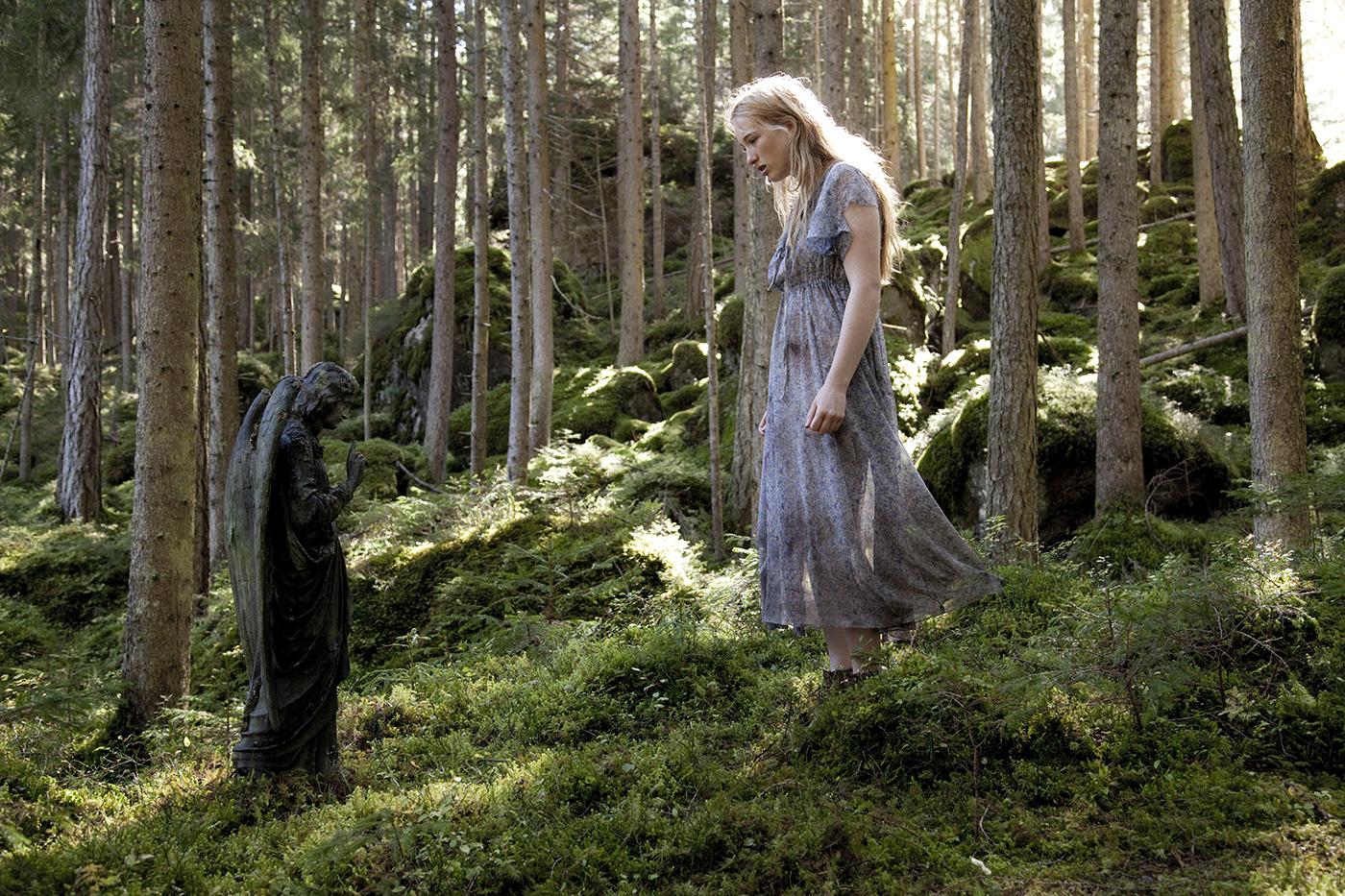
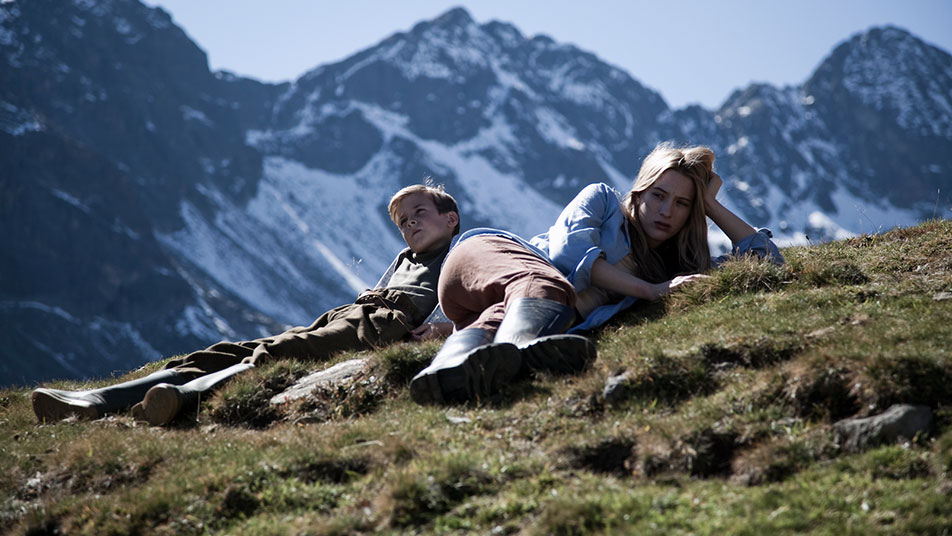
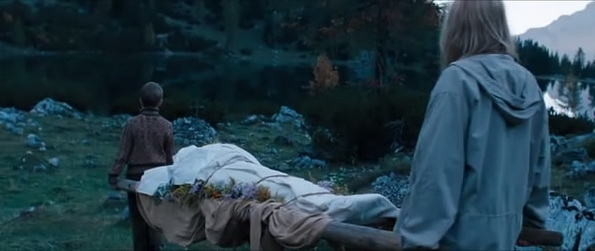
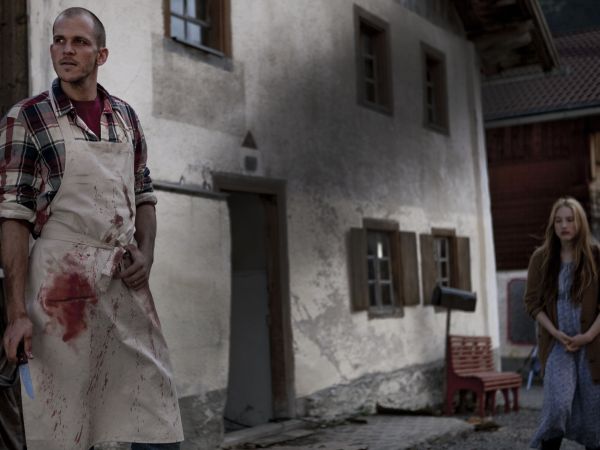
Autumn Blood follows the story of the cryptically-named The Girl and The Boy, siblings tending their farm up in some lush, ice-capped, breathtaking set of mountains. While the film, directed by German-born Markus Blunder, was probably shot in Austria or Switzerland, it reeks of Scandinavian overtone, as it features Swedish actors Peter Stormare (Fargo) and Gustaf Skarsgard (Vikings). The movie also features a few German actors, including The Boy (Maximilian Harnisch). Only our heroine, The Girl (Sophie Lowe), is an English actress, though her accent betrays nothing in the few lines that she actually gives us. The sweeping landscape seems to do a lot of the talking for her.


The Girl is a fair, blonde teenager carrying the brunt of her family's chores with a mother who is ill, a brother who is helpful but diminutive, and a father who died at the hands of some unspoken vendetta with The Mayor (Peter Stormare). She milks cows, washes clothes, and shovels slop during the days, but the evenings are built for her and her brother to enjoy general bouts of faux wrestling and stargazing. The Girl also likes to skinny-dip in the mountain lakes, seeing as how she believes herself to be completely alone. This is what gets her into trouble with The Hunter, a villainous townie who just happens to be the son of The Mayor. This immediately inspires ideas of family vendetta, with The Mayor having shot dead The Girl's father in front on her nearly a decade before.


The Hunter is not such a good guy. He takes it upon himself to rape The Girl while no one else is around, leaving her abused physically and mentally. While she tries to cope with the loss of her innocence, her mother passes away of some undisclosed illness. One feature of the film I do like is the cryptic nature of the parents' demises. It fits well with the minimalist dialogue.


At this point, the siblings are living alone on the mountainside farm, and it's not until the The Girl wanders into town to the post office, that The Clerk (German actor George Lenz) sees the bruises and scars on her face and places a call to social services. The Girl and The Boy have seen to the burial of their mother themselves, so this is the time their abandonment becomes public information. As The Girl wanders through the rustic town, she's noticed by The Butcher (Gustaf Skarsgard) and The Friend (German actor Tim Morten Uhlenbrock). Of course, they're friends of The Hunter, and are well aware of what he's done to The Girl. That night, The Butcher, The Friend, and The Hunter head out to the homestead to have their way with The Girl again. With all the monikers and the fairy tale scenery give in the film, this story reminds me of some gritty and obscure Scandinavian or German fable retold in the modern age.
Soon, a social worker makes a house call to the homestead, though The Girl pretends she isn't home. She's not sure who the blonde stranger is, and she doesn't want to turn the three big bad wolves in, causing more problems for her and her brother. The bad guys, afraid that The Girl will snitch on them for what they've done, decide to eliminate the threat. It is then up to The Girl and The Boy to defend themselves. 
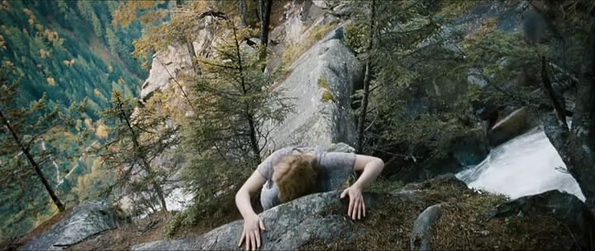
The homestead defense doesn't come out quite as you might imagine. It transpires more organically, which I can appreciate. The siblings are chased into the mountain forest, pursued through the heavy brush and up the side of a pretty treacherous waterfall. The Girl doesn't turn into Katniss Everdeen or Lieutenant Ripley in this one, but stays true to the scared orphan she's playing. She simply tries to outrun the baddies, being that's all she knows to do. Scaling the mountainside leads to the crushing death of The Friend, which leaves The Butcher and The Hunter still in hot pursuit. The Girl and The Boy have split up to increase their chances of survival, but this doesn't quite turn out as expected when The Boy is caught by The Hunter.

When The Girl comes across The Hunter, she cracks him in the back of the head with a rock, making him shoot himself with his own rifle. Reunited, The Girl and The Boy make their way to their home, only to be spotted by The Hunter. The ending is a tad anti-climactic, but very unexpected, and overall, satisfying.

Years ago, I came across a Brazilian film called The Three Marias (As Tres Marias), a low-budget family vendetta flick featuring some pretty heavy Catholic imagery. Autumn Blood is the same in that respect, the town in the movie at least subconsciously dominated by the rustic church at the center of it. 

Autumn Blood has a very old world feel to it. If not for the shotguns toted by the characters from time to time, this story could have taken place in the Middle Ages with its examples of simple, harsh living in a rural, rugged landscape. The Girl doesn't possess the drive for vengeance that the Marias did, but she simply did what she had to do to survive. Ultimately, justice (the social worker) and reparation (The Mayor) were on her side to quell the three-pronged attack of the savage men.

Autumn Blood doesn't make my all-time list, but it's memorable for all the reasons I've described above. It's artsy, simplistic, rugged, and very Northern European. As I said, it feels like something made in Scandinavia for an American audience. You can find it now streaming on Netflix. This movie is so obscure that even with the spoilers, I probably won't spoil it. More than likely, not enough people will see this one and it will only be appealing for anyone who looks for the same Euro simplistic storytelling that I do. The performances of Stormare, Skarsgard, and Sophie Lowe are memorable, or as good as they could possibly be given such a minimalistic vehicle. 


Tuesday, July 11, 2017

Music History 101

Sometimes, I really miss being in a band. I covered a gamut of genres in my time spent in music, and that's probably why I can listen to the new Broken Social Scene and old Zao within the span of about five minutes. I never did anything quite as heavy as Zao, but I screamed just as hard as Dan Weyandt, and with perhaps just as much passion. I miss the catharsis, I miss the camaraderie, I miss songwriting, I miss having the new things I was learning about in the world filter into my lyrics, to be given an outlet that no one but me would understand, but others could obtain to form their own interpretations. I miss PS 150, I miss Sonrise, I miss All Books. After reading about the tenure of Deadguy through the eyes of their drummer, and watching the Zao documentary, The Lesser Lights of Heaven, I was inspired to script out my own musical history, mainly for the sake of nostalgia. I don't know if I'd call this post a memoir, but this is sort of a fleshed out reflection of my time lent to the wonderful world of music.


ISH HALL (1996-1997)
To quote the great Andy Garcia in Things To Do in Denver When You're Dead, "give it a name." That's exactly what we did. In '96, I got my first guitar. I was opened up to a whole new world at that point. I mean, I was terrible, but I had the passion to learn, and if not for Darrell, my next door neighbor, who had always been more of a friend of my sister's than mine growing up, I would've have learned how to play correctly. He taught me simple chords like G, C, D, E, and E minor. He was younger than me, but way more accomplished. We started playing together, mainly Smashing Pumpkins, Oasis, and Bush covers, he on lead, me on rhythm. We did this until we were comfortable enough to start writing our own songs.

Our practice sessions would consist of he and I sitting in my garage, playing and recording with a tape player, my dad's voice on the in the background every now and then when he came out to harp on me about something. The songs I wrote sounded like the Pumpkins and Hum, while Darrell's were more Dave Matthews merged with Tripping Daisy or something funky like that. When we had our own songs, we needed a name. I think we had a slew of options, but they were all either too quirky or too Smashing Pumpkins inspired, seeing as how I was still sort of obsessed with their "Siamese Dream" album. I wrote songs like "Star"and "Sleep," Darrell composed "Walsh" and "Freak Universal," and together, we wrote a tribute to Nina Gordon from Veruca Salt after I'd drooled over her "Volcano Girls" video. Our song was aptly titled "Nina of Aurora." It wasn't until we went with my dad to a Berkeley High School football game did we have a name. Berkeley's running back, an elusive bruiser named Ish Hall, had an incredible night on the field with the announcer shouting his name ad nauseum. Darrell and I just kind of looked at each other at one point, both recognizing what the other was thinking. Ish Hall was the fortuitous band name we had been waiting for.

We didn't end up being a band as much as a project. We dabbled with a full cast of players, but the commitment level wasn't there for all the members, and frankly, I think we just sort grew out of it. Darrell soon bulked up, got involved with football at Stratford High, and enrolled at the Citadel for college. I lived at home, was working a telemarketing gig, flipping burgers at Burger King, and going to school at a JC. I didn't have too much time on my hands either, but the passion for music was still there. I just needed some time to get better.


SEVENTH VISION (1997-2000)
7V was formed in the summer of '97. My sister and I were hanging with the youth group at church a lot, and hanging with each other quite a bit as well. This was our best friend period. A mutual friend from church named Justin had told us about this Christian club called PS 150 Verse 2 in North Chucktown. It was a bit of a haul, but we made the trek anyway. The place was bought by a guy named Ross, who converted an old warehouse into a sort of night club for youth. Justin introduced me to his school friends, Doug and Johnny. Johnny, strangely enough, lived in my neighborhood, literally right around the corner. Another dude I met at the club, Ben, was into some really cool music in the burgeoning Christian hardcore scene. He introduced me to bands like Zao, Training for Utopia, and Living Sacrifice. My favorite heavy band was Rage Against the Machine, and when Justin, Johnny, Doug, and I talked about forming a band, I told them that I wanted to do something more rapcore. The only rapcore acts in the Christian scene were POD and Every Day Life (EDL). It needed another.

I followed House of Pain pretty religiously for a  long time. As I followed the progress of the members after their breakup, the DJ, Lethal, made his way into a rapcore act called Limp Bizkit. Without hearing any of their stuff beforehand, I took a chance and bought their debut album, Three Dollar Bill, Y'all just because Lethal was in the band. I listened to the album on the way to my first 7V practice in Justin's living room, and was immediately floored and inspired. Johnny and I cooked up some riffs, and my friend Mike and I wrote some lyrics to a song entitled "Crown of Thorns." We rocked for the first time in that living room that day, and what a great feeling it was.

Over time, we'd come up with five or six songs and had been practicing at PS 150, which had quickly turned into a music venue as well. Ross recorded our first demo tape, which we actually sold out of the first night. I think we sold out because we were the only band who was doing rapcore locally and there weren't many Christian acts doing it period. Our stage presence was awful at first, but the more we got comfortable in our skin, the more exciting the shows became. I remember I bought a Freddy Krueger sweater for a Halloween show. Thank God I don't have any digital pictures of that to share.

After we recorded another five song demo at Island Sound in Chucktown, we didn't sell it, but shared it with Ted Cookerly of EDL, whom we had befriended. Ted loved it and had connections with Screaming Giant Records all the way on the opposite coast in CA. I mailed him the demo, he shared it will the label, and the next thing we know, we have a record deal. We recorded our debut album, Shock of tha Hour locally, but the quality of the recording was awful. The label had paid for it, and they were just as disappointed with the final product as we were. They understandably refused to pay for another. I was the only band member living on my own, so all my money was tied up in the rent. Justin, Johnny, and Doug got jobs delivering pizza and literally saved every penny to buy new equipment, and a new recording. The second one was good. We'd actually written a new song between the two recordings and decided it was our strongest, making it the first track on the disc. We re-recorded all thirteen songs again at Island Sound, and the product was for the most part satisfying. We toured with other Screaming Giant bands, Rod Laver and Jesse and the Rockers, and even shot a video is Dallas, TX. On the tour, one hotel was so bad that Justin slept in the van, Johnny slept on a luggage rack, and Doug and I slept on the bed on top of the covers. That hole in the wall literally had a hole in the wall, no lie. We played locally and regionally, and occasionally, remotely in support of the CD. We played with POD, Rod Laver, Luti-Kriss, who later changed their name to Norma Jean, Third Root, and Project 86, as well as some great local bands, such as our pals in Fountain and Source of Our Strength.

Screaming Giant eventually ran out of money and caved, leaving us label-less. We didn't really have the clout yet to just hop into another deal. On the first day of a solo tour, our van broke down, and we didn't have any other means of transportation. I remember sitting with the guys at a truck stop, re-thinking our path as a band, and thinking about the new direction I wanted to go in. I had been listening religiously to the Deftones album Around the Fur, and after a fateful trip to TN with Johnny to see Spitfire, Hopesfall, and 18 Visions, I was introduced to the Incubus song "Pardon Me" for the first time. Brandon Boyd, the singer, had a sort of rappy-singy thing that I absolutely adored, and being that they were the only band really doing that style, I immediately latched on and was ready to write new jams.

Shock of tha Hour track listing:
1. Crossover
2. Cerebellum
3. Quicksand
4. Alarm
5. Sick
6. Forefront
7. F.I.S.S.T.
8. America
9. Days of Sorrow
10. Tha Legend
11. Paydirt
12. My Dark Cloud

I was inspired vocally by the debut albums of Nelly Furtado and MIA, as well as Deftones and Incubus.  I wanted to take the heavy melodies of Deftones and mesh them with Brandon Boyd-ish vocal styles for the songs on our second album, which I later wanted to call The Fall of Fashion. Speaking of fashion, during this time, I was also listening to a lot of Placebo, so the androgyny of singer Brian Molko was sort of an influence on me as well (much to the chagrin of my bandmates). I painted my nails, mascaraed my eyes, and shopped in the girls section of Gadzooks for too small t-shirts riddled in girly, ironic phrases. Doug and I spent a lot at the mall, and our friends at Hot Topic gladly played our five song demo to help promote the new stuff.

We were rejected by Solid State Records, and didn't achieve the following we'd once had. Frankly, Chucktown didn't seem quite ready for the style we were bringing. I felt the new songs were a lot better than those on the debut album, but I also felt like we were sort of ahead of our time. We played with some great bands like Zao and He Is Legend but could never seem to have a stable tour vehicle. Soon after, Doug got married and left the band. A friend of ours, Josh, gladly joined in Doug's place, we added a DJ, Marvin, and we continued on for a bit. We were an odd-looking foursome. Johnny looked like Wes Borland from Limp Bizkit, Marvin and Josh looked like they played in the rhythm section of Coal Chamber, I was for all intents and purposes glammed out, and Justin was the plain Jane.

No automatic alt text available.
The day we played our last show, I started selling copies of a solo project I'd done called Plumeria. That was about the only bright spot at the farewell show we played at Sonrise Church. I think we were all ready to do new things, and the band had become more taxing than fun. We didn't fit into a genre anymore, and I think that probably wasn't a good thing for us. I'm not sure folks were ready for the sound we were giving out, being that it was such a far cry from our debut. I actually learned how to scream properly by this time, which would help when the next full band came along.

5-Song Demo track listing:
1. Ave Rose
2. Your Pretty, Hollow Eyes
3. Rockstar
4. ARV 110
5. Something Borrow, Something Blue


PLUMERIA (2000)
There's not a whole lot to say about Plumeria. It was just me with an acoustic guitar. I had so many songs inside of me that really didn't fit the Seventh Vision mold, so I experimented by recording a demo in Johnny's bedroom, making copies, and selling them. I think I sold three or four of them, but have no more at this point. My pal, Tracy, still has one, and reminds me of this every time I talk to her. She always says she's going to mail it to me. Funny thing is, she's been saying that for about five years now. If my memory serves me correctly, I recorded four songs with vocals, and four instrumental tracks. I was really into a band called The Autumns at the time, so they, and Chino Moreno from Deftones, really inspired the project. It was recorded on cassette tape, and the recorder itself was so crappy that it gave Plumeria a really low-fi sound, which is cool looking back on it. As for the name, I had an unnatural affinity for the Bath & Body Works scent - so much that I named a side project after it. The project sounded a little similar to Fog Lake, particularly the track above. Plumeria was melancholic, wistful, and .simplistic.

NEVER UNTIL NOW (2001-2002)
By the time Seventh Vision ended, I was back in college but still looking for a new band. I wasn't quite as zealous about it this time around, but Johnny and I still had a passion for making music. We did a lot of hanging out at this time. We were best friends, spending Friday nights eating Chinese buffets and pestering my cat, Danny Boy (who ironically hated Guinness). Doug was married and Justin was the lonestar, so Johnny and I were really all we had. Seventh Vision had played a few times with a local punk band called Never Until Now, and had become friends with their members. We really got to know each other one night after a show in upstate SC at a Waffle House. Good times, really bad coffee. I sadly don't exactly remember how it went down, but Never Until Now had lost a member to another band. That member sung and played guitar. One of the remaining members told me as much, and I offered to be their frontman. Much like Dan Weyandt and Ross Cogdell of Zao, Johnny and I were a package deal. We joined the existing three piece as a revamped Never Until Now. They were already heading toward a more emo sound, and in the later incarnation of 7V, my singing had improved a bit. The NUN guys wanted me to sound like Davey Havoc from AFI, but I was really into Glassjaw at the time. We meshed influences from Glassjaw, AFI, and Thursday to produce a sort of punky, ultra-melodic brand of screamo.
The pre-existing members had to have been skeptical about Johnny and I. We were a guitar and vocalist coming from a band that was absolutely nothing like Never Until Now. Knowing that fact, I was excited, but I was nervous, as I felt like I had a lot to prove to them and myself. Strangely enough, we practiced in our drummer's girlfriend's guest house. Though they were a bit younger, I bonded with each member in our own unique ways. I knew they were still skeptical of my singing and screaming, as you can't really hear how they sound playing on a practice PA. It wasn't until we went in to record a three-song demo that the guys finally got to hear me. I didn't sound like Davey Havoc, but there were no complaints. We spent 48 hours in the studio to record three songs. We all got goofy, delirious, and I thrashed my voice by doing too many takes of my favorite track on the demo, "If These Walls Could Speak, They Wouldn't."

It was strange. Never Until Now sticks out in my mind as the more successful band, even though we never left the East Coast. Seventh Vision had a record deal and a music video, but Never Until Now had such a good local following that it compensated for the lack of national accomplishments. We played with bands like Paint the Sky Red, Yellowcard, and a host of other great local bands like Summer Rerun and Quench. We played at churches, bars, venues, and one time, in a kid's backyard with no PA system. We played with a bunch of old, staticy TV sets stacked up on our guitar amps, adding an eerie but interesting ambiance. I think we wrote six songs in a year, which is not really not that good. But those songs were really so good. Three of our guys, John, Jonathan, and John (I sometimes announced us from the stage as Four Johns and a Will) were in their final year of high school, and they composed songs that far exceeded their years. At one point, Jonathan left to tour with Farewell to Fashion, so we asked Justin of 7V fame to fill in. One night after a show at the Music Farm, John and John told me they were also leaving at the conclusion of the set. That was the weirdest show I've ever played.

3-Song Demo track listing:
1. Goodbye Cruel World
2. If These Walls Could Speak, They Wouldn't
3. Epic Le Fin

SCARLESS (2002-2003)
By the time Never Until Now ended, Doug was back in the picture, ready to reform Seventh Vision. Justin was down, and Johnny and I, distraught over NUN but ready to play music again, were optimistic. Doug had a sort of enigmatic charm in which he could kind of talk you into anything. We didn't want to be called Seventh Vision anymore. We were the same band with the same members, but we were different people with different influences. Deciding on name was not an easy process, and by default almost, we went with Scarless. I was still listening to a lot of Deftones, Glassjaw, and At the Drive-In, while Johnny was still into the screamo stylings of Never Until Now. We sort of merged the styles into one with Scarless, the heavy crunch of his absolutely sick guitar tone the glue that bridged the genres. No more rapping, no more sing rapping. In Scarless, I sang and screamed, my lyrics heavily influenced by the things I was learning about in college and how they filtered their way into the ups and downs of my life. For some reason I can't recall, Doug left the band again, and that sort of zapped out my passion for playing heavy music.

7-Song Demo track listing:
1. My Two Sides, My Open Diary
2. Farewell to Thee
3. Actium Novena
4. Caesar and His Rosary
5. Nothing to Come Home To
6. Drama
7. Icepick

SLOW MOTION PICTURE (2003)
I had a brief stint with this band when me and a fella named Lee, the drummer for local band Quench, starting talking about the bands we listened to. I was really into Sigur Ros and The Autumns at the time, I'd just gotten a new telecaster guitar, and I was ready to trade in my mic for an ax. We were really a four-piece jam band, sounding something like an Explosions in the Sky cover band. We were dreamy, ethereal, and shoegazy, but due to inconsistent members and lack of a consistent singer, we fell to the wayside. We took a great promo picture, though I regretfully don't have a copy of.

POLLUX (2003)
Pollux was formed when Doug and I started hanging out again. I used to go over to he and his wife's apartment in Summerville after school and hang out for hours, talking about 7V, Scarless, and old times. He asked what I had been listening to at the time and I told I was really into this band Denali. They were part Sigur Ros, part Portishead, and they wrote just really good, somber, atmospheric songs. I had already delved into the genre with Slow Motion Picture, so I was eager to play some more guitar. Doug said he could play bass, and Becky took up piano and vocals. One night, I brought over some new Plumeria songs I'd recorded and showed them to Doug and Becky, thinking maybe we could do something with them. To add more moodiness and ambiance, Doug and I programmed a some beats, some sonar chimes, and other atmospheric effects around the song. Becky learned the lyrics, came up with some piano parts, and soon, we headed to the studio to record a three-song demo. The lyrics of the songs themselves, based solely on dreams I'd had, already meant a lot to me, but hearing the outcome of our studio session sounded like some new ethereal band covering my Plumeria tunes. I loved it. But the ups and downs of being in a band can pull you into different directions, and that's exactly what seemed to happen.

3-Song Demo track listing:
1. Pinstripes
2. Icepick
3. Sur Mes Levres

PAX ROMANA (2004)
Pax Romana means Roman peace, which I'd learned in college. I'd become quite the historian, especially when it concerned Roman history. Pax was perhaps my most original bands, but ultimately short-lived. Much like Ish Hall, it had been more of a project, my friend Randy and I playing all the instruments. Randy and I were hanging out a lot, going to a lot of shows together and seeing a lot of movies. I also had a piano in my house and liked to compose a lot of really somber pieces, thanks to my newfound fondest for Frenchman Yann Tiersen, who'd completely done the music for the movie Amelie. I had also just gotten an accordion, and was learning to play when Randy and I decided to start something.

2-Song Demo track listing:
1. When in Rome, Do As the Comatose
2. Antony and Cleopatra

Randy didn't play an instrument, but much like Doug, he was great on FL Studio. I brought him over to my place and showed him the song on the piano. We then created some sounds and beats to fit around it, I added acoustic guitar and accordion accompaniment, and we had our first song. I was into this tune by The Crimea called "Opposite Ends," in which the guy did sort of a rhythmic singing, sort of rappy. It was way different. His way of doing it was even different from the way I did it in 7V. Randy and I had a mutual friend who had some recording equipment, and we took our FL track, my accordion, guitar, and a keyboard to his house and recorded. At the end of the track, Randy did what he did best, screaming the words I was singing in tandem with me. I loved the track. It was so different from anything I'd heard before, and to be honest, I really don't remember why we stopped playing. The year of 2004 was a really crazy one for me. I got really into my college courses, started writing and performing poetry, and eventually, I started to write my first novel. I never went back to music, transferring my lyric writing to the world of prose.