Saturday, February 24, 2018

Top 10 Historical Movies

Historical movies used to be my favorite genre overall. I created a similar list years and years ago on a historical blog, but the movies needed a little revamping, and a little more flair than I had originally given them. Several greats fall just outside the top 10. While I love Ptolemaic Egypt, Alexander and Cleopatra don't make the list, and neither does the darkly sinister From Hell.


10. A Very Long Engagement (2004)
I had recently seen up-and-coming French actress Audrey Tautou in her breakout performance, Amelie. A Very Long Engagement was her follow-up movie, directed by Amelie maestro, Jean-Pierre Jeunet, whose colorful, opulent style really makes the screen pop. Engagement was also my first exposure to Frenchwoman Marion Cotillard, who plays the memorable, screen-stealing Tina Lombardi, a Corsican prostitute on a mission of vengeance.

A Very Long Engagement stars Tautou as Matilde, a polio-stricken young woman whose fallen in love with a young solider named Manech. They pass the time on their bluff, waiting for the opportune moment to marry and live happily ever after. But when Manech is shipped off to World War I, Mathilde's heart is broken, though she will wait patiently for his return. When he in fact does not, Mathilde's family fears him dead, though she herself refuses to believe it, and conjures up little happenstances to prove to herself that he's still alive.
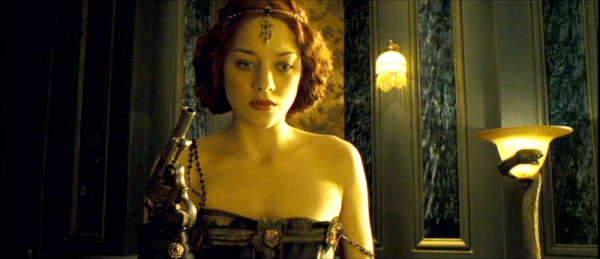
Mathilde plays her lonely tuba by the lighthouse and waits for news on Manech. When none arrives, she becomes bound and determined, polio leg and all, that she will conduct her own relentless investigation to find him. At the same time, Corsican prostitute Valentina Lombardi is conducting her own investigation into the death of her pimp come boyfriend, Angel Bassignano. Manech and Angel were part of the same company. They were condemned to death for abandoning their posts during the war. When Angel is killed, Tina tracks down the commanders responsible and murders them one by one like an angel of death.

While the story teeters onto Tina from time to time, Mathilde and her manic search gets most of the airplay, and with good reason. Engagement is a sentimental love story and a mystery in one as Mathilde conducts interviews and tries to connect the dots on Manech's disappearance.

Director Jeunet is known for quirky films, and his glossy direction made him a surprising choice to direct Alien: Resurrection. Be that as it may, there was a point when Jeunet and Audrey Tautou worked together on a string of movies. While Tautou played different characters in said movies, they played out similarly with the quirks and happenstances created by Jeunet. A Very Long Engagement is an endearing love story that takes you with Mathilde on her incredulous journey. And because she never seems to become dissuaded in her search, the audience doesn't either.


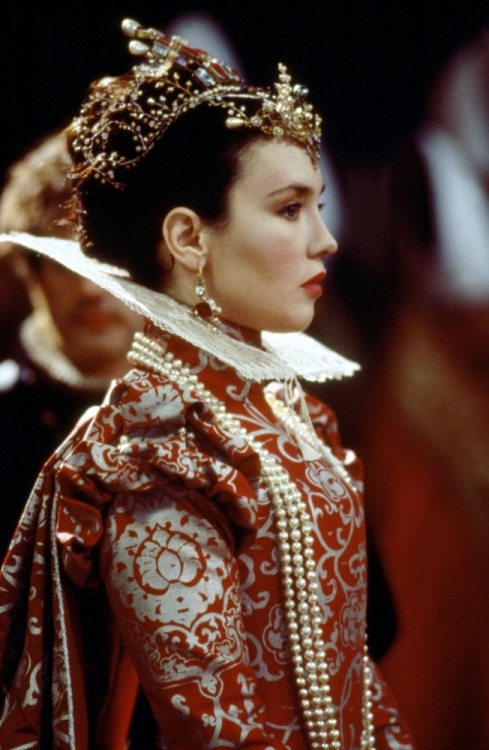
9. Queen Margot (1994)
Queen Margot, or La Reine Margot, is another French film, one that tackles the historical melee of the Massacre of St. Bartholomew. This incident was incited when the arranged marriage between Catholic Marguerite de Valois and Protestant Henri de Navarre unfolds in Paris. Both factions of worshipers are brought together for the event, which left thousands of ambushed Protestants dead in the streets. One of the catalysts for the event was none other than the infamous Catherine de Medici, the mother of Margot. The movie was based a novel by The Three Musketeers and The Count of Monte Cristo mastermind, Alexandre Dumas.

I'll be honest. While it's a great story in the midst of such religious and civil strife, I like this movie just as much for the exquisite costumes. I'm a sucker for a good costume drama, which is just of the reasons why I've really been into Ovation's Versailles. Queen Margot is extremely dramatic, with excellent music and even better acting. The French certainly know to do drama, with an all-star cast of French-speaking delight (Danile Auteuil, Vincent Perez, Pascal Greggory, Jean-Hughes Anglade, Asia Argento).


Trapped in a loveless marriage to a man she's not even attracted to, young Margot is led by her ladies-in-waiting to the streets of Paris, under disguise to avoid detection. It's there that she comes across random hottie, La Mole (Vincent Perez), with whom she eventually falls for. Well, this is the night before the infamous Massacre, and love is hard to hold onto when your family plots and back-stabs and the people of Paris riot in the streets.

Queen Margot is an unforgettable movie in the French canon, that's for sure. Sometimes, if I'm watching a movie that takes place in France, I would certainly rather the actors be speaking French. Call me a movie snob, call me a perfectionist, but if a movie takes place in a certain country where the people speak a certain way, then make it happen the way it actually would given the circumstance. Just saying.


8. Musa the Warrior (2001)
In the early 2000s, East Asian cinema went through a relatively short period of historical films. The best known of these might be considered Crouching Tiger, Hidden Dragon, Hero, and House of Flying Daggers. A little-known gem called the Musa the Warrior is the best in my opinion. It doesn't feature a big name, except for Chinese actress Zhang Ziyi, who frequented these sorts of movies while they were popular.

Musa the Warrior is about a troupe of Korean diplomats who journey to China to seek peace relations in the 14th century. Chinese officials then wrongly accuse the delegates of trying to assassinate the emperor, banishing them to the Gobi Desert. Most of the Korean diplomats, including elders, slaves, and military men, survive the first wave of heat, but soon come across a Yuan Mongol horde who kidnapped the Chinese princess. Eager to return to the good graces of the Chinese, the Koreans attack the Mongols. But when the Mongol general sees how slave-turned warrior Yeo-sol fights, he is eager to try and recruit him into the Yuan army.


Musa the Warrior portrays a complicated love triangle, played out by Yeo-sol, Princess Bu-Yong, and Korean general Choi Jung. Choi tries to win her heart with his raging bravado, while Yeo-sol walks softly but carries a big spear - one that he really knows how to use. The climactic battle in the end is epic, with nearly every Korean diplomat getting in on the action - some of them, to save the lives of an elderly group loyal to the princess and the Ming Dynasty.


7. Apocalypto (2006)
I know what they say about Mel Gibson these days, but wow, can he direct some great movies. His first was Braveheart. Then came The Passion of the Christ, and then we got Apocalypto. One thing I really like about Gibson's style of direction is his accuracy when it comes to the linguistics. I think it's probably his fault that I've been permanently ruined on linguistically-accurate, historical movies. Passion was spoken completely in Aramaic, Hebrew, and Latin, while Apocalypto is in the native language spoken by the Mayans in pre-colonial Central America. I know that most Americans hate having to read subtitles, but if they are in favor of a more authentic movie experience, count me in. I digress.

Apocalypto follows the story a young family man named Jaguar Paw. He's devoted to his wife and kids, his father, and his fellow tribesmen as they hunt the grounds hunted by their fathers, and their fathers' fathers. The problem comes in when a neighboring tribe raids their village, slaughters half its people, and kills Jaguar Paw's father. The tribe's crops are suffering, and as a direct result, they've sent out a raiding party to find human sacrifices to appease their gods.

Jaguar Paw seems destined for greater things when he is fortuitously spared from a ghastly decapitation at the top of a pyramid. This is when he escapes, and Jaguar Paw and the raiding party play cat and mouse all the way back to where they started from. Meanwhile, Jaguar Paw's family is running out of time, and only he can save them before they drown. Of course, this is only after he upends each member of the enemy warriors in one epic scrap of a third act.


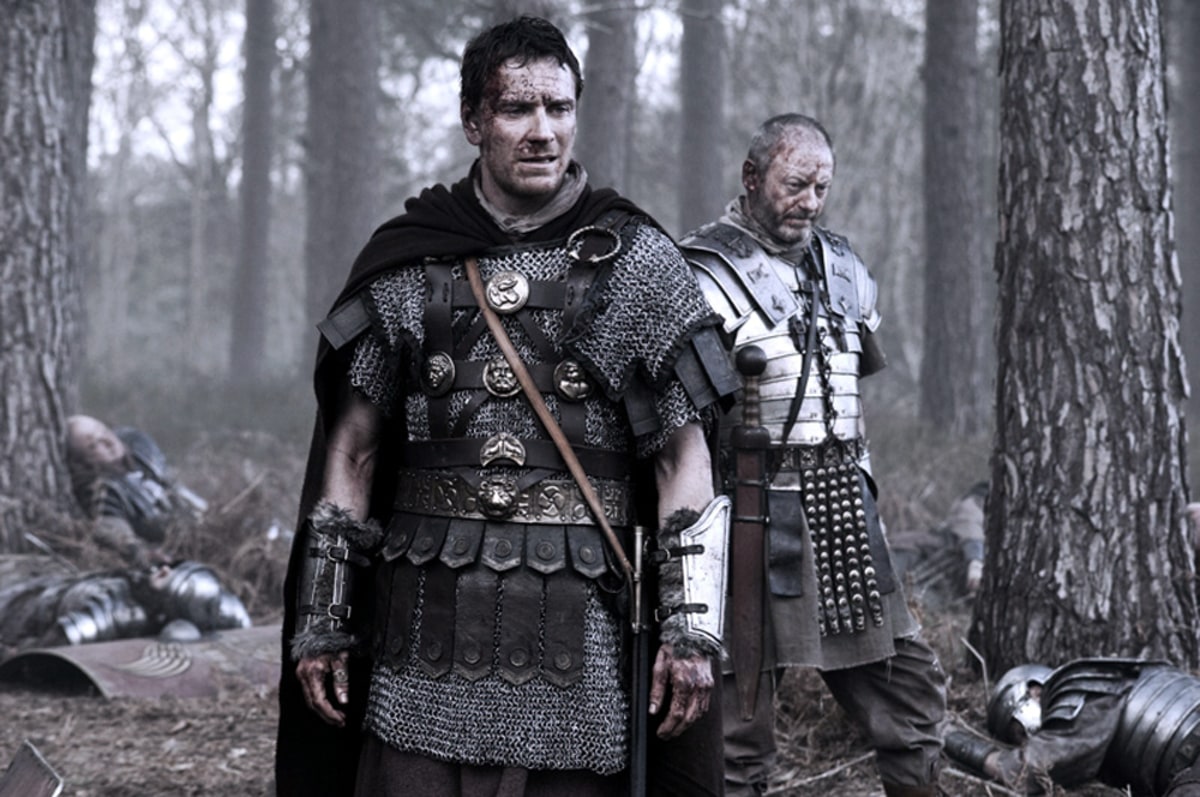
6. Centurion (2010)
I'm not sure how I came across Centurion, though I was given the DVD for a Christmas present back in 2010. It pretty quickly headed to Netflix, which made the DVD obsolete. I digress. Centurion is based on the true disappearance of Rome's famed Ninth Legion, who vanished behind enemy lines while fighting a ferocious Celtic tribe, the Picts. This movie saw Michael Fassbender's star on the rise. This was the second film I had seen him in, the first being 300. The movie also stars Game of Thrones alum, Liam Cunningham, Walking Dead and Britannia alum David Morissey, and Ukrainian model/actress, Olga Kurylenko.


When Centurion Quintus Dias' garrison on the Scottish border is attacked, he is captured by the Picts. He escapes, and is quickly swallowed up by the Ninth Legion, led by Mark Antony-like General Titus Flavius Virilus. Dias, Virilus, and his men are then led into the dense forest by double agent Pict tracker, Etain. She is mute, thanks to the Romans cutting out her tongue when she was young. Her other senses are heightened, making her an excellent hunter. She leads the Ninth right into an ambush, and an intense battle scene amid the forest ensues.

A ragtag group of legionnaires survive the attack, and are bound and determined to rescue the captured Virilus before they head back to the Roman outpost. Instead of saving the general, one soldier accidentally murders the Pict chief's young son, which officially calls the dogs onto the small group. They are trapped behind enemy lines with Etain heading the party - just after she makes quick work of General Virilus inside the Pict village.

The Pict killers converge on the Roman contingent as they leap over waterfalls, hike through snowy mountains, and try to outrun a pack of wolves. Fassbender, Dominic West (Virilus), and Kurylenko as Etain give memorable performances, and director Neil Marshall does an excellent job of blurring the line between good guy and bad guy. Though we like Dias, the Romans were unjust in their occupation of the land, and we just as much see ourselves rooting for Etain and the Picts. 


5. The 13th Warrior (1999)
I remember seeing this one when it was in theaters, then buying it as soon as it was on DVD. The story seems to unfold a little too quickly, and it based on the book Eaters of the Dead by Michael Crichton. While some of the scenes are rushed, the dialogue and the character transformations more than make up for it, giving us an excellent, and the only look, at the Swedish Viking exploits in Eurasia.


Ahmed Ibn Fadlan is an Arab poet turned emissary, exiled from Baghdad for bedding the wife of an aristocrat. We have to gather as much, or read it from the book, sadly. The movie skims the incident, starting off the first real scene of the film with Fadlan's travels and initial meeting with the Northmen on the Volga River in Middle Age Russia. These Northmen are the Swedish Vikings, the Varagians, or the Rus, who traded up and down the River and eventually settled in what is now Kiev, Ukraine. This is Hollywood's sole depiction of the Rus, and despite their occupation as traders, they are excellent warriors. They are led by soft-spoken but well-respected Buliwyf (pronounced Bull-vy).

An ancient, flesh-eating evil called the Wendol are plaguing the Northmen's homeland, and they are recalled to deal with the threat. When the Angel of Death, or Viking Seer (like an oracle), announces that thirteen men must return, one Viking after another volunteers for the job. The crowd then falls silent and all eyes rest on Fadlan. According to the prophecy, the thirteenth warrior cannot be a Northman, and by default, Fadlan is their guy.

This movie gives us an interesting view of how a poet and a diplomat can eventually become a battle-hardened fighter. Fadlan can barely swing the sword the Vikings give him, so he grinds it down into a shorter, curvier, Middle Eastern blade, which he comes to use well. He'll certainly need to when the Wendol attack with the mist. They wear bear headdresses, paint their bodies head to toe in a blackish soot, and carry the heads of their victims away with them after they attack. They are led by the Mother of the Wendol, who dwells in a cave and points her feral attack with a giant snake fang fashioned to her hand.

The 13th Warrior is great because of Fadlan's transformation from a wordsmith to a warrior, guided indirectly by the Northmen's bravado. The Arab proves his worth on more than one occasion, earning him the respect of his Scandinavian brethren. This movie also has an indirect look at religious tolerance, Fadlan and his closest Viking friend, Herger, promising to pray to their respective gods for one another. Before the end battle, Fadlan even recites the Viking prayer along with the Northmen, each one reciting a line as the enemy forces line up against them.


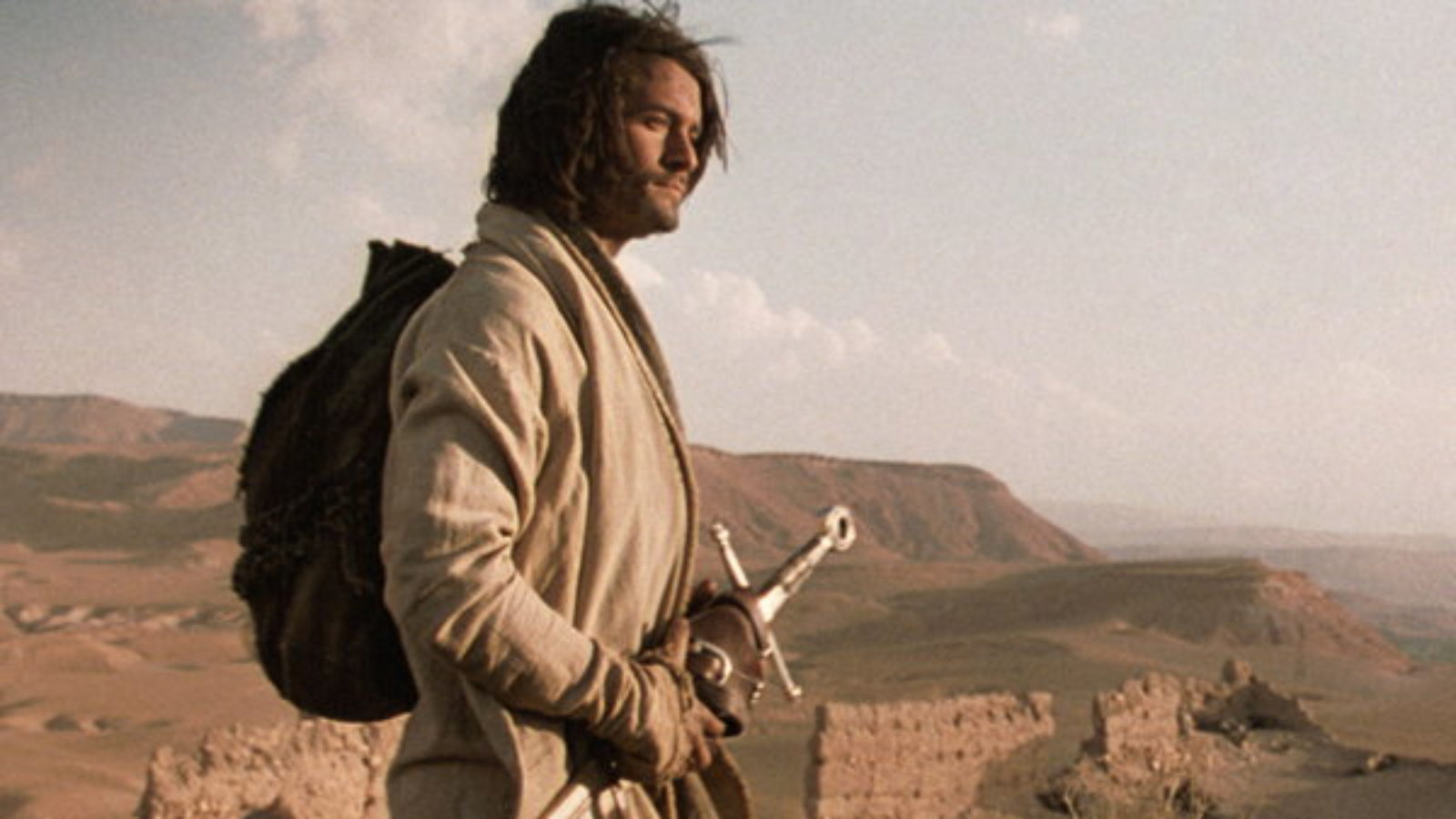
4. Kingdom of Heaven (2005)
Kingdom of Heaven captures the era of the Crusades, the fruitless pursuit of trying to prove which version of God did it better. I saw this movie back in theaters, and leaving that night, I replayed what I'd just seen in my mind over and over again. I honestly didn't know if I liked it. It wasn't until the second time that I better saw it's complications and messages of religious tolerance in a time when not much of it was given. It was also one of the first historicals I'd seen to expose the hypocrisy of the Church, and how easily the lines of eternal life and damnation can be divided.

The movie stars Orlando Bloom (Pirates of Caribbean), Eva Green (Penny Dreadful), and Liam Neeson as Baron Godfrey de Ibelin, a Crusader returned to France to confront the son (Bloom) he left behind. Bloom plays Balien de Ibelin, an honest blacksmith whose wife has just committed suicide in the wake of their child's death. The hits come quickly, as Balien is approached by a member of the local French clergy, who informs him that since she took her own life, the wife is now condemned to eternal hell and cannot be buried on the Church grounds. This ends badly for him, as Balien drowns the man in a sea of flames. It's only when he is hunted down that Balien joins his father and a brood of Crusaders towards the Holy Land. Godfrey then passes the torch to Balien, making him Baron de Ibelin.

This is when Balien meets Guy de Lusignan and Reynald de Chatillon, who are powerful military commanders pushing for constant war against against the Muslims, led by historical figure, Saladin. Balien also meets the French Queen of Jerusalem, Sybilla, who he immediately develops a thing for. Guy and Reynald plot to kill Balien, Balien gets mistaken for one of them essentially, and it fall to the young Baron of Ibelin to defend the city of Jerusalem from the encroaching forces of Islam.

There are several themes at play here, the primary being religious tolerance. Saladin is tough but fair, which makes the antagonists of the movie Guy and Reynald, not the enemy Muslim army. Essentially, anyone caught up in their own prejudices can certainly push it too far, turning you into a bigot led only by your the fear of what you don't understand. Balien only real calling is to protect the inhabitants of Jerusalem, and Saladin has no choice but to attack when Guy and Reynald murder his sister. This movie also shows the different interpretations of the Christian God, some followers choose eradication of all who are unbelievers, and some who administer kindness and understanding to those choose to worship under the guise of a alternate religion.


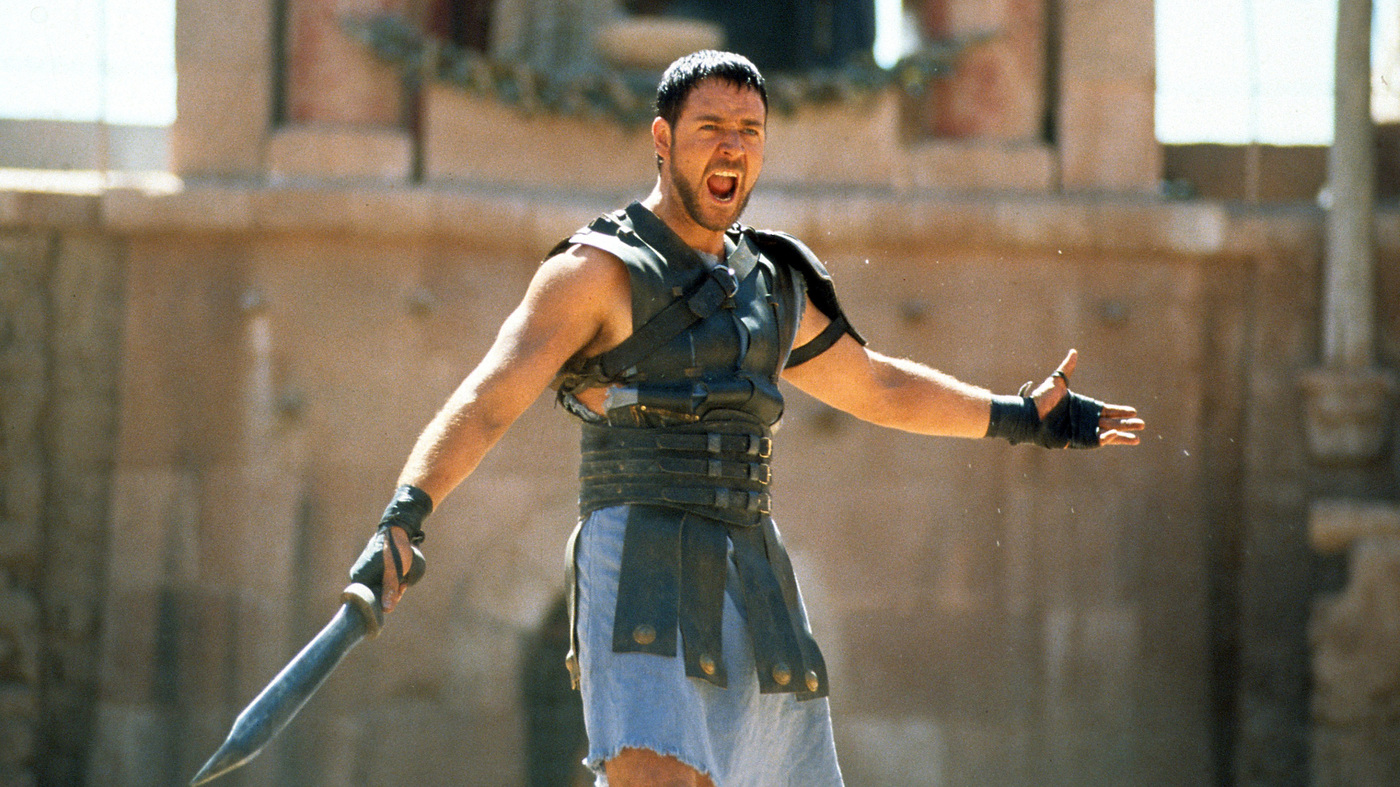
3. Gladiator (2000)
This scene is one of my favorites in movie history in probably the best alternate history movie I've ever seen. I don't think the writers meant for it to be that way, and I don't want to sound like a history snob, but Marcus Aurelius wasn't killed by his son, Commodus, and Commodus never died in the Colesseum. Though this movie would have one believe that. Though Gladiator doesn't look create an alternate history, or not directly anyway, it's still a great movie.
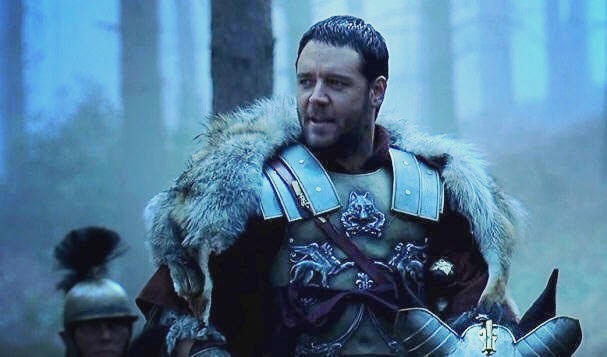
Russell Crowe stars Maximus Decimus Meridius. The writers got this all wrong, but I can overlook it for a better overall picture. In Roman naming conventions, he would have been Decimus Meridius, and the nomen, or nickname, Maximus, would have been added for bravery or leadership on the field of battle: Decimus Meridius Maximus. This is small beans when compared to the movie itself, Maximus going from general to slave to gladiator in the name of vengeance. Gladiator definitely mixes in elements of Spartacus, a Thracian slave who led a rebellion against Rome.
Gladiator gives us a glimpse at one of my favorite historical figures, Marcus Aurelius, played expertly by screen legend Richard Harris. They called Aurelius the philosopher-king, though king was a dirty word in the mind of Romans. He was essentially a Roman emperor who daily practiced stoicism. He was incredibly humble, thankful, kind, modest, and stoic. I own and revere his journals, The Meditations of Marcus Aurelius. In the movie, he is always questioning his position in Rome, his duties to Rome, and how he might be viewed in the grander scale of history. Maximus, who is more like a son to him than his own, carries on that sort of honor toward those who share his path. He is rendered an equal to the slaves he fights alongside, never once telling them that he was once a decorated Roman general.

Gladiator portrays a direct to defiance to Rome, which is essentially represented by the evil, opportunistic Commodus, played expertly by Joaquin Phoenix. He certainly has his vulnerabilities, but can be contained and silenced at times by his sister, the elegant Lucilla (Danish actress Connie Nielsen). The scenery and the story are both epic, as is the score, orchestrated by Hans Zimmer and the elegant chants of Dead Can Dance's Lisa Gerrard.


2. 300 (2007)
300 can't be considered for its historical accuracy. Yes, there were 300 elite Spartan guards who accompanied their king, Leonidas, to fend off the Persian invasion. No, they didn't dress the way they did in the movie. No, giant war rhinoceros' did not exist. No, goats cannot play flutes. 300 took a lot of liberties, and people should know that it's not a movie based on history - its a movie based on a graphic novel that was based on history.
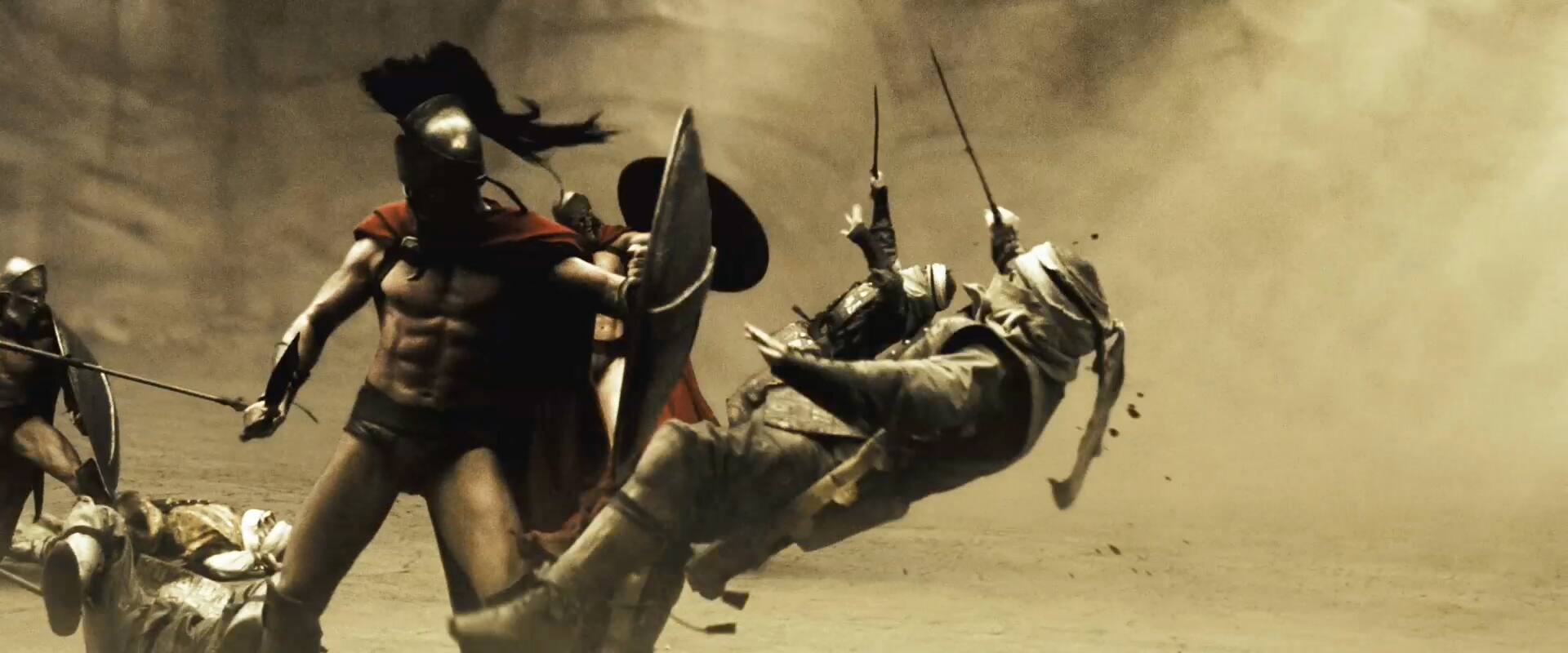
Frank Miller, who created the Sin City series, created the 300 graphic novel. Director Zack Snyder (Dawn of the Dead, Sucker Punch, The Watchmen, Man of Steel) stepped to direct the film, basing it almost completely on the graphic novel. Snyder, and Miller for that matter, took lots of liberties with the most famous last stand in history, which I am okay with. The story is told by a Spartan warrior to a group of Spartan soldiers. Back in ancient Greece, storytellers used to slight embellish things a bit, incorporating how larger-than-enemies were seven-feet tall, enemy soldiers were beast-men, and exaggerating the size of the enemy war animals, all to the make the heroes appear as valiant as possible.

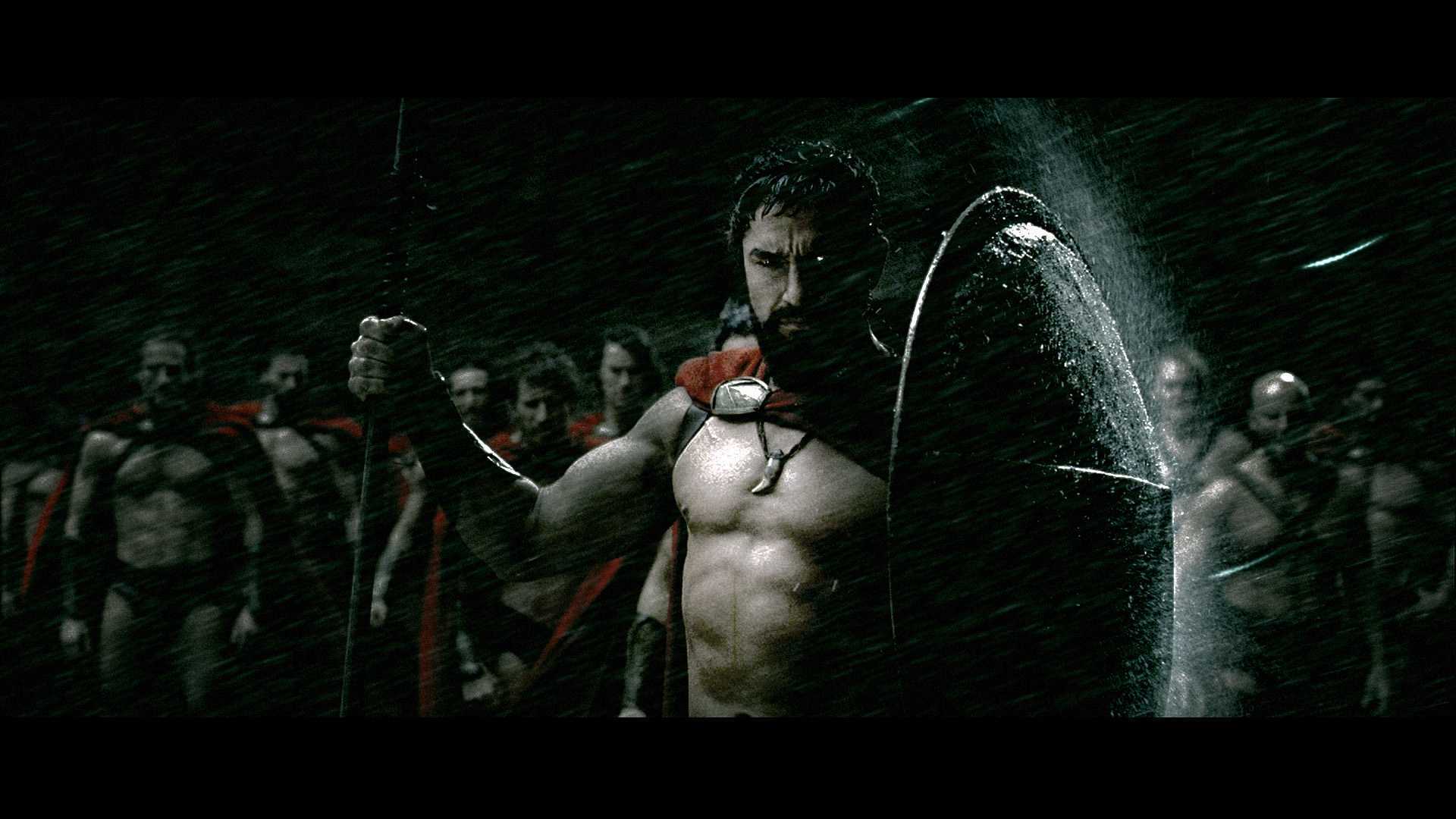
King Xerxes of Persia sends a royal emissary to basically order the subservience of the Spartans. This doesn't go over well with Leonidas (Gerard Butler), nor his wife Gorgo (Lena Heady), as can be seen in the picture to the left. Leonidas composes himself, then the Spartans toss the unarmed emissaries into a massive, bottomless pit. Thus begins the war between Sparta and the Persian war machine.
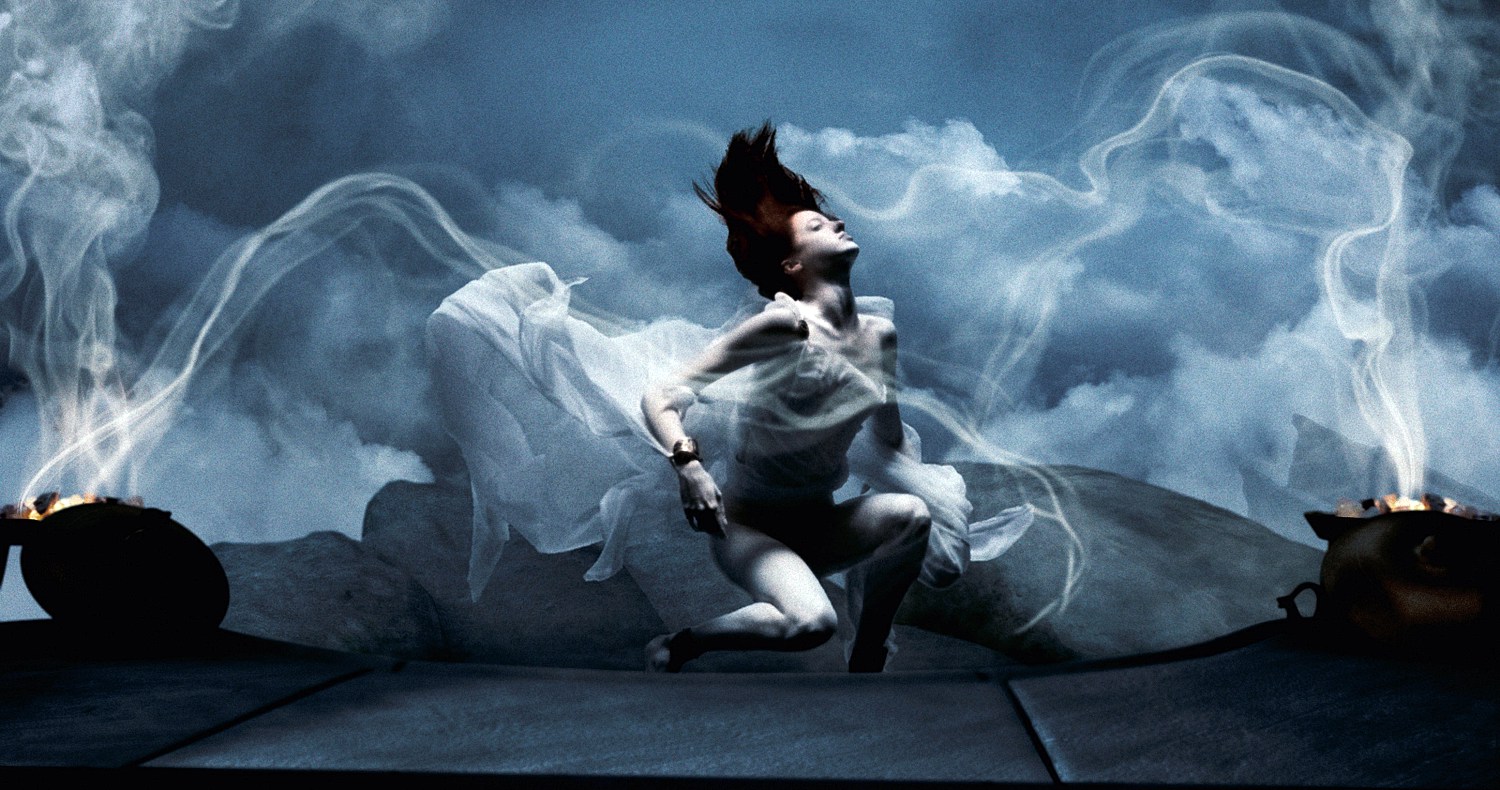
Leonidas consults the Oracle on whether or not to go to war, but doesn't get the answer he's looking for. The Ephors, a sort of ancient Spartan troupe of wise men, advise against it, and little does Leonidas know, they, along with the Spartan oligarchy (government), are being bribed by Xerxes to allow the Persian onto Greek soil. Frank Miller and Zack Snyder take some very cool liberties with the Oracle, morphing her into a young, ether-swimming holy woman, tormented by the tether of the old, nasty, boil-ridden Ephors.

Under of the guise of just taking out his elite bodyguard for a stroll, Leonidas and his 300 Spartans travel to meet the Persians at the Hot Gates, a narrow mountain pass where they can defend the borders and make the Persian numbers diminished. One of the Spartan elite is Stelios, played by Michael Fassbender, who appears on this list for a second time. This was my first exposure to Fassbender, and while Stelios is a minor character in the story, he surely takes full advantage of his subsidiary role, leaving his mark on the tyrannic Persian soldiers.

300 is a visually stunning movie. It plays out very much like a comic book, the landscapes and the horizons fantastical but grounded like an alternate universe version of the ancient Peloponnese (the landmass that Sparta was situated on). We get to see how Leonidas grew up to be so tough, having killed a massive wolf in the dead of winter when he was a mere teen. While the Spartans parade around in scant clothing, they hardly lack in their grit and overall toughness.


1. Brotherhood of the Wolf (2001)
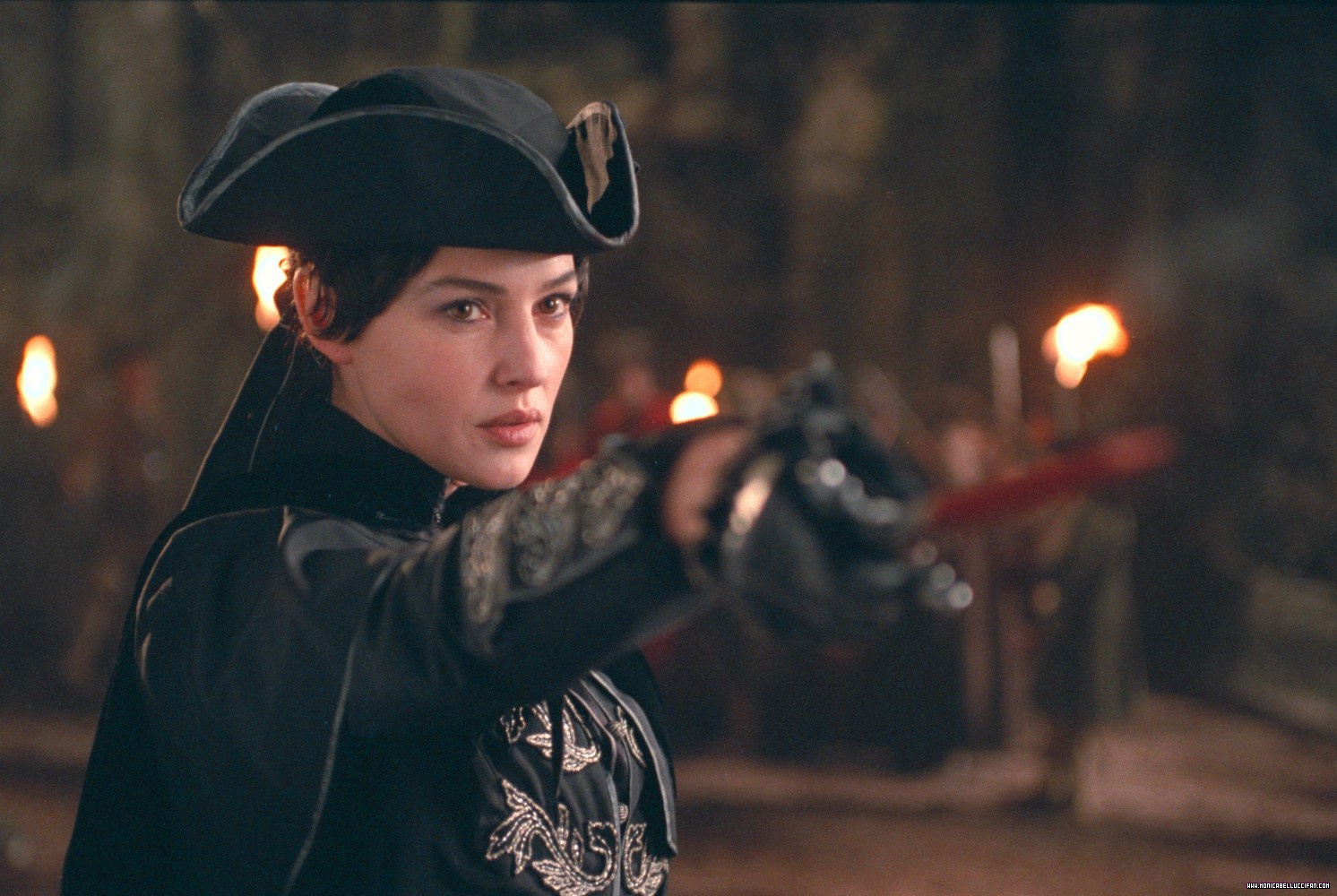
Brotherhood of the Wolf, or Le Pacte Des Loups, is an unassuming film that blossoms into one of the wildest and most rewarding cinematic experiences one will ever have. Spoken completely in French, much like A Very Long Engagement and Queen Margot, Brotherhood gives us a costume drama, a horror film, and a martial arts masterpiece all in one sitting. I know, it sounds silly, but I guarantee that it is far from it. French director Christophe Gans (Silent Hill) went to great links to bend the genres on this one, refusing for this film to fit into any particular category. I had never seen another movie like it when it released to American audiences in 2001, and I have never seen another since.


Based on the actual events that plagued the French province of Gevaudan in 1764, Brotherhood opens with the onset of the French Revolution, told by humble aristocrat, Thomas D'Apcher. He recalls how his friends, naturalist and infamous libertine, Gregoire de Fronsac, and his companion, the stoic Iroquois, Mani, arrive in Gevaudan to assist the local aristocrats with their serial slaying problem. That problem comes in the form of a string of beastly killings on women and children in the area. No one can seem to understand what is laying waste to the local peasants, but the Gevaudan wolf population certainly gets the blame. Fronsac and Mani are a little hesitant to believe it. From the findings of their investigations, the attacks are more brutal, and suggest a larger animal than what the aristocratic propaganda puts forth.


Fronsac has caught the eye of Marianne de Morangias, a pure beauty whose jealous brother, Jean-Francois (Vincent Cassel), does all he can to shield her away. Marianne also dismisses Fronsac's advances, as she knows of his reputation as a libertine. This leads Fronsac, Mani, and Thomas D'Apcher to a local brothel, where Fronsac meets French-speaking Florentine Italian Sylvia (Monica Bellucci). She seems to know more than she should, speaking short, cryptic lines on desire and a sort of non-partisan all-knowledge.

As the plot thickens, Fronsac shows us his true colors, as he for the first time displays his tendencies for fighting. He eventually takes on the Mani role, unleashing a plethora of skills with swords, guns, and a bow. He takes on a slew of French gypsies on the way to uncovering the truth about the Beast of Gevaudan - an unbelievable one that's stranger than fiction. The action is fierce, well-crafted, and even cooler when placed inside of a melodramatic costume drama. The costumes are elaborate, the dialogue is coy and witty and fast-paced, and the music is earthy and gritty. Brotherhood of the Wolf is in a genre of its own, which is why it probably tops this list. I had always hoped that based on its success, Canal Studios and Christophe Gans would once again team up for another gargantuan effort.

Sunday, February 18, 2018

A Case for Cleo

Coming off of the larger-than-life mythos of the Green Fairy, I thought I would tackle another femme fatale gargantuan, one that left more of a direct mark on world events. There are a few things that Cleopatra Ptolemy and the Fairy have in common; their powers of manipulation and seduction, and their influence on artists and writers throughout the centuries. Cleopatra's name is nearly synonymous with beauty and harlotry, though these words couldn't be farther from the truth. As she makes for an inimitable muse, she certainly must be done so for all the right reasons, not the ones borrowed by Rome's, and therefore the entire world's, skewed view of her.

Cleopatra Prolemy VII Philopater was born in 69 BCE, daughter of the Egyptian pharaoh Ptolemy Auletes. Cleopatra was a descendant of Ptolemy I Soter of Macedonia, who had been a general and distant cousin of Alexander the Great. Therefore, Cleopatra touted her heralded ancestry to the young conqueror, as any female ruling in a man's world might if she wanted to be taken seriously. When Ptolemy I took over Alexandria, a city Alexander had named after himself before his death, he ruled the Egyptian metropolis with skill and ingenuity. Ptolemy of course was Macedonian Greek, and in order to be taken seriously himself and to assimilate with the lower classes of Egyptians, he created a deity in Serapis, who was a melding of Zeus and Egyptian god, Apis. Fast forward nearly 300 years and Cleopatra is the only Ptolemy to speak fluent ancient Egyptian. She could also speak 6 other languages, including her native Macedonia Greek, Latin, and ancient Syrian. Yes, Cleopatra, while she might have claimed a small portion of Egyptian blood, was in fact Greek.


Cleopatra was not a beautiful woman by the classical standards. Exaggerations of her looks probably came around the time of the first depictions of her, namely in Shakespeare's Antony and Cleopatra. In The Divine Comedy, Dante mentions nothing of her looks as he crosses paths with her and Helen of Troy in Hell, only that he feels sympathy for her, as she was ultimately doomed by love. While she may have developed some love for Antony at some point, she was certainly not directed by romance. She formed an alliance with Julius Caesar through her powers of seduction, and tried the same thing with Antony, her most primary of reasons being to keep her beloved Alexandria from being swallowed up by the Roman Empire. Yes, Cleopatra claimed her powers of seduction, but she did so without an overwhelming sense of beauty. When she spoke, it was said that her voice was eloquent, that she was highly-educated in linguistics, mathematics, astronomy, finance, and international relations. She was actually a very strong leader who appeased the people with her foreign policy, her constant supply of grain, and urgency toward bolstering her navy (for reasons of trade and war alike).

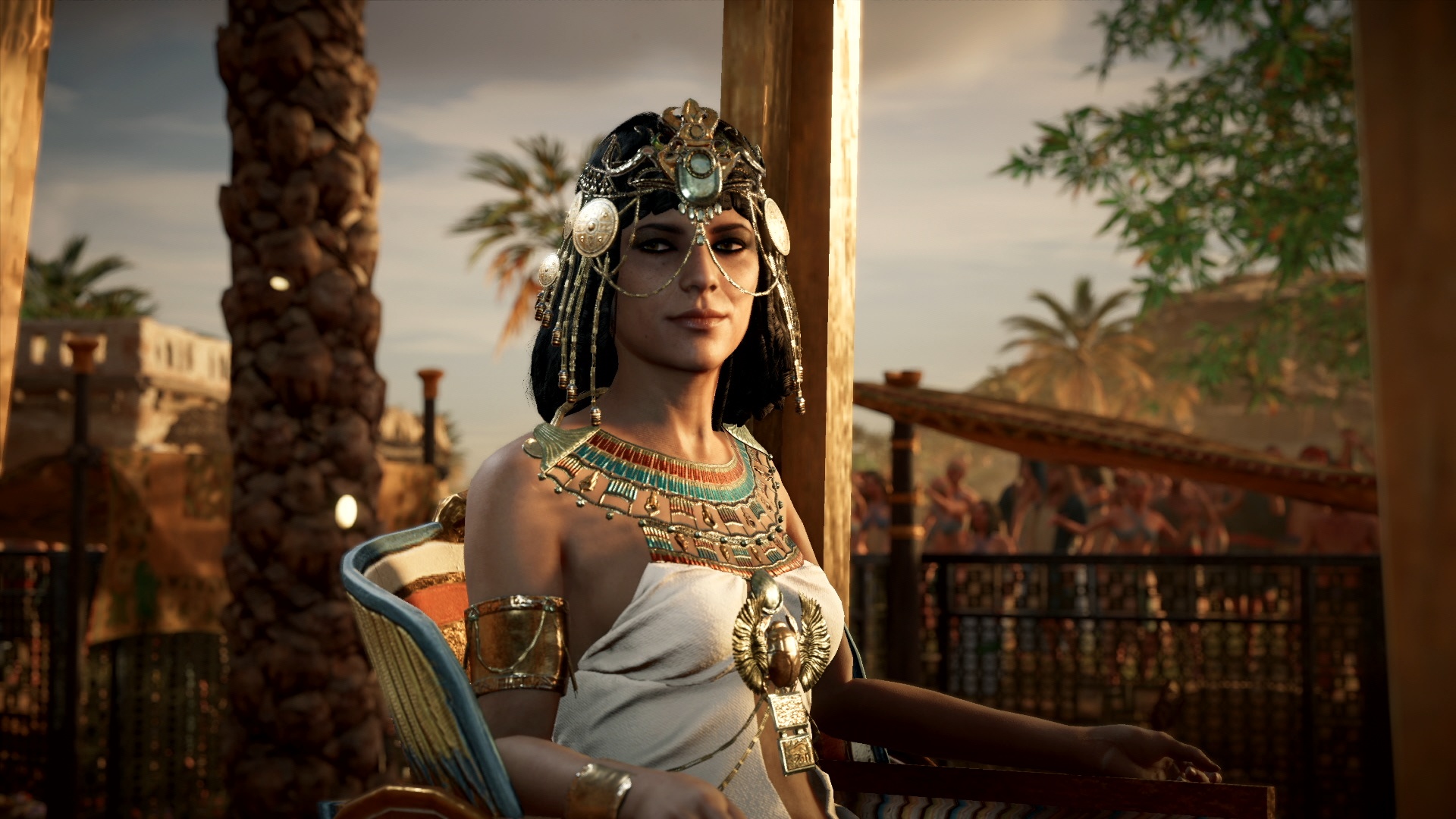
However history sees her, there is certainly a mythos that popular culture has tried to capture. Cleopatra has been referenced throughout the ages through poetry and art, and in the modern age through movies, TV shows, and TV ads. She's nearly synonymous with ancient Egypt, even though was more Greek than anything else. Comedian Sandra Bernhard and Kim Kardashian have posed as Cleopatra in magazine shoots. Cleopatra has been brought to life Elizabeth Taylor and by HBO's short-lived series Rome. She is the constant subject of the art world, both mainstream and indie, and is a subsidiary character in the newest installation of the Assassin's Creed saga. Two of the most recent notable books written about her life have respectively inspired an upcoming biopic, and inspired a novel I wrote years ago in which Cleopatra is seen as a shrewd businesswoman.

"When the smoke cleared, I found that Cleopatra was actually more pleasing to the eye than the stories of her suggested. Her coinage painted an unflattering picture of her, all hooked nose and manly features. Now standing before her, she could have hardly been any more feminine.

Her face was both glossy and honey-hued, her hands and forearms covered in the henna ink designs worn by Mardian. Her eyes were a chestnut shade of brown, heavily-decorated with hues of charcoal black and metallic blue. Her lips were full and brightly-colored a shade of rosy red, truly charming and complimentary of her ever so slight overbite. Her nose was only slightly curved, proving its hooked qualities more anecdote than actuality.

Her sleeveless Doric dress was multi-layered and low cut, revealing her broad shoulders, her well-defined clavicle, and modest cleavage. Her face was slightly elongated, though her hairstyle paid it heavy compliment, neatly braided into traditional Ptolemaic melon rind rows. She had fashioned a royal diadem upon her brow, the image of an Egyptian cobra rearing its head, exposing its ominous hood at the center. She wore twisting golden bands upon her upper arms, meticulously speckled with pharaonic images and multi-colored jewels. Her necklace was of the same quality, broad and highly-detailed, pleasantly loud upon the eyes.

Her initial appearance to us was highly accented by the sweet incense burning brightly, perhaps to coerce the Roman contingent into terms that might suit her favor more than ours. Her son by Caesar sat perched at her side, bearing every bit the facial features attributed to his deified father.
"

Based on Cleopatra's ancient descriptions and her official coinage, she was depicted as hook-nosed and manly. Historians have debunked this idea, being that Cleopatra herself would have signed off personally on the coins bearing her image. There is no way she would have depicted herself as such without a very good reason. It makes sense that she would have wanted to associate herself with Rome, mimicking the hook-nosed depictions of its greatest generals. It also makes sense that Cleopatra might have asked to appear manly because of her gender in such a male-dominated world. Scientists have recreated the only bust of Cleopatra that has ever been found, giving us the image to the right. She is not overtly beautiful but more in an unconventional sense, especially given her charisma and high level of intelligence. Her nose is very Greek, though she is far from manly. The surviving depictions of her were Roman, who just happened to turn out to be her greatest enemy. As you know, history is written through the eyes of the victors.


Cleopatra was a master strategist. Everything she did was meticulous and deliberate, from her coinage to her political and romantic alliances a with Caesar and Antony. When she died, Alexandria and Egypt as a whole were annexed by Caesar Augustus and his Roman Empire. That death is shrowded in mystery, as it's said that instead of allowing herself to be paraded a prisoner through the streets of Rome, she allowed an Egyptian cobra to bite her on the breast. A more recent chain of thought has her being murdered by the Romans, who then cooked up a fantastical story about her demise. In any case, the bodies of she and Antony, who were buried together, have never been found.

Suffice it say, Cleopatra still manages to capture the imagination. Sure, there were other powerful, intelligent, female rulers throughout the history of the world, many with highly-interesting stories to tell. Though, Cleopatra Ptolemy was a descendant of Alexander the Great who made Egyptian culture pop with a Macedonian Greek flare. She captured the heart of two legendary Roman military men in Julius Caesar and Marcus Antonius. Because of her defeat to Octavian, who changed his name to Caesar Augustus in the direct wake, the Pax Romana, or great Roman Peace, was born. Cleopatra bridged one culture to another, and eras of the ancient world to one another the same.

Wednesday, February 14, 2018

The Green Demon

Absinthe. Is there any other drink that stirs the imagination more? It has long been a controversial topic in its long, checkered past as a liqueur, drawing the imagination of critics and artisans alike, both for very different reasons. Were Hemingway, Picasso, Van Gogh, and Wilde insane, or were they spurred on by the mystic charms of the Fairy's fluttering wings, her opaque smile, and her sinister smirk? They say that absinthe, or the Green Fairy, is deadly and delightful, causing massive waves of hysteria and spurring forth the art of some of the greatest masters the world has every known. Writers dabbled in her mystic arts, and for a couple of years, I was certainly one of them.

Absinthe certainly has a checkered past not only in the United States, but in the world. While she was created in Switzerland, she's most often attributed to France, and to New Orleans, which dedicates an entire bar to it. Absinthe is made of a few different herbal ingredients, most specifically wormwood, anise, and sweet fennel, which collectively give it its black licorice taste. While emerald green, absinthe is much better consumed in the traditional sense - served in a glass, diluted with water, and guzzled with a melted sugar cube. Despite being served in this fashion, in 1905, Frenchman Jean Lanfrey served himself several glasses of wine, coffee laced with brandy, and two ounces of absinthe before before murdering his family. It was because of this, and another murder that included absinthe, a hatchet, and pistol, that the drink became banned in Europe and the United States. Temperance leagues blamed the hallucinatory beverage because of its connotations, and it wasn't made legal again until as late as 2004.

Absinthe, and the Green Fairy, eventually became a cultural icon, most likely because of its more taboo reputation. Walt Whitman, Earnest Hemingway, Pablo Picasso, and Oscar Wilde all claimed that she made their artist expression all the more vivid, and that she inspired them heavily. Artists have referenced her in paintings, writers have professed their love for her, this fiery, metaphorical Fairy that charms you one second and bliss kisses you to death. I have made several references to absinthe in my days of dabbling with the drink. It's made its way into a few of my novels, short stories, and poems. In my latest novel, Romanticide, my character Kendall has had too much of the stuff, and his absinthe hallucinations have transformed his friend and lover hopeful, Nadia, into a seething seductress, the Green Fairy incarnate.

"While she cools her heels, my green-screened imagination runs wild. I imagine Nadia, finally sick of the complaints and the threats and the games, peering down over the edge of the bed at me. I imagine her giving me a sultry smile, uttering something poetically suggestive, blowing me a kiss maybe…no, puckering her lips or something, cocking an eyebrow as her lids fall half-mast. Yeah. She apologizes for the attitude, blaming it on the strong sexual tension that’s been building up between us. I unzip the sleeping bag, flinging open the top flap, a silent welcome for all her pent up frustration. She’s dressed in a frilly lime green blouse, a cucumber-toned skirt and a matching pair of lacey tights. Her hair is tussled and teased and intense like neon electric. She slowly rolls onto the edge of the bed above me. She moans, purrs, and it resounds across the apartment like the faint fluttering of delicate wings. It funnels its way into my ears like a pleasant trill, idyllic beauty encapsulated, the perfect sound, Cleopatra Ptolemy reciting Tennyson. Nadia’s glossy face gleams in the enveloping darkness, the headlights bearing in from outside the window illuminating a strip across her eyes like a sultry villainess in a Tod Browning picture. I lay enraptured, incapacitated. Her pearly, perfectly-aligned teeth are simply a ruse to conceal the fangs hiding behind them and I squeal and flail and feel the entrancing embrace of her iron jawbone ripping at my neck, kissing it with delicate dread, tongue dripping with potent decay."

In my very first novel, written back in 2004, I made the Green Fairy an actual character, one who rears her head when protagonist Cameron has had too much of the opalescent delight.

"Her presence delivers her true intentions. She inspires hints of Lavinia, only to jealously tuck her away again into the gloom that entraps her. Elegantly, immorally, she defies gravity, hovering over to my bedside only to make landfall again. Thinking it a possible new incarnation of Lavinia, I open my eyes. I watch her wings cease their buzzing hymn. I watch them as they mesh themselves to her back again like a second layer of flesh. Her emerald-hued skin, her thighs emit streams of absinthe. Her skin is like a taut, plastic mold. It is like a spandex body suit, a Gorgon costume she has known ever since the dawn of her existence. She utters my name. She utters all her pet names for me in her intangible accent, Eastern European meets Caribbean. She’s naked, though her intimate areas are concealed by a murky green ambiguity. Her perfect teeth are unveiled from underneath her ample lips. The spreading smirk creeping into the corners of her wide mouth is one that I can only describe as sinister. Her fluttering eyelashes are like the legs of an insect, long and nimble and spiny. Her brows are pointy, devilish. Her bulging yellow eyes resemble something between a feline and a demon, light and bright and frightening. Her green hair is significant in length, dripping wet corkscrew curls like a patch of lush, twisting vines following a fresh rain. Her visits are brief, but epic. Her visits are comparable to the selling of my soul, to sanctioning a pact with the devil himself. 

La Fée.

I feel her scalding touch despite the anesthetization of my flesh. Her fingertips caress my face to the rhythm of her slithering, serpentine body. She utters all her false promises and jealous quips. Her fingers, her vampiric fingernails stroke my cheeks and lips. She lowers her face down to mine. The dripping tips of her hair brush against my face. I feel her touch, and her touch only, as she and the bottle of absinthe are one in the same. 


I find that the bottle is no longer in my hand. I lower my arm to my side on the bed. I lose myself in the trance of her eyes. I lose myself in the bittersweet wickedness of her smile. With her long, lean tongue, she licks the underside of my upper lip until it separates from the bottom one. She slithers her tongue, trickling waves of wormwood anise, into my mouth to quench my thirst, to further numb my senses. Her lips suction their way onto mine. Her tongue serves as a funnel for the liquid fire she spews forth from her inner recesses. Floating in a swoon of euphoria, I’m rendered her captive, her slave, her lapdog. 

Her palms are like a soothing sandpaper, like the tongue of a cat. She strokes, massages, chafes my bare chest and stomach. She slips into position next to me on the bed, desecrating the imprints of Lavinia’s body, the ones I’ve managed to keep free of contamination for a two full years. I try to scorn her for it. I try to curse her for it, but even in this lucid state I find myself in, I can’t speak and guzzle her sweet nectar at the same time. She nestles her body closely to mine. She proves a warm contrast to such a cold night. The locks of her hair latch onto my shoulder like a conquering kudzu. Her leathery skin, her breasts are pressed to my chest and ribs below. Her oozing thigh and calf tangles themselves to mine, almost as if she believes herself capable of entering not only my mind and soul, but my body as well. 

I attempt to push her away, but I’m too far gone in my stupor. As her soft, serrated lips and tongue dance across my jaw, I can do nothing in my own defense but turn over onto my side to face the wall. I close my eyes. I breathe steadily, hoping to vanquish her seduction in every sense of the word. She lulls me closer to the arms of sleep with her faint kisses upon my shoulder, neck, and earlobe. Though she wasn’t directly invited, I run the risk of such a liaison with her every time I raise her bittersweet juices to my lips. Death in a bottle. I close my eyes, lie completely motionless. I wait for sleep to deliver itself to me just as fast as La Fée did. My only defense against her is to call upon my greatest ally in this particular situation. 

Sleep.
"

In a spin-off of that first novel, I create a short story in which Cameron is investigating a string of supposed absinthe deaths ravaging the French Quarter in New Orleans.

"Cameron’s Diary: November 22nd, 2007

Is it cliché to say that the mirror has many faces, or does the saying go that it’s just two? At any rate, I attest that it indeed has many, especially in the case of the plague that swept through the French Quarter of the summer of 2007. The Green Fairy. The Green Muse. La Fée Verte. Death in a Bottle. Absinthe.

I tracked well her emergence, her resurgence in New Orleans, a place where she had first made her entry into the United States. She had enchanted the likes of Oscar Wilde, Picasso, Crowley, Poe. All of the terrifically inspired craftsmen displayed either their extreme dualities or their most terrifying inner demons. She, La Fée had been the catalyst. Of that, I’m sure. She possibly may have even murdered Poe, leaving him begging for his own soul with his final words, while leaving the rest spared but permanently scarred by her searing, hooved footprints. 

Do I hold the key to her mysterious resurgence? My careful research has guided me into compiling it into one volume. All my interviews, surmises, experiments, and calculations in true Holmsian form, trying on the tight-fitting gloves of deductive reasoning. I’ve included diary entries from early victims like Jean Lanfray,

When the days grow short and the nights grow longer, she appears from the mythical, mystical ether of the opened bottle. Colorless, odorless, translucent, venom contained by, and in, its vapors. She will tease you, seduce you with her minty scent of green anise and sweet fennel and black licorice as she injects her Artemisia absinthium and enough thujone to slay a small horse.

In a sort of jovial pursuit, you adhere to her charms and obey her silent commands (vapors do not speak), to empty a third, possibly two-thirds if prematurely aroused by all the lush degrees of her initial allure, of her sweet, potent essence into the parting glass, as our friends in Ireland refer to it. Funny that the Fairy didn’t make more of an initial splash on the Emerald Isle, what with their fond affections for the color green and their cultural references to a glass that might preface a meeting with a contented death.

Add the water or not, you are wholly hers. She slithers her way down your throat like Gorgon kiss, her pixie dust first numbing your tongue before scorching a path into your bloodstream
."

In the past few years, I published a poem about the Green Fairy in Literary Orphans online magazine.

Ode to La Fée”
What myths and monsters paint the night
In hues of ghastly green and the absence of light?
Ghostly white, curdled with the essence of neutral tones,
Bones and skin and bloody knees, the beast finds herself appeased.

Erased from the face of the earth from birth.
Festering sore on the cheek of humanity,
I combat her vanity with a dripping prose,
Flipping her underworld free of all its flaming woes.

Stay the course, live among the light
Though the night is a jealous sprite, dealing only in death and spite.
Fight that Green delight until you find her absent her color,
Sobering valor shall resist her most horrifically shrill holler.

A new voodoo queen shall prowl this scene,
Laveau shall fade where La Fée shall incite parade.
A lavish spectacle, a Bacchanalia of fools
In which fairies and ghouls spawn bottles empty a’ plenty.

And if so vigorous a she-devil should fail to fall abashed,
Then hold still with teeth gnashed, awaiting the foul tempest to pass.
Drink her down, hold yourself still,
And blink not, righteous friend, while baited breaths draw nil.


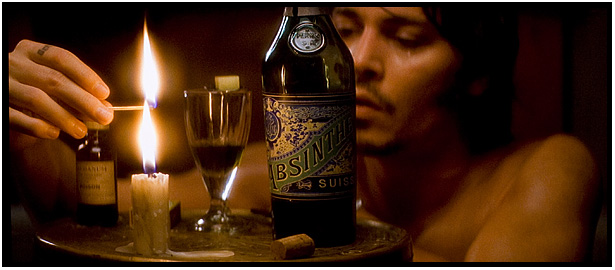
Suffice it to say, absinthe can be quite the inspirational entity, even when its not being consumed. The Green Fairy, is a cultural icon, its charms depicted in vivid pieces of art and film. Absinthe plays a subsidiary role in Bram Stoker's Dracula, From Hell, Interview with the Vampire, and Murder By Numbers. From those particular titles, you can see that absinthe is most associated with the macabre and the affluent, the drink of choice for the soul's seduction. It begins an emerald green, but by the time you add water, it becomes a murky sort of opaque, almost the color of what you'd imagine for a St. Patty's Day-themed eggnog. Drink too much and you are bound to lose yourself in frightful hallucinations, spawned from the 90-proof, herbal delicacy. The flavors of mint and licorice will fill your mouth, and if you consume her without water and sugar, she is a scalding trail of liquid fire down your throat. She is a moody beast, a whimsical sprite, boasting streams of death and delight with the toxic charms and her delicate dread.

Sunday, February 11, 2018

Black Widows

As soon as I think I've seen all the good Netflix movies, another one pops out of nowhere to pleasantly surprise me. This happened to me yesterday, as I somehow came across Paint it Black, a movie with a simple enough plot, but one that's further explored to its utmost potential. The film could have gone many different ways, and while it certainly teeters on the unconventional revenge trope, it finds its ultimate haven in redemption.

Paint it Black stars indie darling Alia Shawkat (Arrested Development, Search Party, Green Room, Whip It) as California girl Josie living for the moment, making her rent money as a nude model for an unnamed university (UCLA or USC) and starring in an independent movie - one that strangely starts to mirror her own life. It's on one of her modeling gigs that Josie is approached by Michael, a handsome, young artist who has just drawn her naked figure, and who randomly asks her if she wants to go swimming. The two sneak into Michael's mother's pool, complete with autumn leaves floating in the water. The two jump in fully clothed, and soon fall in love.
When Michael disappears on a quest to find himself, Josie and her besty, Pen, indulge in a night of live punk rock and utter drunkenness. The following morning, Josie's hangover is completely obliterated by the sobering phone call of a detective, informing Josie that Michael, who checked into a hotel under the moniker Oscar Wilde, has committed suicide by self-inflicted gunshot wound. The nearly destitute Josie is left with so many questions. Instead of having them answered, she's attacked at Michael's funeral by his legendary concert pianist mother, Meredith, who blames Josie for Michael's suicide.

Attempting to sooth over their strained relations, Josie shows up at the doorstep of Meredith. The matriarch deals with the grief of her son's death by drinking heavily, pounding out classical tunes on her lonely piano, and sobbing in complete isolation in the candlelit darkness of her sprawling house. Josie seems to deal with her grief in a slightly different way, drinking heavily, sure, but moving ahead with her life to make ends meet - starring in a low-budget indie movie called "In Purgatoria." This film within a film is set in the LA River about a hapless couple trying to string their lives together in Purgatory. It is through this indie flick that Josie tries to reconnect with the artsy Michael, living out an unpleasant allegory of her life with him, ultimately paralleling her life without him.

When Meredith bosses Josie around and patronizes her, Josie responds by slamming a fireplace poker into the top of Meredith's piano. Meredith then passive-aggressively ransacks Josie's apartment to steal the items that might better connect her with her departed son. In turn, Josie sneaks into Meredith's home while she is sleeping, stealing some of the items back, along with elegant dresses, priceless pieces of jewelry, and Michael's private journals. Meredith responds in kind, tracking down Josie on the set of "In Purgatoria" in an attempt to mow her down with her car.

At this point in the movie, I expected the tit-for-tat pendulum to swing back and forth until the two grieving women became ultra-violent, ending in the eventual deaths of both. The story takes an unexpected turn, with Meredith returning the journals to Josie, and with the matriarch inviting the starving artist to move into her house. It's at this point that Meredith starts to turn over a new leaf, resolved to nursing Josie back to physical and mental health. On the topic of leaves, there is a solitary leaf that serves as the movie's unofficial leitmotif. When in bed with Josie after their initial autumn swim, Michael had a leaf from the pool attached to him. This becomes a sad, sweet remnant of their first afternoon spent together when Josie finds it in the bed with her at a later point in the movie.

It's in Meredith's home where Josie starts to see visions of Michael, or the child version of him, moving about the halls as Meredith entertains her bourgeoisie dinner guests. While appreciative, Josie becomes a wallflower, spending her time reflecting on the depth of her relationship with Michael. She realizes how kind of a soul he was, how sheltered by his mother he had been, and just how cruel she (Josie) had been to him as a result. She realizes that it probably was her fault that Michael committed suicide. We find this realization, and the flashbacks of the events leading up to it all to the somber but blissful tune of Animal Collective's "Loch Raven."


Josie tries to make whatever amends she can. She's already admitted to Meredith, while sobbing inconsolably, that Michael's death was her fault. Josie then leaves LA behind, seeking out a pilgrimage of sorts. She unleashes the pages of Michael's journals and portraits to the whims of the desert winds, and tracks down the motel room where the tormented artists killed himself. As Meredith took her in, she turns around and does the same thing to the German indentured servant Greta, who initially found Michael's body. Not only is Greta a lifeline that still connects Josie to her departed lover, but she's the lost cause that Josie was herself when Meredith so tenderly looked after her.

Paint it Black takes a somber, vengeful vendetta and flips it on its head for the sake of tenderness. Actress Amber Tamblyn (The Ring, The Grudge 2) directed this indie gem, and based on it alone, I look forward to any of her other directorial endeavors. The film uses color isolation techniques, neon dream sequences, and homages to the Marilyn Monroes and the Tippy Hedrens of the past. Tamblyn does a great job of distinguishing the characters of Josie and Meredith, one gritty and struggling to keep her head above water, the other regal and accomplished, even if in a downtrodden sort of way. Michael is meanwhile stuck somewhere in-between, raised with privilege but drawn to the self-destructive, chronic underachiever in Josie. This movie was a pleasant surprise, and while I was expecting something between Death Becomes Her and Cat Fight, I instead got something more akin to Stay and Bright Star.

Friday, December 8, 2017

Hey, Vanity

I've lately been listening to Deftones' 1997 sophomore album, "Around the Fur." Ever since it initially came out, it's been one of my favorite records, number five on my all-time list. This is also singer Chino Moreno's favorite Deftones album, one he claimed he repeatedly listened to between the time of the recording and release. It's a true concept album, the songs intricately linked together by colorful, cryptic lyrics and a dismal, airy ambiance. The album is iconic, not only in subject matter, but in its ingenuity and brand of innovative brutality.

Track one on the record is an excellent encapsulation of the band's progression as a heavy band. "My Own Summer (Shove It)" shows the maturation from a nu metal act to a band basically creating its own genre, so original it could scarcely be emulated. Guitarist Stephen Carpenter constructs a meticulous riff over a pensive beat, while singer Chino Moreno layers his pent-up scorns over to the top. In the chorus, he unleashes his fury and the guitars only slightly morph to a heavier incarnation of the verse version. Chino targets the sun on this one, painting the soundscape with shades of his own summer, one in which "the shade is a tool, a device, a savior." He apparently likes it dark, surmising that "I think God is moving its tongue, there's no crowds in the streets and no sun in my own summer."

Shifting the focus from the seasons to the fashion industry, and the superficiality of the fashion industry (the primary theme of the record), Chino croons on "Lhabia" over heavy ax blows, "It looks and feels great, but look at what it's doing to you, that's okay, look at how it feels." The songs starts abruptly with Carpenter's thick guitar chugs, accompanied by Chino's faint vocals, meshing heavy and soft into one. This song was a big inspiration for Seventh Vision, one of the many bands I was in. I couldn't find a good version of the song to post, though I did find an acoustic version.

Where "Lhabia" ends, "Mascara" begins. Upon my first listen of the album, this track stuck out as the most dynamic departure from their debut album, "Adrenaline." It's an ambient little ditty, a lyrically-rich jam session turned into one of the cuts that made the record. Though the song is overly soft, it hardly portrays the role of a lullaby. It is instead as stoic a track as I've ever heard, leaving behind the melody and beauty that the title might suggest. It's an uneasy, bleak morning with a significant other, unsure of exactly where you stand, or if you even stand at all. The song is filled with cynical lines such as "I hate your tattoos," and "Well, it's too bad you're married, to me."


"Mascara" fades flawlessly into the title track, "Around the Fur." Drummer Abe Cunningham bursts in with a rhythmic pummeling, tricky and precise. Chino comes into play at the same time as the choppy guitars, swaying, "Hey, vanity, this vial is empty, so are you. hey glamorous, this vial is not God anymore." He calls out the fashion industry and all its co-conspirators, leering at the ugliness buried underneath the glossy veneer. The fur, of course, refers to the fur coats and high stakes vanity of the limelight, and it is evenly chopped to pieces by this adrenalized assault. The defiant anthem is pulsating and relentlessly, pausing only in preparation of its final pillaging. "Speak, I don't get, should I ignore the fashion or go by the book? I don't want it, I just want your eyes fixated on me." It seems as though Chino took a model for a love interest, the story didn't end well, and he eventually saw her for who she really was. After all, he has come out and said that the time period of this record was the angriest he's ever been in his life.

"Rickets" is another chaotic ride, Chino this time tackling the topic of what seems like domestic oppression. He goes on to bark about all the things he does too much, screaming his way through the chorus, "You're probably right this time, but I don't want to listen, you're probably right this time, but I don't even care." This is not one of the strongest tracks, but on an album full of strong tracks, it hardly blemishes the overall portrait the band was trying to paint. The video posted to the right was created by a fan, and I have to say, it definitely coincides with the theme of the record.


The band finally takes a more mellow turn when they reach "Be Quiet and Drive (Far Away)." Chino doesn't scream as much on this one as he does croon delicately over the verses and plead for a peaceful getaway by the time the chorus rolls around. The track is not really all the mellow, only in chord choice. This is not a punisher as much as it is a meaningful slab of redemption. The guitar riffs are pretty redundant, but the overall sound works really well, even when Chino comes in just before the end with his injured cat-like snarls and hisses. This is something he also did from time to time on their first album, and while "Be Quiet and Drive" is an exemplary track of the band's progress, they still manage to retain some of the old gimmicks that put them on the map. The video posted is a rare acoustic version of the song.

The next track, "Lotion," is probably the most aggressive of the 10 tracks. Chino almost immediately begins his snarl-fest, unleashing his highly-original scream that eventually came to be so emulated. Chino's lyrics throughout the album are cryptic and brilliant, and though this is one is harder to nail down just off listening alone, he continues his assault on the facade of glamour, belting out "It's classical anyway, how cool are you? I remember." Classical certainly alludes to beauty, and Chino gets dirty beyond the chorus with "I feel sick, right here." The guitars are intense and gritty and meticulously stunted in the ways of metal, as that's where Stephen Carpenter's roots are. This is a sick song in which you can practically feel the anger surging from the stereo.

"Dai the Flu" takes it back down a notch, but only slightly. "I've always wondered what it takes, fifteen stitches and a soft parody to make my eyes be like deceit, believe the sting proves heart to me. Now I know that you love me, thank God that you love at all." The guitars are not metal, but they are heavy, regular old riffs made crunching and stark. Steph climbs the fret board in the breakdown while Chino goes off, literally, with, "What surprise, I was right here going off and going on." This track is one of my favorites on the album. Songs like this one give a face to the duality that Deftones are trying to achieve here - the yin and yang, pretty and ugly, clean and grimy. Dai is the middle name of now-departed bass player Chi Cheng, and the song was first known as "Before the Flu," though it was changed to honor Cheng.

The only track that's even remotely skippable is actually one of their of their most popular. Near the end of the album, the gang gives us "Headup," which is incredibly simplistic in terms of riffage and drums. Chino rhythmically sings, rapping without rapping until Soulfly metalhead Max Cavelera comes in on the chorus with his guttural growls. This track is really not all that cohesive with the rest of the songs. It's simply a quick shredder to add just so the record has an even number of jams. In my personal opinion, they should have added hidden track, "Damone" in place of "Headup" on the album's track listing.

On a positive note, when "Headup" ends, I know that "MX," the last track, is next. "MX," or Max, is heavy and brutal and even a little sexy. Chino soars through the track flawlessly, musing on the topics of vanity and excess. "Let me think about girls and money and new clothes, thirty nights of violence and sugar to love." He then moves the evening's romance out to the balcony, breaking the porcelain face of the glamorously enamored, threatening to "Shove her over the railing, you make it so easy." This track, along with "My Own Summer," "Around the Fur," and "Mascara," are my personal favorites on the record.


Some may not agree on "Around the Fur" being the best Deftones album, as many prefer "White Pony." I really am a sucker for a good concept album, and Deftones perfectly captures the veneer of beauty glazed over the surface brutality and decay. This record is very much like a short film to me, one about the rise and eventual decent of the Hollywood starlet whose nightlife has finally caught up with her. Deftones begs the question of what exactly lies around the fur and the glitz and the decadence - the answer is something very dark and brooding.

Sunday, December 3, 2017

Heart of Glass


After a lengthy, and do I mean lengthy hiatus, Glassjaw has officially returned with their first LP in 15 years. They've been teasing us off and on throughout the new millennium with promises of tours and singles and promotions, though die-hards like myself have been waiting patiently in the wings for the real deal. The new record, "Material Control," is Glassjaw in its purest form. It's a familiar return to belted out choruses morphed to sporadic, feral screams and meticulous guitar work that would make Stevie Ray Vaughn a jealous man. It's a familiar return for childhood buddies Daryl Palumbo and Justin Beck, who are the only original members to return for the new incarnation. In this post, I seek to celebrate the band's discography, and to pay special attention to the newest release - the pinnacle after the arduous climb.

The boys burst on the scene with 2000's "Everything You Ever Wanted To Know About Silence," a raw, true-to-life output that placed Glassjaw firmly on the map. The problem was, they were something sort of like Paris, Texas. Their first landing spot label-wise, Roadrunner Records, was a place that they didn't really belong. They were labelmates with Korn, Coal Chamber, Slipknot, Mudvayne, and Static-X. For those who don't already know, all of these bands fit into the sub-genre of Nu Metal, or Adidas Rock - which was a far cry from Glassjaw's sound. This caused a lot of mislabeling and stereotyping for the band, who were far better suited to share the stage with the likes of At the Drive-In, Finch, or The Used. Their debut was screamo enough, while avoiding the whininess that often accompanied screamo music. "Everything You Ever Wanted to Know About Silence" was brutal and melodic, an autobiography into the life of lead singer, Daryl Palumbo. Songs like "Babe" ripped your head off and spit down your throat. Tracks like "Her Middle Name Was Boom" were pretty and nearly lullaby-like, while "Lovebites and Razorlines" successfully captured the essence of both heavy and soft.

In 2002, Glassjaw released their follow-up, "Worship and Tribute." While "Eveveryting You Ever Wanted to Know About Silence" was framed around scorned love and extreme isolation, the sophomore effort was a little less emo and little more lyrically obscure. Daryl had definitely matured by the second album, and had had the time to get over the Tiger, the femme fatale who fueled his rage on the first record. The track that is the easiest to understand is "Radio Cambodia," in which Daryl tackles the atrocities and intricacies of war. He does make a few nautical references on "Trailer Park Jesus" and "Two Tabs of Mescaline," in which he respectively croons, "I jumped ship into a burning cell, atom bomb," and "Sailor, safe."


In the years that followed, obscure tracks like "Convectuoso" and "The Number No Good Things Can Come Of" floated around all the downloading docks of the internet, both of which conveyed a softer side to the boys. The latter, posted to the right, is one of my favorite tunes of all time. It features a stripped down version of the band, with only Daryl, his piano, and a tame set of drums. The band released an EP in 2011 called "Our Color Green," which was more akin the works on "Worship and Tribute" than their debut release. During this time, Daryl also spent a pretty fair amount of time with his side bands, Head Automatica, and the cryptic hardcore troupe, United Nations.


Sometime between 2015 and 2017, Daryl and guitarist Justin Beck got together to jam again. That jam session resulted in "Material Control," the band's first LP since 2002, in which they enlisted a bass and Dillinger Escape Plan drummer, Billy Rymer. The first track on the album is "New White Extremity," which was their first single - one that certainly had hardcore fans abuzz. I figured that Glassjaw must be about to put something out in terms of a new EP or LP, a reward to whet our appetites after so much time away. "New White Extremity" is a great opener to the album, which tells me that in his time away, Justin Beck has been listening to a lot of Every Time I Die - another personal favorite. While Daryl Palumbo will go down in history as one of my favorite vocalists of all time, it's Beck that really makes this record pop. The guitars are gritty and meticulous and unrelenting, avoiding hardcore tropes for the subtleties of the genre instead. Beck channels Every Time I Die ax men Andy Williams and Jordan Buckley in the breakdown of the song. He links one riff to another with clever little guitar spasms that come off like a carefully constructed moments of improve. Daryl's distinctive voice soars over a plain of guitar chops and pounding bass licks, projecting a slew of rhythmic brutality. Fair warning. This track will do nothing to cure your anxiety, but if you feel the need to psych yourself up or to break something, turn it up, and turn it up loud.

"Shira" carries on much like the verse of "New White Extremity," with choppy guitar licks and a descending bass line. This, along with "New White Extremity," is one of the better tracks, capturing the band's 2002 sound. The verse is searing and all business, while the chorus comes in melodic and familiar. Toward the end of the track, Beck comes in with another familiar element - a guitar riff nearly taken straight from the debut album standout track, "Siberian Kiss." "Shira" successfully meshes the best elements of Glassjaw's first two LPs as a reminder that they're still indeed Glassjaw, and they still remember their roots pretty well.

"Golgotha" is dark and dismal, channeling the "Worship and Tribute" track "Stuck Pig." On it, Daryl cynically croons, "I'm not a betting man, but if I was, I'd have my money on you." He boots up the feral screams of old here, while the drums pound relentlessly and bass climbs and descends with precision. The album is also sprinkled with experimental tracks like "Strange Hours," "Bastille Day," and "Material Control."

Melody is found few and far between on the record, though the last track, "Cut and Run," takes the listener out with a sense of levity after the blistering track, and the blistering album at large. "Material Control" boasts a considerable amount of aggression, more so than "Worship and Tribute," but not quite as much as "Everything You Ever Wanted to Know About Silence." Bands should never really give us the same thing from one album to the next. The only times I've seen this successfully pulled off was with Dredg's "El Cielo" and "Catch Without Arms" albums, and Beach House's "Depression Cherry" and "Thank Your Lucky Stars." Maturation and the intake of new influences, artistic or true to life, can certainly change the trajectory of a certain style or sound.

"Material Control" is a solid return to the music world, a reward for the true fans after so many years of dedication and support. Daryl and Justin are original members, and even though the other three originals aren't around for the new effort, it's still a long-awaited taste of the real thing. Beck's guitars are careful and chaotic, and while Daryl's vocals are a little muddied up by the production, they work for the overall around sound the band was trying to achieve. I'm still digesting the 12 tracks of "Material Control," so I'm sure that more will grow on me in the coming days. It's just good to have the band back with a brand new bag, especially when it's been crafted this well for a band that hasn't put a record in 15 long years.

Saturday, November 25, 2017

Top 10 Rap Albums

A lot of seminal rap albums fail to make this list, which basically goes to show that there's a certain type of production and gimmick-led antics that I prefer when it comes to the genre. While the likes of Public Enemy, NWA, and KRS-One should probably show their face on this all-time list, they alas do not. I salute their works, sure, but they failed to make their lasting impressions on me like their noted counterparts below did.


10. GZA - "Liquid Swords" (1995)
Following in the footsteps of crew mates Raekwon and Ghostface Killer, GZA was the next member of the Wu-Tang Clan to find autonomous fame. On his first solo album, "Liquid Swords," GZA rhymes his way across 13 tracks that explore the nuances of Kung-Fu stand offs and random street violence throughout the projects of Staten Island, NY. Produced by DJ and Wu-Tang helmsman, RZA, "Liquid Swords" is riddled with intros and interludes, samples of old Shaw Brothers, dubbed over Kung Fu classics that I grew up on, like Five Deadly Venoms and The Kid With the Golden Arm. Wu-Tang generally loves to equate Kung-Fu movies to street life, shady deals, and unpredictable violence. GZA's lyrics are metaphorical and brainy, melding intelligent snaps with popular culture, drug references, and lyrical sword fights. Kung-Fu flicks are also an influence on a few of the song titles, including "Liquid Swords," "Duel of the Iron Mic," "4th Chamber," and "Swordsman."


9. Atmosphere - "Seven's Travels" (2003)
In the picture above, Atmosphere's Slug and Ant look more like mobbed-up mafia knock-around guys than successful, ultra-talented indie rap artists. "Seven's Travels" was my first exposure to Atmosphere, as I caught the standout track, "Trying to Find a Balance" on an indie rock station one night. I proceeded to go buy the record to find that Atmosphere was something akin to the Beastie Boys' goofy, indie sensibilities and Gang Starr's two-man, street edge prowess. The Minneapolis, MN native, Slug, raps throughout the duration of the record, while Ant remains silent as the group's DJ and producer. The girls who have crossed Slug seem to be a major theme of "Seven's Travels," and he's angry at them on "Bird Sings Why the Caged I Know," and they're mad at him on "Suicidegirls." The rest of the tracks seem to be about Slug himself, and about obscure, larger-than-life anomolies like "Cats Van Bags" and Liquor Lyle on "Liquor Lyles Cool July." Slug gets goofy on "In My Continental," but shifts the focus to a more visceral, dramatic experience on "Always Coming Back Home to You."


8. Sole - "Selling Live Water" (2003)

It's hard to be considered a true indie hip hop artist if you're not part of the Anticon record label. Greats like Jel, Alias, and Why? have been spawned from this netherworld of underground rap artists, and Sole is among their brightest and best. "Selling Live Water" was produced by label mate Alias, who put out a stellar hip hop record or two himself. Sole, aka Tim Holland, looks more like your favorite drinking buddy than an intelligent, socially-conscious rapper. My first exposure to Sole came on an Anticon sampler, so I then made a dash to download as many of his tracks as I could, finding that the best ones came from "Selling Live Water." My brother-in-law and I also recorded some hip hop CDs for each other, and "Selling Live Water" was one we shared in common without even knowing it. Sole is a mouthpiece for the disenfranchised, and for the avid Bernie supporter. Through cynical metaphors and scathing comparisons, Sole dips into a whole slew of rants and raves on the topics of income inequality and white privilege and Indian removal. Highlights on the social apt whirlwind include "Da Baddest Poet," "Shoot the Messenger," "Selling Live Water," and "Teepee on a Highway Blues."


7. The Society of Invisibles - "The Society of Invisibles" (2006)

TSOI are such an interesting act. Though their self-titled debut album came out in 2006, they wear their influences blatantly on their sleeves. Their overall style and smorgasbord of characters harkin back to the days of Wu-Tang Clan. The Society is basically a supergroup, with three or four different rap groups melding together like Voltron for an earth-shattering contribution to the underground hip hop scene. The key protagonists, or antagonists, depending on how you look at them, are Gutta, Indrid Cold, Joey Baggs, and the enigmatic, ultra-talented but wholly demented Sunn Sunn Szizzorhandz. If the rest of the group channels Wu-Tang, Sunn Sunn channels Gravediggaz, with his maniacal stylings and horrorcore lyrics. The Arizona super team should be heard and taken at face value for their old school delivery, street tough fervor, and crafty trappings of hip hop mastery.


6. Lordz of Brooklyn - "All in the Family" (1995)
House of Pain burst on the rap scene in 1992 to bring a new flavor of Irish-American hooliganism. Hot off the heels of HOP came the Lordz of Brooklyn. If The Godfather and Goodfellas had an official house band, it would certainly be the Lordz. They were a four-man crew, boasting rappers Kaves, Admoney, and Scottie Edge, along with producer and DJ, Pauly Two Times. The Lordz were a crew of Italian-American street toughs from Brooklyn who constantly gave shout-outs to social clubs, mafioso activity, and the Verrazano Bridge. The Lordz also made frequent references to Mack the Knife (Sinatra) and the laudded gang movie, The Warriors, in which Kaves beckons to the listener on "LOB Sound," "Lordz, come out to plaaay." LOB immediately makes their presence felt on "Saturday Night Fever," where the boys channel rowdy nights at the social club, where you need to "bring your boys and your bat 'cause it's a bar fight." The act is a little campy, but it worked for the time, when other ethnic groups were trying to make their way into the rap game. The Lordz did an ultra-gritty track with Everlast from House of Pain called "Lake of Fire."


5. Gravediggaz - "6 Feet Deep" (1994)

Horrorcore hit the rap scene right around '93 and '94, and while Brotha Lynch Hung seems to get most of the credit for flourishing in the genre, Gravediggaz carved out a small niche using their ties with Wu-Tang. The creator of the group, Wu-Tang mastermind RZA, sought to explore the darker side of street life, melding it with horror anthems and monstrous melodies. He even took gold teeth a step further, wearing custom-made gold fangs in his mouth when performing with Gravediggaz. "6 Feet Deep" was group's first, and best, effort. Later studio efforts would see them decrease in their Gothic overtones, never once again reaching their zenith, the torch-bearing "Diary of a Madman." "Constant Elevation" conjured images of a visit to the mortuary, "2 Cups of Blood" is menacing and macabre, and "Bang Your Head" serves up metallic flavorings melded with grungy hip hop. Because of Wu-Tang, and because of Gravediggaz, I now make the attempt to follow the always-innovative RZA into any project he's part of, be it music or movies.



4. Macklemore & Ryan Lewis - "The Heist" (2012)
Macklemore & Ryan Lewis, took conscious hip hop to brand new heights with the release of their major label debut, "The Heist." One of the hits from the album, "Thrift Shop," turned the world of hip hop upside down, delivering a message of finding self-comfort in the old rags and vintage flavors of your local Goodwill. In a rap game so concerned with gold chains and stacks of cash, Macklemore encouraged us to save our money and pop some tags with the 20 in our pocket. The tune was jovial and fun-loving, and it was a breath of fresh air in the slightly redundant modern world of rap. From there, Ben tackles personal relationships with females on "Thin Line," same-sex rights in "Same Love," alcoholism and substance abuse in "Neon Cathedral" and "Starting Over," and the lies and shadiness of record execs on the blatant diss track, "Jimmy Iovine." One of my favorites on the album is track 1, "Ten Thousand Hours," in which Macklemore encourages the listener not to give up on their dreams, the chorus belting out, "Ten Thousand hours felt like ten thousand hands, ten thousand hands, they carry me."


3. Cypress Hill - "Cypress Hill" (1991)
Cypress Hill was an innovative rap trio coming out of 1991, blistering the radio stations and the Juice movie soundtrack with watershed hit, "How I Could Just Kill a Man." Frontman B-Real has a very distinctive vocal tone, especially in the hip hop genre, nasally and seedy and delinquent. Subsidiary member member Sen Dog keeps his bars to a minimum, usually adding background barks to B-Reals clever choruses. DJ/producer Muggs deserves as much recognition as any other in the genre, with his loops and samples of feral shrieks and old, peaked-out guitars. He uses a slow, deadly bongo beat on "Latin Lingo," and old school classic rock riffs for album opener, "Pigs." Muggs' beats, and B-Real's vocals, are highly distinctive in the genre, and for a hip hop group, Cypress has had a nice, respectable longevity.


2. House of Pain - "Same As it Ever Was" (1994)
House of Pain came out of nowhere to change the rap world in 1992. Never before had Irish-American hooligans been cast as hip hop heroes. Members Everlast, the aptly-named Danny Boy, and DJ Lethal brought a familiarity to white inner-city and suburban Irish-American kids looking to unleash their pent up angst. Loud and brutish, House still managed to tread lightly, never disrespecting or trying to completely overtake the occupied rap genre they'd infringed upon. HOP's debut album dropped and dropped hard 1992, and while the group lost some of their initial footing in the 1994 sophomore effort, "Same As it Ever Was," it's actually the more preferred of their albums for me. Before their debut in '92, along with Cypress Hill and Funkdoobiest, House of Pain formed a clique called the Soul Assassins. Every group in the Soul Assassins had their music and beats produced by the revolutionary DJ Muggs. He did a fantastic job of distinguishing beats of the Soul Assassins recordings. He made "Same As it Ever Was" a very horn and classic guitar-heavy endeavor, giving the album a very old world, old school Irish feel to it. The beats of "Back From the Dead," "On Point," and "Keep It Comin'" conjure images of black and white photos in the back of some Irish pub, it's walls littered with shamrocks and Celtic crosses. In "On Point," Everlast even strengthens that image, going off with "Back in the days there were Irish ways, and Irish laws, stand up for the cause." He also goes on to tout his support for Sinn Fein, the Irish Republican government, who's long waged a war with the British occupation of predominately Protestant Northern Ireland. "Same As it Ever Was" is a true Irish-American experience, a little more subtle than the 1992 debut, in which the group had to keep reminding the listener that they were Irish.


1. Wu-Tang Clan - "Enter the Wu-Tang" (1993)
I was living in Alabama when I discovered Wu-Tang Clan. When I came home to SC, all my friends, and their friends, were stricken by Wu-Tang's fiery blend of lyrical mysticism and genre-bending antics. They floored me with their rural Chinese meets inner-city cultural meshing. They successfully weaved traditional Chinese music into their first single, "Da Mystery of Chessboxin.'" In the video, integral members Raekwon The Chef, Inspector Dek, Ghostface Killer, Masta Killer, and Ol' Dirty Bastard are introduced in full glory. On later album tracks, we're given Method Man and GZA, who went on to become popular solo artists. Much like GZA's debut, "Enter the Wu-Tang" is peppered with Kung-Fu movie samples, equating life in Shaolin to life in the group's native Staten Island. The album was groundbreaking, spawning hits like "C.R.E.A.M.," Method Man," and mentioned before, "Da Mystery of Chessboxin.'" Of course, the whole concept of the group and its image was perpetuated by RZA, who went to produce further Wu-Tang efforts, the Gravediggaz albums, his own solo albums under the moniker, Bobby Digital, movie scores, and films. This album launched the careers of Raekwon, Ghostface, Method Man, and GZA, making "Enter the Wu-Tang" a watershed moment in the burgeoning world of hip hop. Another thing that stands out about Wu is their incredibly intelligent lyrics, which are raw and full of allegories and metaphors.