I just re-watched a movie I saw for the first time last year, Ryan Gosling's directorial debut, Lost River. The movie is not like many that have been made. It can be best described as a modern fairy tale, an urban fantasy in the midst of a lush, overgrown town that time forgot. Most of the characters go by nicknames, which are never clarified as being their nicknames. Most of the scenes are clad in lush, tall, green grass, with splashes of neon every here and there, just to remind us that it's Ryan Gosling, and that he's strong protege of Drive director, Nicholas Winding Refn. The movie stars Bones, a late teen fighting desperately to help his mother, Billy (Christina Hendricks), keep their home. Most of the neighborhood is being demolished, with city officials flooding one town after another to use as water reservoirs. Bones used to try to buy parts for his car, but more importantly, he's trying to save his house for his mother and toddler brother, Frankie. He goes around stripping all the copper pipes from the numerous abandoned buildings throughout the area. The problem is, the pipes have already been spoken for by Bully, who basically runs the town like a sadistic mafia boss, shouting his maniacal decrees from a microphone in his throned car. He has a chauffeur driver name Face, whom he has disfigured for failing to follow commands. And he's given the moniker Face after the disfigurement.
Bones soon comes across his neighbor, Rat (Saoirse Ronan), a dreamy, sweetheart amateur musician who lives with her catatonic grandmother. The grandmother used to live in one of the now flooded towns, but all she does now is watch her wedding video over and again on a repeated cycle. Rat tells Bones that her grandmother is under the spell of a curse that came with the flooding over the town, and that their own town, Lost River, feels like it's already flooded, as everyone seems to be on the verge of despair. Rat reveals that the only way to break the spell is to dive down and bring up a piece of the flooded town. Meanwhile, Billy is fighting her own battle. Her home is about to be foreclosed on by the bank with the mortgage having fallen behind, and the powers that be are about to make Lost River another reservoir. She pleads with the duplicitous bank manager, Dave, who turns her down, but offers her a job instead. She basically becomes his indentured servant, as she is introduced into a world of grotesque live performance show, where thrills come in the form of fake blood and gory scenes of morbid fantasy. Cat (Eva Mendes) is the seasoned pro in the show, who plays only a minor role in Billy's burgeoning nightmare. While Billy does what she must and struggles through her own travails, Bones and Rat have to deal with Bully who is hot on their trail. He tries to get at Bones by taking horrific shots at Rat, and it's not until Bones starts to believe in the curse that he decides to do something about it. We're never told whether the curse is broken or not, but we're certainly left to assume so, with Bones standing his ground and retrieving the sunken relic from the submerged town over.
Bones and Billy finally stand up to their bullies in the end, making for an ambiguous but satisfying ending. Though Lost River was a critical bust, I really enjoyed Gosling's directorial debut. His style lends itself to Refn, which makes sense, seeing as how the two are best friends. They collaborated on Drive and Only God Forgives. Lost River surely shares some of the same DNA with those movie in its indie sensibilities, pulsing electronic soundtrack, and lush cinematography. The world of Lost River could almost exist in the real world, but not quite. This adds to the fairy tale aspect that sees looming spells broken by outstanding acts of heroism, the same plot schemes we see in the stories we were read as children. Billy upends Dave at roughly the same time that Bones stands up to Bully, which only goes to show that the spell/curse was indeed broken in the end. I look forward to more from the Canadian hearthrob Gosling, as his is a style I would love to see more of in Hollywood.
I'm currently reading a biography called Posthumous Keats, which is basically about the death of John Keats and the legacy he left behind. Some of my favorite people in the world are dead and gone, having left their respective legacies behind for regular folk like me - Keats, Jeff Buckley, Heath Ledger. I adored the work of Jeff and Heath before they died, but most people will revere their legacies even more now that they're no longer here. It's the way of the world. Keats was a sickly, poor, unappreciated nobody in life, but a riveting, Romantic darling in death. Certain ideas and the people who put them forth often live ahead of their time. While it's cool to love the posthumous starving artist, it's quite a novel idea to admonish them while they're still with us.
"My words are worth nothing until after I'm dead." The poignant quote comes from another famous but unrelated Buckley - Keith, from the Buffalo, New York-based hardcore troupe, Every Time I Die. Keith was and still is a true artist, who reveres mastering words over belting out guttural screams for the masses. The band has been going strong since their 2001 debut album, Last Night in Town. This is when they came to my attention. While the music was good, it was Keith's feral cries and visceral lyrics that stood out the most to me.
The University of Buffalo graduate proved himself a true wordsmith on their 2003 sophomore effort, Hot Damn. Keith created short stories, poems with his lyrics over heavy guitar chugs and harmonic squeals. On track one, "Romeo a Go-Go," Buckley creates the frenzied soundscape of a sickly poet, scorned by an unrequited love.
"Your hopeless romantic, now helplessly rheumatic, Poets grinding teeth to powder, All my vowels are getting lost in the gauze, Misinterpret courting for the cursing of a drooling fool."
Keith goes to scorch a path for his hospital bed champion: "There's a delicate long song in this, Kicked out and dripping in verse, Go get your gun because God won't show, He sent a poet instead, The Don Quixote of the ICU, Quite impression for a cripple, Munchhausen by proxy of a muse."
On "Off Broadway," Buckley meshes a sociopathic criminal with a Music Appreciation course he took in college:
"This isn't at all unpleasant, I'm enchanted by the lavish ballet, And I'll whistle a tune on the way to gallows That I heard at the cabaret. At the sheriff's signal, the orchestra moves the floor. Don't it make you feel wonderful? Body twisting, strictly ballroom, Criminally elegant ideal postured Viennese waltzer. I'm dressed to kill, I'm weightless and well-rehearsed, In my godless opera my character is canonized."
While the band was finishing the record, Keith was finishing up his English degree, taking courses on John Milton, John Donne, Chaucer, and Shakespeare. At the time, he was quoted as saying "If there is somebody out there that would actually put the time into reading hardcore lyrics, which I doubt there is, then there is a lot of Shakespeare images in there, just because that's what I was reading at the time." Keith doubted his lyrical genius was being recognized, which is certainly an artist's mentality. Keats felt the same way, openly criticized and told to return to his former medical pursuits. In other words, critics were telling him not to quite his day job. People generally fail to recognize genius until after it's gone. After all, absence makes the heart grow fonder.
On "Godspeed us to Sea," we're given a tale of a maniacal mariner:
"Oh, captain, my captain, You've been drinking, what happened? I've been blurring my cadences and blacking out when I stand, I know about your son, Who never did return from the war. This is all an elaborate, scheme, And it be cleared up when the governor beckons for me, He'll clear my name. It appears that the inmates have overrun the asylum, There's a madman at the wheel. We are not even remotely capable of keeping our heads about us, We've abandoned all semblance of presence. Dead bolted, buckled in, Keeping our word to a sinking ship. Let the rats orchestrate the new mutiny, I'll meet you overboard."
Hot Damn is Keith's most poetic album, teeming with imagery and metaphors. At the time, I was beginning to write poetry myself. Keats and Keith Buckley were my two biggest influences, lines and lines of metaphorical prose that neighbored somewhere between lovelorn and cynical. I spoke to Keith online right around that time, and he was pleased that I represented a small portion of people who actually did read his lyrics, and he was humbly appreciative.
Some lyrically-rich efforts from ETID followed. On the band's third album, called an overall dud by Keith himself, he belts out on "Guitared and Feathered:"
"I haven't lived a day of my life apart from the one that everyone's read about. I'll spark de-evolution, I was specially bred for the cover page of your magazines. I've been fattened up for the guillotines. I've been drawn and quartered, I've been twice picked over, And it's sickening what you've come here today to celebrate."
He continued this imagery into The Big Dirty, and into the track "Pigs is Pigs:"
"Oh Lord, I am saved! Judge says I am fit to swing. 'bout time I have prayed, My woman just might wear my ring. You know I'm no good, You know I'm no good at court-ordered goodbyes. When I'm gone you'll see I'll be a better man yet, For the disposition, take it back into your arms, Better keep me close to your heart. The defiant had me cornered in a store, And he let me walk out the front door At the scene of the crime. Hang 'em high, Keep your vows brief, Let him swing, make his swindle an art, And if you still believe that man guilty of love can survive, Then hang 'em high or not at all. We are liberated by the hearts that imprison us, We're taken hostage by the ones that we break. Throw the book."
Keith likes to set up a scene, inserting a courtroom, a hospital room, a ballet, a ship. He then meshes a dark sense of urgency with metaphors for the sake of the modern world. This style of lyricism is highly unique, especially when it's surrounded by a chaotic frenzy of guitars and drums. He hardly looks like an educated wordsmith, with his rugged beard and lengthy hair, the plethora tattoos stretching down his arms and his chest. He's a modern poet, who is scorching a path by himself.
On 2009's New Junk Aesthetic, Keith spits an array of imagery on the "Roman Holiday," conjuring images of the arduous march of undead Roman legionaries, resurrected by a necromancer:
"We are the death of the party, We are life of the funeral, All of us, rag men. We traded vows on the front line, They ushered us through the stop sign, All of them, witches. We found our way in the blackout, We are the ghosts in the lighthouse, All of us, rag men. I want the open wound, I want dark street, I want the virgin blood, I want the wet heat."
He seems to make a sequel of sorts to "Roman Holiday" with 2012's "Underwater Bimbos from Outer Space" from the Ex Lives album.
"I want to be dead with my friends, I want to be dead with my friends, Wide-eyed, brilliant, tie them in rags, I want to be dead with my friends, When the iron sharpens the iron. Let boredom cease the beating of our purple hearts, Against this, even gods fight violently in vain. What chance could we have stood? We're the last of the lost, But now we're the first of the fashionably late. Loved ones decompose, You'll dance around their bones. Most of us are holy ghosts, All of us are holy ghosts. We made the scene when we made a scene, And though it was brief, it meant everything. Oh what a pity, now they're bound to make us saints. Oh what a pity, now they're bound to make us saints.
Even though most of the ETID fan base probably has no idea what Keith is talking about, he's true to himself anyway, writing lyrics that make sense to him. They certainly aren't life-changing, but they stand out for a hardcore band, in a genre with boring songs about girls and putrid death. There are few true artists I follow at this point in my life, but Keith is certainly one of them. While on the road, he even completed a semi-autobiographical novel called Scale. I tried to buy it at the last ETID I attended, but the band's card reader couldn't read mine for some reason. It's still a little too expensive on Amazon, so I wait on. If Keith continues his writing career after the band calls it quits, I am certainly with him. I look forward to more novels, and whatever else he decides to write while he still occupies the planet.
I follow a site on Facebook called Ancient Origins. While I haven't been on Facebook in ages, and while her story is not really ancient at all, Marguerite de la Rocque de Roberval led a fascinating life that leaves a lot of space for the imagination. Though I left it for other projects, I started a novel about her cruel and unusual banishment to the Isle of Demons, somewhere between Newfoundland and New France. She was marooned on the island with her unnamed lover and her handmaiden, Damienne, in the year 1542, and while the other two died off, Marguerite survived. Here, I give a proposed account of how that might have turned out for her after being stranded by her jealous cousin, Jean-Francois de Roberval.
PRIMAL
Memoirs Recounted from March,
1544
I perhaps would
have concentrated more upon the silence, the unsettling stillness, had the
otherworldly orchestra of the untamed wilderness not been setting my ears
ablaze. It had indeed been far worse upon my initial arrival to the island, and
day by day, I favored the thought of becoming more at one with the beasts and
the elements with which I had acquainted myself in the two years previous.
I
stalked the wilderness like a prowling cat of prey. The demon had been watching
me. Of that, I was certain. I felt its eyes upon me. I had seen its hideous
gaze before, leering at me from the encompassing darkness – so torrid, so
tormenting, so horrifically capable. I felt their eyes upon me – the muskrats,
the Arctic hares, the Canada lynxes, and the feral wolves. I felt upon me the insidious
eyes of the great man-killer itself.
I
listened steadily as the gargantuan echoes of the beast chased the icy wind
through the forest. I heard its cries of sorrow, its howls for retribution, its
guttural growls for the reckoning to come. Yes, as it were, we were the most
dominate of species upon that desolate land mass, the Île des Démons, and only one of us would be retreating from the field
of battle that day.
The dismal canvas
of the sky was painted with brushstrokes of a dreadfully grayish gloom. The scents
of the wilderness were conflicting. I smelled the salty lilt from the Atlantic
Ocean, or perhaps it was the Labrador Sea, as I knew only that I was residing
within the northernmost Hell that the Earth had to offer. I smelled the sap
from the red pines and the conifers, both plentiful in the thickened forest. I
smelled the carcass of the caribou, the dung of the red fox, and perhaps even
that of the Northern long-eared bat, as the scent had become as much a part of
me as my own flesh.
I stalked my way
through the hollow corpses of the fallen trees. Their limbs were like skeletal
fingers, making their attempts to ensnare me as I labored on. The muck coated
my soles, and the morning dew soaked through my boots, the ones I had so
brazenly constructed from the pelts of my enemies. My chemise and corset had
been tattered and torn by all the dastardly facets of that godforsaken place,
and by the brutality of the passing winters. My frilly, lace stockings were
ripped, holey, and threadbare, forcing me to concede to the cold far more often
than I could rightfully bear.
I wore around my
neck an assortment of teeth – some of which were still coated in bits of blood
and flesh – upon a necklace made from the sinews of a slain wolf. The teeth
were collected from the predators that had underestimated my resolve, and I was
proud to count their canines and incisors as trophies, or better yet, notches,
to signify their feeble attempts upon my life.
My blood, and
the blood of my enemies, coated my chemise with contrasting hues of crimson. It
was of course also grayed by the merging of mud and snowfall, evidence that I
preferred to wear the Earth in the stead of succumbing to it. My brunette locks
were coated in dried mud, twisted into knots. They were woven with the shells I
had collected from the water’s edge, and with the talons of the carnivorous
bird I had devoured for breakfast. I wore draped upon my shoulders the
conjoined hides of a feral wolf pack, weaved together by the tendons of their
hind legs. My leather belt, lacquered and worn and weathered, was riddled with a
wheel lock pistol, a hatchet, and the assortment of knives Jean-Francois had
left with us upon our banishment. I had used the knife with the buck horn
handle to carve a tip as pointed as the blade of a rapier at one end of my
walking staff, forging from it a spear I could easily maneuver, and just as
easily kill.
An equal blending of blood and mud were speared
upon my face. The combination of the two formed a sort of camouflage, a
formidable war paint. The demon was far more elusive than the great man-killer,
but it too would soon find the blood-stained tip of my spear. I was set upon bathing
in their liquid life force, both of the monstrosities, for the sake of all that
I had endured, and all I had lost in the process.
I had first
attempted to lure the man-killer to my place of dwelling. I slaughtered ermines,
otters, and the meadow voles, smearing their blood, and my blood, upon the
trees and ground. I urinated upon the assorted array of shrubbery, all along
the path from its nest to mine, in an effort to draw the man-killer to me.
The beast had
proven itself far more cunning than I initially gave it the credit for, as it
refused to succumb to my summons. It was almost as if it knew of my thirst for retribution.
It knew as well as I that one of us would not exit that epic battle with breath
remaining in our lungs. It was almost as if it knew that I sought to drape its massive
hide upon my back for the coming winter, and that I sought to devour its soul
in the process, as if I were one of the native savages occupying New France.
The roars of the
great man-killer grew louder as I drew closer, and much closer still. The great
cries at once sent a chill down my spine, and I could not so easily decipher
whether the reaction was a result of fear, or of anticipation. The twigs
snapped beneath my unwavering steps, confirming to the beast that I indeed approached.
It had never been hunted before, that much was for certain. It was not
accustomed to being stalked in its own den.
The breeze
pushed from the West and whistled through the trees, which seemed to soften the
blow of the blistering cold. I had ritualistically consumed the blood of the
game bird, which, with much surprise, seemed to add a warming glow to my limbs,
so that they may not betray me when the moment of battle had come. I would be without
the traps and snares I had constructed surrounding my own camp site. The
man-killer drew me from whatever comfort zone I possessed, or thought I at one
time possessed. The moment drew nearer for us, as the beast ascended into my
view, just behind the cluster of primordial pine trees.
Around its insatiable
jaws, it had worked up a lather of saliva the color of the blood moon. Its fangs
were tinged with the blood and flesh of its latest victim. Surely, the
man-killer meant to frighten me into submission. It roared at me, long and
guttural, compelling me to cease in my steps. From some fifteen yards away, I
could feel, smell its breath, torrid and rancid and scathing. I closed my eyes,
breathed it in, counting it an asset to my cause, as I had become one with the
uninviting landscape and every living creature that thus spewed forth from it.
I at once
tightened the grip upon my spear, until my fingers began to ache and my
knuckles began to flush white. The man-killer growled again, and I then returned
the gesture, unleashing a sort of savage, bloodcurdling bellow of my own. I
knew that I had reached the point of no return. I knew that I could no longer
turn and run, that I would once again find myself amidst a scrap for my life.
I began to
circle the beast, and it, me. Our eyes locked in heated exchange, we treaded
meticulously, sure-footedly, upon the barren plain of its den.
And as I prepare
to further unfold the details of such a harrowing affair, I now begin to
question the staging point of my saga. Perhaps I have begun with the most distressing,
the most horrific of all events that transpired there in that land God had surely
forgotten. Perhaps I should withdraw my accounts during the early Spring of
1544, when I broached warfare with the great beast, that great king of the
island – at least until I have properly clarified how our encounter came to
transpire. Many days, and many incidents had come to pass before that fateful
day, and I must be afforded the proper time, the proper sanity, to reach deep
within myself and unfold them from the recesses of my muddled mind. Bear with
me, gentle friends, for it shall be a torrid endeavor.
I.
Memoirs Recounted from June, 1542
My
name is Marguerite de la Rocque de Roberval, and the year is now 1560, though
both my name and the year of my account must be deemed far less significant
than the events that have paved the way for their relevance. I begin my tale at
the end of what I supposed would be the end of my life, itself privileged and brimming
with much promise. I had been the proprietor of lands in Languedoc and
Périgord, and a prominent seigneuress
of Pontpoint in the Oise district of my most beloved France. I had owned much
to my name, before the events of the passage and the scorns of familial
jealously thus swiftly snatched me from them.
I
write not because I was isolated, or because I was filled with such an
indescribable fear, or because I now seek to paint a hideous portrait of Jean-Francois
de Roberval, or even because I now wish to leave behind some sort of legacy to
my name, but because such a traumatic experience as this should be chronicled
alongside all other great massacres and pestilences throughout the histories of
mankind. Something, perhaps deep inside of my person, has compelled me to
recall such horrid events as the ones I experienced upon my exile, and to script
them now simply to seek some form of solace from the invisible scars that
remain.
Since
my fortunate return to France, my story has been fictionalized by Queen
Marguerite de Navarre in The Heptameron, though her account cannot solely stand
as the final word on my life and times. While I yet draw breath into my lungs,
such a tumultuous account must be recorded by none other than I. Her most
fictionalized chronicles owe their successes to the actual events they were
based upon, and The Heptameron, while renowned, is nothing but an adaptation,
failing to identify all names and events that breathed human life into the
dreaded Isle of Demons.
We were stranded
there upon the Île des Démons,
located somewhere uncharted between Newfoundland and New France – a stretch of
the Earth that quite exceeded my knowledge. Neither Guillaume nor Damienne
seemed to be familiar with the whereabouts of the island, and the treacherous
rogue Jean-Francois certainly refrained from indulging us to such details.
The
early Summer season of that place seemed much more comparable to an unpleasant Winter
in Pontpoint. The wind swirled and howled like a scorned banshee, and it
carried from the surface of the sea to leave one perpetually ill at ease. If
that was indeed the month of June, I could not so easily fathom the brutality
of the coming Winter. Jerkin jacket and leather gloves would scarcely provide
the protection we sought there in such an immeasurable purgatory. Jean-Francois
surely expected that would not outlive the year.
In
speaking of protection, my cousin, sheltered by a profitable kinship with King
Francis, left us little in the way of provisions and weaponry. I had never used
one myself, a weapon, that is. We were to rely upon the brawn of Guillaume,
merely a poet in his own right, to forage for food, and to keep the carnivorous
natives at bay. Our provisions there upon the island were as follows; one
flintlock musket, one wheel lock pistol, ten ball bearings, three small pouches
of gun powder, three knives of assorted sizes for skinning, two hatchets for the
chopping of kindling, four flint stones, five bundles of pressed, dried meat,
and five water skins.
Jean-Francois
caustically informed us that we would have to ration the water between us, at
least until the first snowfall. When I harkened to him how three full-sized
adults could survive on five water skins for five to six months, he, with much contempt,
suggested that we use our creativity.
While I, and
Damienne, due to her guilt by association, was first persecuted by my cousin
and his belittling crew, Guillaume decided to brand himself the martyr. He
dramatically dove from the side of the ship as it sailed away, so that he might
waste away the same, banished at my side. Though noble, his gesture served as
little consolation to the penance I was to endure.
Though dripping
in the soaking sins of a lonely sea, Guillaume attempted to provide my comfort.
I was blind to his affections in the woeful wallowing of my toils, as if I were
the only one to experience them. I sunk to my knees into the muddy banks of the
island, disregarding the dress I had had custom made by Madame Dupuis. The wind
bounced, scourged from the water’s surface to blister my cheeks as I disparately
watched the Lechefraye sail into the forlorn
horizon, along with whatever future I might possess back in PontPoint, or even
New France.
As I wasted into
initial disparity, I pounded my breast and raked my exposed chest with my
nails, probably like something I had once read from the Roman annals, Plutarch
or Cassius Dio’s descriptions of Cleopatra Ptolemy at the hour of Antony’s
demise. I had quite a propensity for dramatics, and giving the dire situation,
I maintain that I might have been afforded such opportunities. Alas, I was
counted villainess in the wake of my affair with Guillaume, and though I was an
unmarried young woman, merely sowing my wild oats with the God-given free will which
I had been justly reward, I had offended the Calvinistic sensibilities of the
ill-tempered, brutish Jean-Francois de la Rocque de Roberval.
The three of us,
Damienne and Giullaume and I, were then encompassed by a sea of rocks, mud, and
an endless wilderness, filled to the brim with many unknown, ungodly beasts. But
what was it that brought me there, us there, so far from home and far from
anything I had ever experienced or would ever experience so long as I should
live? I forge ahead of myself in the retelling of such an event that might
perchance span copious volumes besides my own feeble memoirs.
I must recall
that I immediately felt a broiling sickness to stomach, and I could not then,
nor even now, surmise whether it was due to such an indelicate marooning on the
Isle of Demons, or the fact that I was secretly with child.
II.
Memoirs Recounted from April, 1542
I
stepped hastily from the coach onto the cobblestone thoroughfare of the
Champs-Elysees, as eager and pretentious as a debutante. From the vantage of
the street, I could see well the candle-lit chandeliers pouring from the other
side of the leaded windows of the Marquis de Seville’s Parisian townhome.
The Marquis
owned claim to a lavish residency, though I was not sure how long it could
endure in the midst of the Protestant and Catholic skirmishes for an altogether
better way in which to worship the same God. I was young, but I knew well that
the Kingdom of Heaven resided within the depths of the mortal being, not within
the pews or the prayer books of the church itself. Works, nor a more direct
route to the ears of the Messiah, should allow one a more gilded halo in the
afterlife, if there even was one. If there were, Calvinists and Catholics would
only continue to splatter one another blood onto the Pearly Gates! Calvin made
a compelling case, though Jean-Francois’ zealous fervor in the name of Calvin
only made me less eager to count myself among the true believers.
Resigned to the
thoughts of such a fruitless campaign, the sole of my silk damask thumped
against the cobblestone to enter the dual lion-protected stoop of the Marquis’
domicile. His cryptic invitation had beckoned the House of de la Rocque, of
which I was surely a member, though his more intended guest was surely
Jean-Francois, the newly-appointed Lieutenant General of New France. That
night, the Marquis was to feature a man called Jacques Cartier and his new
trinket, some nautical device or other that would assist ours and future
generations in the exploration of uncharted lands. I was interested in the
device, the astrolabe, as I was interested in the possibilities of New France,
in the marsh lands of this particular stretch or the timber-heavy tundra of
that particular stretch.
The
day was brimming with much promise. All buds in which the vast oceans had to
offer would bloom for me in that, my first journey beyond the lands of France. I
woke to the sounds of Damienne mousing about my vanity, afraid to make a sound,
afraid to breathe, as was her usual Montmartre way.
I
stretched and arched my back like a Cheshire cat, purring with all the
pleasantries of such a lush life.
Somewhere around 2004, there was some astronomical culmination of factors that led me like a kid in a candy shop into the world of art, poetry, and to European history. I have to thank my instructors at junior college for teaching me what I was apparently ready to soak up like a sponge.
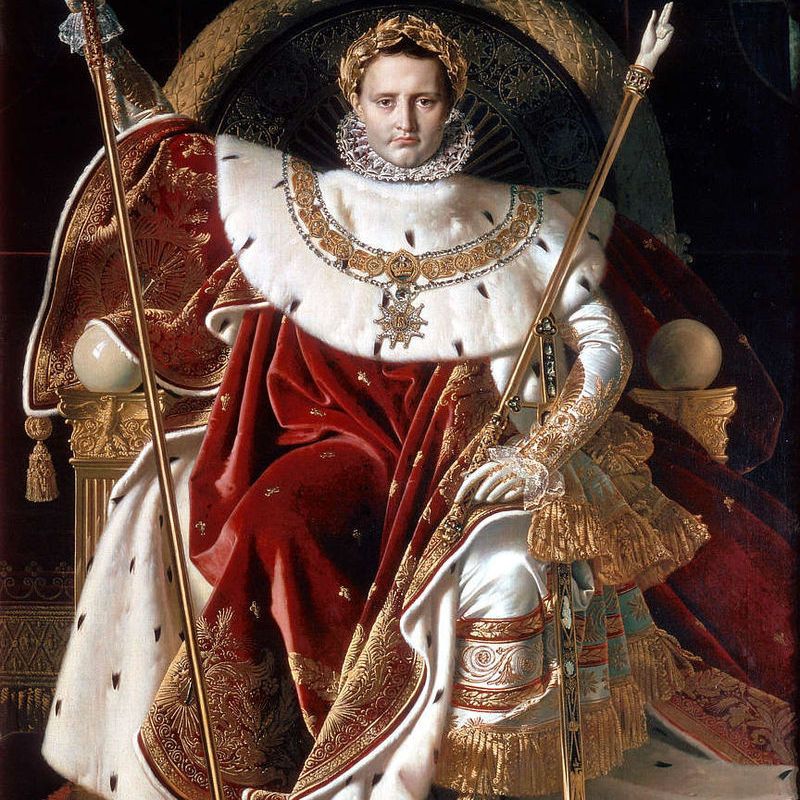
I guess it probably started with Art History. I don't think my professor liked me very much, as she indirectly accused me of plagiarism on a paper comparing and contrasting pieces of art depicting Napoleon Bonaparte and Alexander the Great. The Napoleon piece was by French master Jean Auguste Dominique Ingres, painted after Napoleon had crowned himself consul of France in the ancient Roman style. Napoleon, born with Italian name Napoleone Buonaparte was from Corsica, an island off the coast of Italy with a very unique feature - residents are genetically Italian, but speak French. Napoleon looked to reconnect with his Italian heritage by donning himself in the dress and in the style of the old Roman generals he admired. This painting by Ingres perfectly displays the concept.
I of course compared the Napoleon depiction with an Alexander the Great piece by Italian painter Paolo Veronese. Both rulers were revered conquerors in their day, going down in history as two of the greatest military generals to ever put on the uniform. While Napoleon was depicted as a Roman emperor, Alexander was adorned in a stark red Renaissance fashion - a proposed vision had the Macedonian king had been born in different century altogether. He is depicted standing over the family of his defeated nemesis, King Darius, granting them amnesty as he overtook Persia. In the paper, I discussed their generalship, the way they viewed themselves as empirical generals, and the stark details of their respective red wardrobes. In a nutshell, these two paintings were the catalysts that fueled my love of Western art.
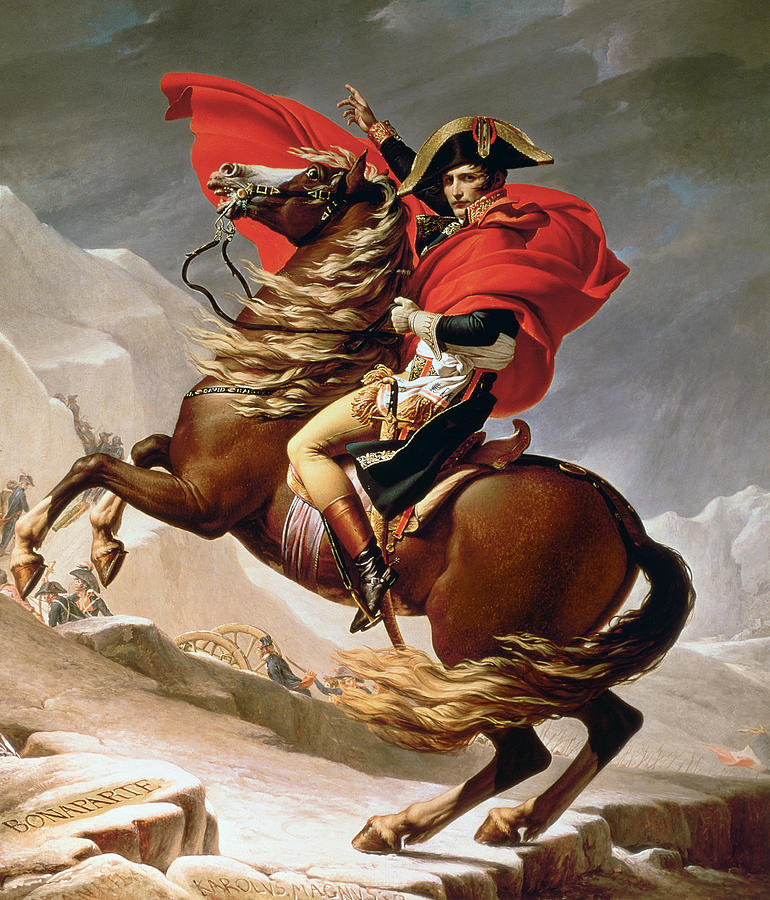
In the same vein as Ingres was Jacques Louis David, whose depiction of Napoleon I came across when I was studying the one above that I covered in the paper. David's painting is a heroic one, one Napoleon might have commissioned himself. It's called Napoleon Crossing the Alps, which is a very heroic thing for a military man to do. Just look at Hannibal Barca. His sneak attack on Rome during the second Punic War is legendary, if not brilliantly insane. I discovered David's work in a time when I was also learning more about the French Revolution. David had been a friend of the revolution, of more specifically, of Jean-Paul Marat and the Jacobians. When Marat was assassinated by loyalist Charlotte Corday, David commemorated the event in probably his most famous outing, one of the unsuspecting Marat dying a martyr in his own bathtub.
On the other side of French Revolution was Eugene Delacroix, who iconic work Liberty Leading the People was partisan to the 99%, the Bastille stormers and the bread marchers. In the American Revolution, the colonial army received financial and military aid from France, which essentially, alongside with a bad harvest, led to poor economic conditions. The common people felt the sting, as the monarchy, the inept Louis XVI and his Austrian bride, Marie Antoinette, continued business as usual with lush parties and excessive spending. Delacroix painted this work to capture the people in the midst of their coupe against the aristocracy
. Delacroix was also a fan of literature, and allusions to ancient Assyrian kings the same. The first actual work of his I saw was The Death of Sardanapalus. The scene is a chaotic slaughter, but Delacroix's Sardanapalus simply reclines and accepts his fate at the onset of his impending doom. He remains calm in the eye of the storm, which is quite striking, as he takes in all the vignettes of death surrounding him. Another Delacroix delight is a Baroque depiction of Dante Alighieri in the midst of his Divine Comedy, taking all the horrors of Hell in The Barque of Dante. I have never read The Divine Comedy, but all the dastardly and misunderstood historical figures Dante deemed worthy of Hell (Helen of Troy, Cleopatra, Chronos, Achilles, King David) are fascinating to me.
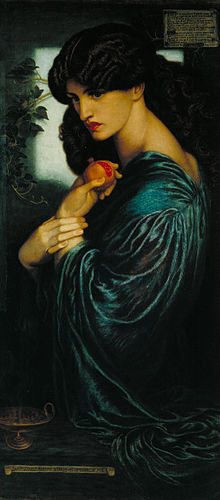
From there, my interest was drawn to the Pre-Raphaelites. I took an English literature class where studied Dante Gabriel Rossetti. Rossetti was Italian by heritage but English by birth, named after none other than Dante Alighieri. Rossetti was a poet, but he was more known for the paintings he did while he was part of the Pre-Raphaelite Brotherhood. The group was a small brood of Mannerist painters who essentially created a movement only to watch it burgeon in later decades. The image below is Annunciation by Rossetti. It portrays the archangel Michael descending from heaven to tell the virgin Mary that she would give birth to Jesus. Rossetti's sister, Christina, served as the model for Mary. In 1874, Rossetti painted Proserpine, which featured his most frequently-painted model and muse, Jane Morris. One of the most famous of the Pre-Raphaelites, John Waterhouse, was not even really a Pre-Raphaelite, but more deeply inspired by the style. One of his most well-known pieces is below in Boreas.
Waterhouse also gave us an enduring look at his version of Cleopatra, an image I previously used in my blog about her legendary mystique.
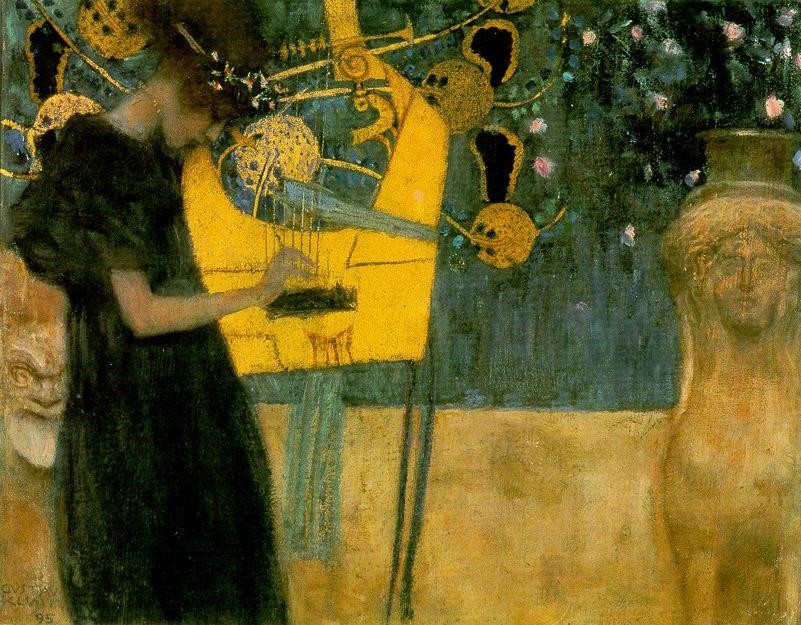
From the Pre-Raphaelites and Mannerism, I discovered wonderful world of Gustav Klimt. His pieces are truly unique, oil colors melded with actual gold leaf material to give the art an exquisite sheen. Much like Rossetti, Klimt loved his female models, and often painted them representing little-known historical figures, such as Judith and Holofernes. Judith in this painting is smiling pompously and touting the head of Holofernes, the Assyrian general under the command of King Nebuchadnezzar. This subject matter had been broached before, with Renaissance maestro Caravaggio's portrayal even more Baroque, and more explicit. Klimt had a flair for powerful women, and for recreating Classical events and characters.
Next was the wonderfully bizarre world of Spanish master Salvador Dali. His paintings were mind-bending and earth-shattering, Dali a forerunner in the Surrealist movement. His paintings were abstract, like living in a perpetual dreamworld where time melts and ants march dutifully like soldiers. He would create living shapes and landscapes and then recreate them with abstract objects, all for the critics to either applaud or puzzle over. Dali's thing was that he didn't care. His paintings were as strange as he was, a true eccentric in a time when they were all but vanished from the art world. When I entered college at the University of Wyoming in 2008, I was really into the Classics. I had a historical blog called Ad Hoc, and on that blog, my homepage picture was the painting to the right. The painting itself, A Roman Emperor, was done by my favorite painter of all time, the grounded Classicist Lawrence Alma-Tadema. He painted immaculate scenes of Greek and Roman daily life, as well as infamous historical events such as the death of the tyrannical emperor, Caligula.
He also gave us Pyrrhic Dance, based on the famed Greek general Pyrrhus, for whom the phrase Pyrrhic victory in named. A Pyrrhic victory is essentially a victory, but one that victor was forced to lose everything in the process, which is not really a victory at all. Alma-Tadema also seemed to be fascinated by the tyrannical Roman emperor, Caracalla. The mad emperor infamously had his brother assassinated in front of his own mother, the Empress Julia Domna, who became injured in the process. Alma-Tadema painted a snapshot of the brothers when both were jointly ruling the Empire, called Caracalla and Geta. He followed that one up of Caracalla as sole emperor in the aptly-titled Caracalla.
When I was learning about some of these 19th century painters, I came across the concept of the Byronic Hero. He is typically described as being quiet, brooding, and capable only of an impossible love. This was certainly me at this particular juncture in my life, and I immediately latched onto the concept. Movie characters such as Johnny Depp's Abberline in From Hell and the late Heath Ledger's Sin Eater in The Order influenced this persona, as did the poetry I was writing and weekly performing at the time. When I came across Wanderer Above the Sea of Fog by German painter Caspar David Friedrich, the Byronic hero, or the Neo-Romantic, was given an official image. I feel an affinity with this painting. I used to have it as my school computer backdrop, and students repeatedly asked if it was me in the picture. I always think no, but that it could have been had I been born in a different century. For a time, I was a reserved, brooding, lonely soul, and this painting allowed me to feel as if someone at some time felt the same thing I did. It's probably my favorite painting of all time.
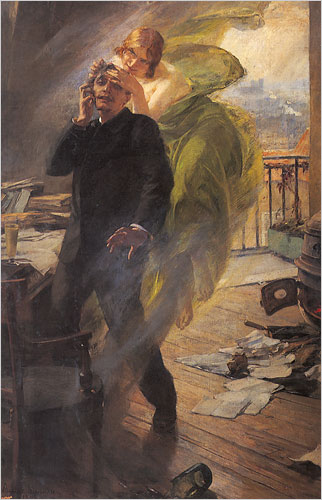
The last painting to leave its impression on me was Green Muse by Frenchman Albert Maignan. It portrays a lowly 19th century poet succumbing to the sinister charms of the Green Fairy, or absinthe embodied. For awhile, I dabbled with the drink, and when coupled with the poems I was writing, this painting fit well the nightly struggles and the whimsical pleasantries I was facing. From the glass of absinthe to the scattered papers to the clothing style of the doomed poet, I could identify with this piece for its turn-of-the-century stylings applied to my modern world. The Green Fairy is a temptress, an enchantress, seen here as a dastardly divine entity that charms the unwittingly soul into a luxurious demise.
Through the years, art has intrigued and inspired me. I tried my hand at painting, but Iultimately decided I was better with words than with a paintbrush. I love the art I've referenced here for their depictions of another time and place, for their allusions to the Classical and to the abstract alike, and for their real-world applications to me at a time when I was on my way to becoming who I am today.
My wife and I were just recently talking about Gothic horror movies set in the Victorian era. While there are several that I love, including Bram Stoker's Dracula, my personal favorite just barely missed my top 10 historical movies of all time (though I may be forced to reconsider). I decided to review here for that exact reason.
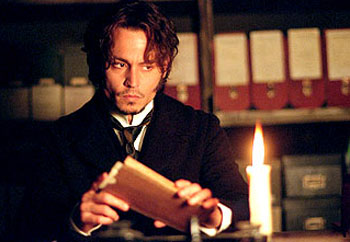
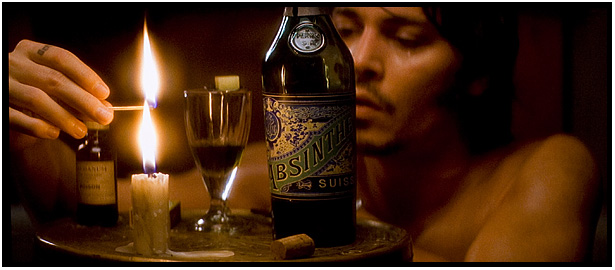
From Hell is my favorite Johnny Depp vehicle. As real-life Jack the Rippper-case detective Frederick Abberline, Depp is likable, dark, tormented, flawed, and incredibly anti-Victorian in his forward-thinking tendencies toward police work. I know the title of the movie sounds pretty ominous, but it's named after one of the infamous Jack the Ripper letters that was mailed to Scotland Yard (London police) in 1888. I saw the movie in the theater when it first came out, and later bought the DVD. As a former Ripper enthusiast, I owned several books and spent countless hours searching the web for the most plausible suspects in the centuries old cold case.
Abberline has a gift. He almost has a second sight, where he can see visions of events before they happen, but only in choppy increments that he has to piece together. Abberline is a Scotland Yard detective, but a highly-unusual one, as he spends his extra time chasing the dragon (smoking opium) and drinking absinthe laced with laudanum (another opiate). Sure, this makes him a flawed character, but it probably has something to do with his wife dying in childbirth, and the fact that he has never quite gotten over it.
Abberline is very Holmsian in his approach to detective work, employing the tactics of deductive reasoning to track down the killer. Jack the Ripper also likes his absinthe, but he drinks it alongside his blood rare steaks and the carved-up kidneys of his victims. Abberline and his partner, Shakespeare-quoting detective Peter Godley, find each of the corpses of the Ripper victims after he has struck. Throughout the process, we are introduced to one suspect after another to keep us, and Detective Abberline, guessing.
The movie is dark and dreadful, Gothic horror at its finest. Johnny Depp pulls off an excellent East End London accent for the part, as do the Ripper victims themselves, five lowly prostitutes who are being picked off one by one. In real Ripper lore, the murders were unrelated. In From Hell, based on the graphic novel by the same name, all the prostitutes know each other, and have bore witness to an event that renders them all liabilities. Abberline just happens to fall for one of them, the Irish immigrant, Mary Kelly (Heather Graham).
I think that From Hell didn't make my top 10 historical list because I've seen it so many times. When I went through a phase of obsession towards the Ripper case, and towards absinthe for that matter, I watched the film frequently, picking up new tidbits here and there with every viewing. The Ripper turns out to be someone you would never imagine, and his reasoning is even more of an elaborate shocker. Of course, the murders involve a conspiracy, which even involves Scotland Yard itself. Abberline must go rogue in order to upend the crooked cops, and he must dig a little deeper in order to find the identity of the Ripper before finally confronting the serial killer.
Strangely enough, the chosen directors for the movie were brothers Allen and Albert Hughes (Menace II Society, Dead Presidents). They are know more for their vivid, predominately African-American portrayals, but in this case, decided to give 19th-century London a shot. They do an excellent job of creating a lurid, menacing atmosphere, and keeping the actors to that East End accent that Abberline and the five Ripper victims own so well.
Johnny Depp's Abberline was a major inspiration for one of my own novel characters, Cameron Dupree. Both have a second sight sort of gift, both are very solitary figures, and both are wholly addicted to absinthe. Abberline is a great character, something between Sherlock Holmes and Romantic poet. He's like Holmes with his meticulous attention to detail and his deductive reasoning. He's likened to a Romantic in his clothing style, his substance abuse, and his pushing death to its upmost limit. He's haunted by the past, and by the future, which probably explains his massive opiate addiction. In any case, this role is just another feather in Depp's cap as a character actor, a far more serious version of his Icabod Crane from Sleepy Hollow. This movie is a lot of fun if you tolerate the morbidity, the gore, and the overall sense of bleakness that the film conveys.
Historical movies used to be my favorite genre overall. I created a similar list years and years ago on a historical blog, but the movies needed a little revamping, and a little more flair than I had originally given them. Several greats fall just outside the top 10. While I love Ptolemaic Egypt, Alexander and Cleopatra don't make the list, and neither does the darkly sinister From Hell.
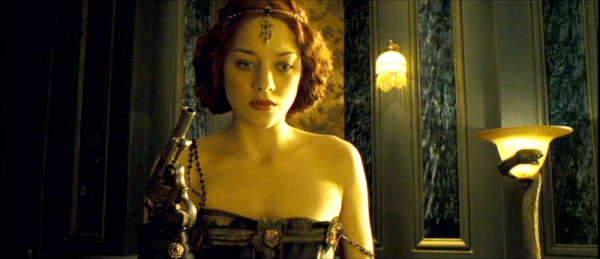
10. A Very Long Engagement (2004) I had recently seen up-and-coming French actress Audrey Tautou in her breakout performance, Amelie. A Very Long Engagement was her follow-up movie, directed by Amelie maestro, Jean-Pierre Jeunet, whose colorful, opulent style really makes the screen pop. Engagement was also my first exposure to Frenchwoman Marion Cotillard, who plays the memorable, screen-stealing Tina Lombardi, a Corsican prostitute on a mission of vengeance.
A Very Long Engagement stars Tautou as Matilde, a polio-stricken young woman whose fallen in love with a young solider named Manech. They pass the time on their bluff, waiting for the opportune moment to marry and live happily ever after. But when Manech is shipped off to World War I, Mathilde's heart is broken, though she will wait patiently for his return. When he in fact does not, Mathilde's family fears him dead, though she herself refuses to believe it, and conjures up little happenstances to prove to herself that he's still alive.
Mathilde plays her lonely tuba by the lighthouse and waits for news on Manech. When none arrives, she becomes bound and determined, polio leg and all, that she will conduct her own relentless investigation to find him. At the same time, Corsican prostitute Valentina Lombardi is conducting her own investigation into the death of her pimp come boyfriend, Angel Bassignano. Manech and Angel were part of the same company. They were condemned to death for abandoning their posts during the war. When Angel is killed, Tina tracks down the commanders responsible and murders them one by one like an angel of death.
While the story teeters onto Tina from time to time, Mathilde and her manic search gets most of the airplay, and with good reason. Engagement is a sentimental love story and a mystery in one as Mathilde conducts interviews and tries to connect the dots on Manech's disappearance.
Director Jeunet is known for quirky films, and his glossy direction made him a surprising choice to direct Alien: Resurrection. Be that as it may, there was a point when Jeunet and Audrey Tautou worked together on a string of movies. While Tautou played different characters in said movies, they played out similarly with the quirks and happenstances created by Jeunet. A Very Long Engagement is an endearing love story that takes you with Mathilde on her incredulous journey. And because she never seems to become dissuaded in her search, the audience doesn't either.
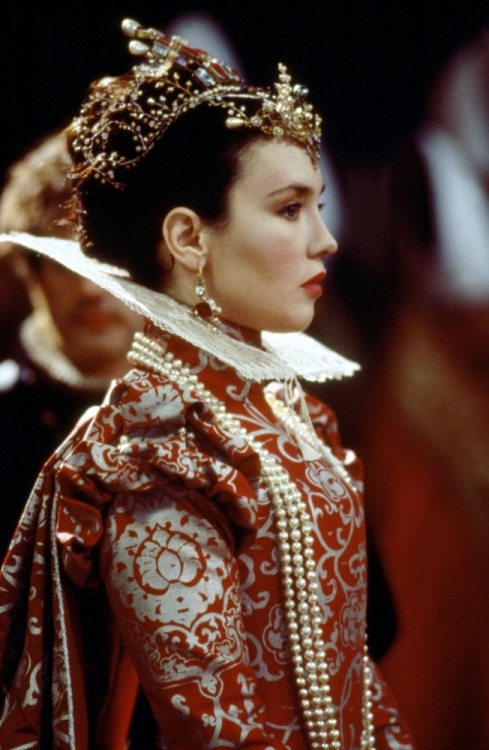
9. Queen Margot (1994) Queen Margot, or La Reine Margot, is another French film, one that tackles the historical melee of the Massacre of St. Bartholomew. This incident was incited when the arranged marriage between Catholic Marguerite de Valois and Protestant Henri de Navarre unfolds in Paris. Both factions of worshipers are brought together for the event, which left thousands of ambushed Protestants dead in the streets. One of the catalysts for the event was none other than the infamous Catherine de Medici, the mother of Margot. The movie was based a novel by The Three Musketeers and The Count of Monte Cristo mastermind, Alexandre Dumas.
I'll be honest. While it's a great story in the midst of such religious and civil strife, I like this movie just as much for the exquisite costumes. I'm a sucker for a good costume drama, which is just of the reasons why I've really been into Ovation's Versailles. Queen Margot is extremely dramatic, with excellent music and even better acting. The French certainly know to do drama, with an all-star cast of French-speaking delight (Danile Auteuil, Vincent Perez, Pascal Greggory, Jean-Hughes Anglade, Asia Argento).
Trapped in a loveless marriage to a man she's not even attracted to, young Margot is led by her ladies-in-waiting to the streets of Paris, under disguise to avoid detection. It's there that she comes across random hottie, La Mole (Vincent Perez), with whom she eventually falls for. Well, this is the night before the infamous Massacre, and love is hard to hold onto when your family plots and back-stabs and the people of Paris riot in the streets. Queen Margot is an unforgettable movie in the French canon, that's for sure. Sometimes, if I'm watching a movie that takes place in France, I would certainly rather the actors be speaking French. Call me a movie snob, call me a perfectionist, but if a movie takes place in a certain country where the people speak a certain way, then make it happen the way it actually would given the circumstance. Just saying.
8. Musa the Warrior (2001) In the early 2000s, East Asian cinema went through a relatively short period of historical films. The best known of these might be considered Crouching Tiger, Hidden Dragon, Hero, and House of Flying Daggers. A little-known gem called the Musa the Warrior is the best in my opinion. It doesn't feature a big name, except for Chinese actress Zhang Ziyi, who frequented these sorts of movies while they were popular.
Musa the Warrior is about a troupe of Korean diplomats who journey to China to seek peace relations in the 14th century. Chinese officials then wrongly accuse the delegates of trying to assassinate the emperor, banishing them to the Gobi Desert. Most of the Korean diplomats, including elders, slaves, and military men, survive the first wave of heat, but soon come across a Yuan Mongol horde who kidnapped the Chinese princess. Eager to return to the good graces of the Chinese, the Koreans attack the Mongols. But when the Mongol general sees how slave-turned warrior Yeo-sol fights, he is eager to try and recruit him into the Yuan army.
Musa the Warrior portrays a complicated love triangle, played out by Yeo-sol, Princess Bu-Yong, and Korean general Choi Jung. Choi tries to win her heart with his raging bravado, while Yeo-sol walks softly but carries a big spear - one that he really knows how to use. The climactic battle in the end is epic, with nearly every Korean diplomat getting in on the action - some of them, to save the lives of an elderly group loyal to the princess and the Ming Dynasty.
7. Apocalypto (2006) I know what they say about Mel Gibson these days, but wow, can he direct some great movies. His first was Braveheart. Then came The Passion of the Christ, and then we got Apocalypto. One thing I really like about Gibson's style of direction is his accuracy when it comes to the linguistics. I think it's probably his fault that I've been permanently ruined on linguistically-accurate, historical movies. Passion was spoken completely in Aramaic, Hebrew, and Latin, while Apocalypto is in the native language spoken by the Mayans in pre-colonial Central America. I know that most Americans hate having to read subtitles, but if they are in favor of a more authentic movie experience, count me in. I digress.
Apocalypto follows the story a young family man named Jaguar Paw. He's devoted to his wife and kids, his father, and his fellow tribesmen as they hunt the grounds hunted by their fathers, and their fathers' fathers. The problem comes in when a neighboring tribe raids their village, slaughters half its people, and kills Jaguar Paw's father. The tribe's crops are suffering, and as a direct result, they've sent out a raiding party to find human sacrifices to appease their gods.
Jaguar Paw seems destined for greater things when he is fortuitously spared from a ghastly decapitation at the top of a pyramid. This is when he escapes, and Jaguar Paw and the raiding party play cat and mouse all the way back to where they started from. Meanwhile, Jaguar Paw's family is running out of time, and only he can save them before they drown. Of course, this is only after he upends each member of the enemy warriors in one epic scrap of a third act.
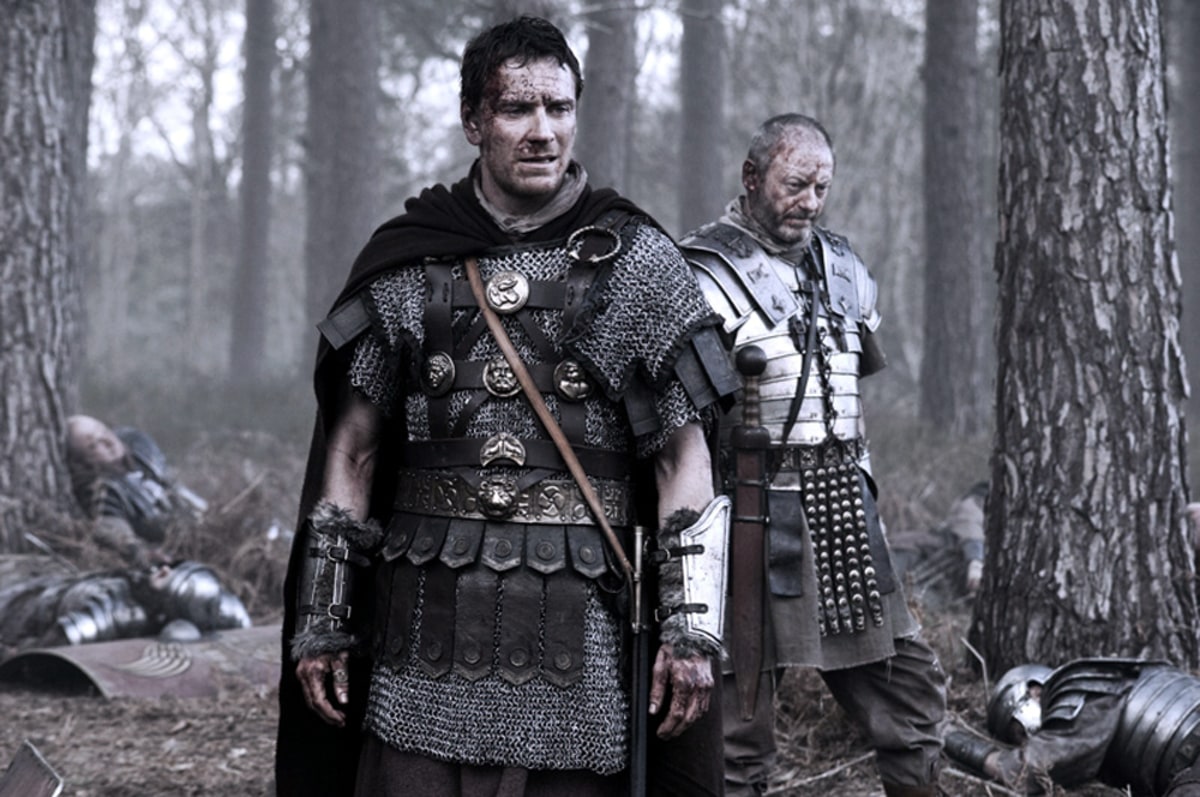
6. Centurion (2010) I'm not sure how I came across Centurion, though I was given the DVD for a Christmas present back in 2010. It pretty quickly headed to Netflix, which made the DVD obsolete. I digress. Centurion is based on the true disappearance of Rome's famed Ninth Legion, who vanished behind enemy lines while fighting a ferocious Celtic tribe, the Picts. This movie saw Michael Fassbender's star on the rise. This was the second film I had seen him in, the first being 300. The movie also stars Game of Thrones alum, Liam Cunningham, Walking Dead and Britannia alum David Morissey, and Ukrainian model/actress, Olga Kurylenko.
When Centurion Quintus Dias' garrison on the Scottish border is attacked, he is captured by the Picts. He escapes, and is quickly swallowed up by the Ninth Legion, led by Mark Antony-like General Titus Flavius Virilus. Dias, Virilus, and his men are then led into the dense forest by double agent Pict tracker, Etain. She is mute, thanks to the Romans cutting out her tongue when she was young. Her other senses are heightened, making her an excellent hunter. She leads the Ninth right into an ambush, and an intense battle scene amid the forest ensues.
A ragtag group of legionnaires survive the attack, and are bound and determined to rescue the captured Virilus before they head back to the Roman outpost. Instead of saving the general, one soldier accidentally murders the Pict chief's young son, which officially calls the dogs onto the small group. They are trapped behind enemy lines with Etain heading the party - just after she makes quick work of General Virilus inside the Pict village.
The Pict killers converge on the Roman contingent as they leap over waterfalls, hike through snowy mountains, and try to outrun a pack of wolves. Fassbender, Dominic West (Virilus), and Kurylenko as Etain give memorable performances, and director Neil Marshall does an excellent job of blurring the line between good guy and bad guy. Though we like Dias, the Romans were unjust in their occupation of the land, and we just as much see ourselves rooting for Etain and the Picts.
5. The 13th Warrior (1999)
I remember seeing this one when it was in theaters, then buying it as soon as it was on DVD. The story seems to unfold a little too quickly, and it based on the book Eaters of the Dead by Michael Crichton. While some of the scenes are rushed, the dialogue and the character transformations more than make up for it, giving us an excellent, and the only look, at the Swedish Viking exploits in Eurasia.
Ahmed Ibn Fadlan is an Arab poet turned emissary, exiled from Baghdad for bedding the wife of an aristocrat. We have to gather as much, or read it from the book, sadly. The movie skims the incident, starting off the first real scene of the film with Fadlan's travels and initial meeting with the Northmen on the Volga River in Middle Age Russia. These Northmen are the Swedish Vikings, the Varagians, or the Rus, who traded up and down the River and eventually settled in what is now Kiev, Ukraine. This is Hollywood's sole depiction of the Rus, and despite their occupation as traders, they are excellent warriors. They are led by soft-spoken but well-respected Buliwyf (pronounced Bull-vy).
An ancient, flesh-eating evil called the Wendol are plaguing the Northmen's homeland, and they are recalled to deal with the threat. When the Angel of Death, or Viking Seer (like an oracle), announces that thirteen men must return, one Viking after another volunteers for the job. The crowd then falls silent and all eyes rest on Fadlan. According to the prophecy, the thirteenth warrior cannot be a Northman, and by default, Fadlan is their guy.
This movie gives us an interesting view of how a poet and a diplomat can eventually become a battle-hardened fighter. Fadlan can barely swing the sword the Vikings give him, so he grinds it down into a shorter, curvier, Middle Eastern blade, which he comes to use well. He'll certainly need to when the Wendol attack with the mist. They wear bear headdresses, paint their bodies head to toe in a blackish soot, and carry the heads of their victims away with them after they attack. They are led by the Mother of the Wendol, who dwells in a cave and points her feral attack with a giant snake fang fashioned to her hand.
The 13th Warrior is great because of Fadlan's transformation from a wordsmith to a warrior, guided indirectly by the Northmen's bravado. The Arab proves his worth on more than one occasion, earning him the respect of his Scandinavian brethren. This movie also has an indirect look at religious tolerance, Fadlan and his closest Viking friend, Herger, promising to pray to their respective gods for one another. Before the end battle, Fadlan even recites the Viking prayer along with the Northmen, each one reciting a line as the enemy forces line up against them.
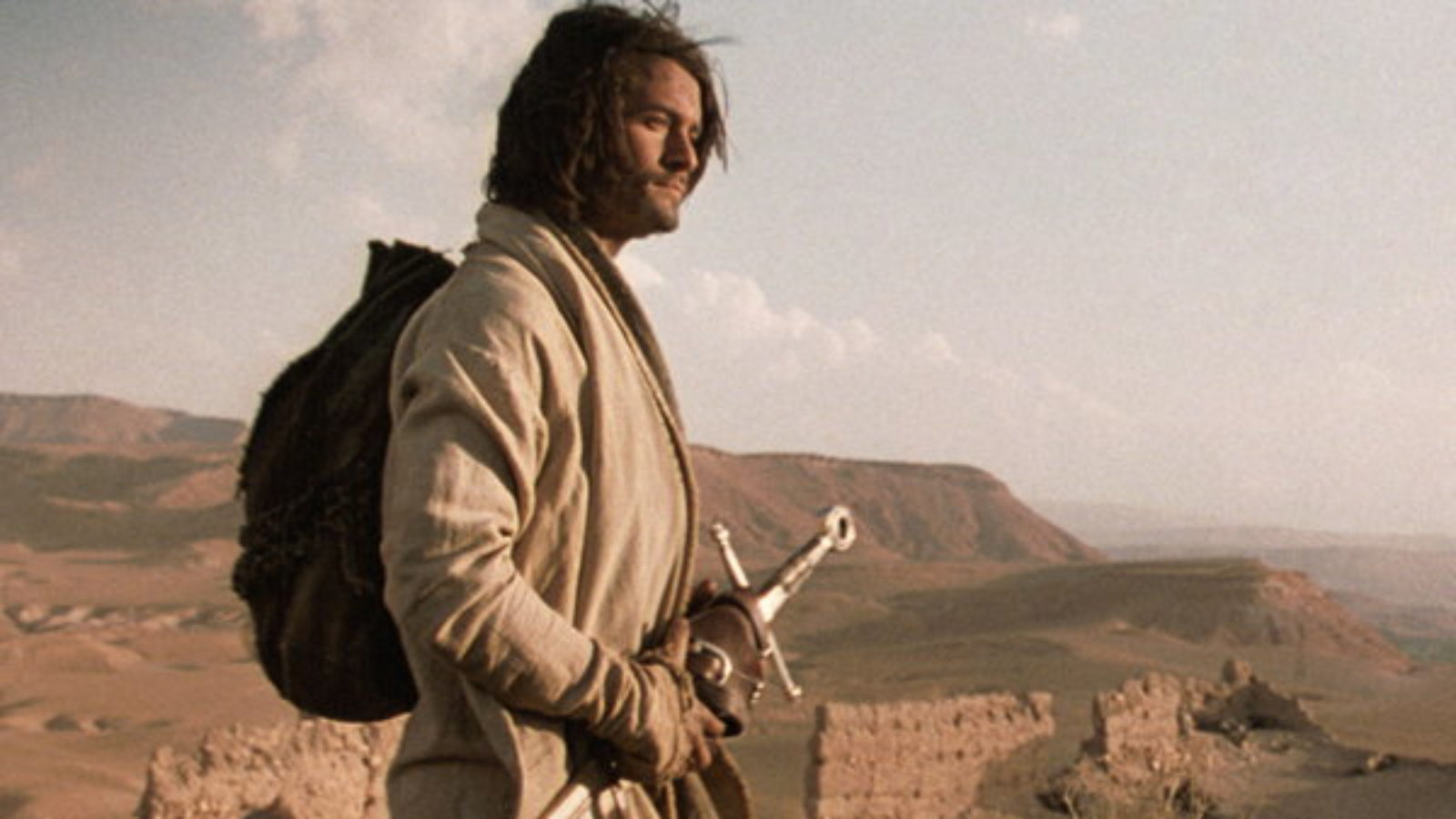
4. Kingdom of Heaven (2005) Kingdom of Heaven captures the era of the Crusades, the fruitless pursuit of trying to prove which version of God did it better. I saw this movie back in theaters, and leaving that night, I replayed what I'd just seen in my mind over and over again. I honestly didn't know if I liked it. It wasn't until the second time that I better saw it's complications and messages of religious tolerance in a time when not much of it was given. It was also one of the first historicals I'd seen to expose the hypocrisy of the Church, and how easily the lines of eternal life and damnation can be divided.
The movie stars Orlando Bloom (Pirates of Caribbean), Eva Green (Penny Dreadful), and Liam Neeson as Baron Godfrey de Ibelin, a Crusader returned to France to confront the son (Bloom) he left behind. Bloom plays Balien de Ibelin, an honest blacksmith whose wife has just committed suicide in the wake of their child's death. The hits come quickly, as Balien is approached by a member of the local French clergy, who informs him that since she took her own life, the wife is now condemned to eternal hell and cannot be buried on the Church grounds. This ends badly for him, as Balien drowns the man in a sea of flames. It's only when he is hunted down that Balien joins his father and a brood of Crusaders towards the Holy Land. Godfrey then passes the torch to Balien, making him Baron de Ibelin.
This is when Balien meets Guy de Lusignan and Reynald de Chatillon, who are powerful military commanders pushing for constant war against against the Muslims, led by historical figure, Saladin. Balien also meets the French Queen of Jerusalem, Sybilla, who he immediately develops a thing for. Guy and Reynald plot to kill Balien, Balien gets mistaken for one of them essentially, and it fall to the young Baron of Ibelin to defend the city of Jerusalem from the encroaching forces of Islam.
There are several themes at play here, the primary being religious tolerance. Saladin is tough but fair, which makes the antagonists of the movie Guy and Reynald, not the enemy Muslim army. Essentially, anyone caught up in their own prejudices can certainly push it too far, turning you into a bigot led only by your the fear of what you don't understand. Balien only real calling is to protect the inhabitants of Jerusalem, and Saladin has no choice but to attack when Guy and Reynald murder his sister. This movie also shows the different interpretations of the Christian God, some followers choose eradication of all who are unbelievers, and some who administer kindness and understanding to those choose to worship under the guise of a alternate religion.
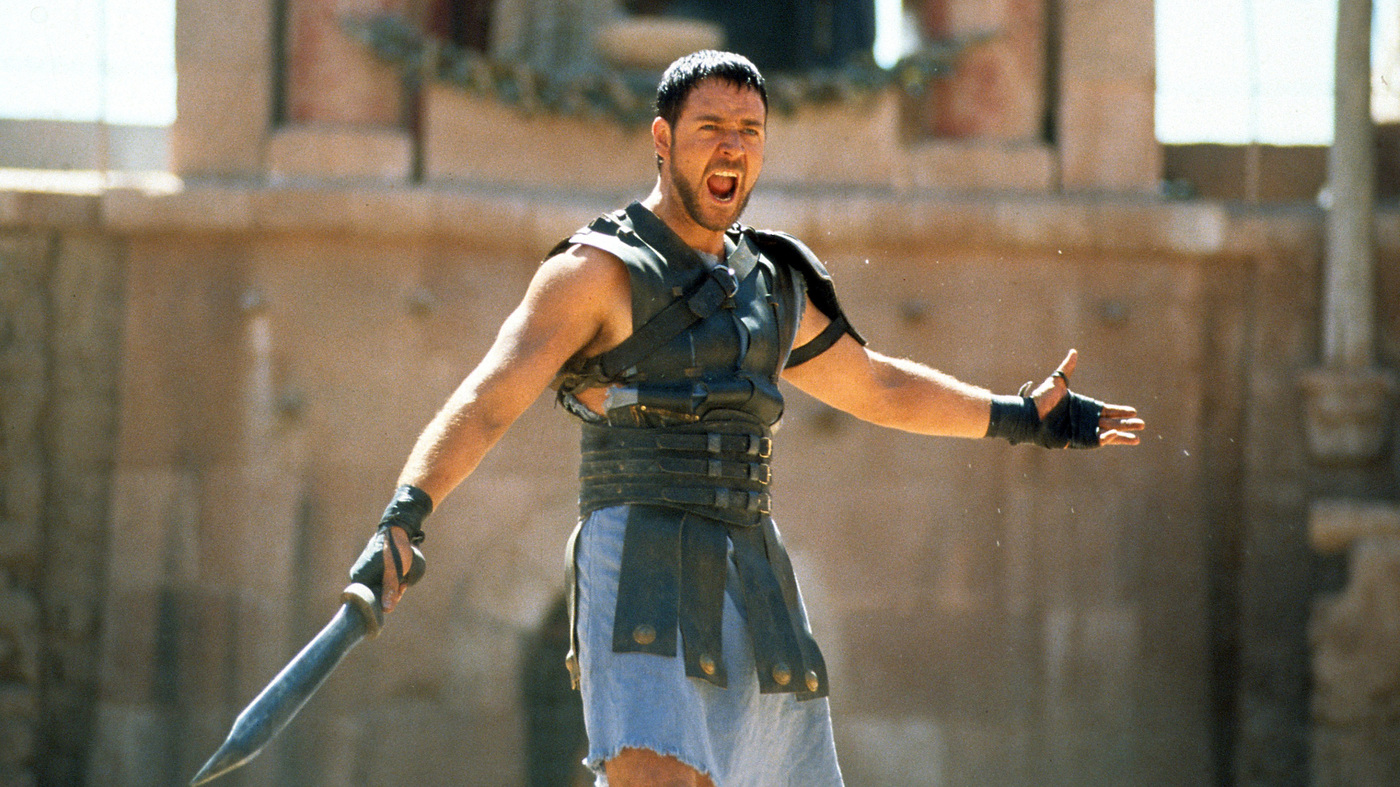
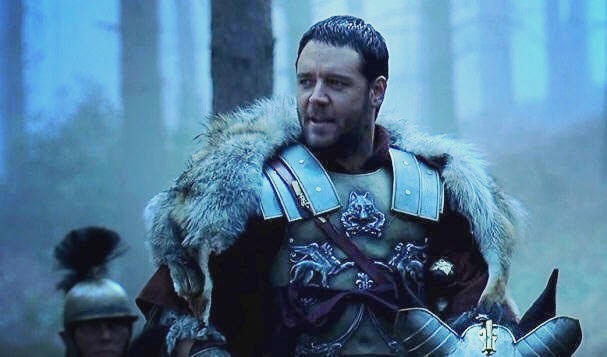
3. Gladiator (2000) This scene is one of my favorites in movie history in probably the best alternate history movie I've ever seen. I don't think the writers meant for it to be that way, and I don't want to sound like a history snob, but Marcus Aurelius wasn't killed by his son, Commodus, and Commodus never died in the Colesseum. Though this movie would have one believe that. Though Gladiator doesn't look create an alternate history, or not directly anyway, it's still a great movie.
Russell Crowe stars Maximus Decimus Meridius. The writers got this all wrong, but I can overlook it for a better overall picture. In Roman naming conventions, he would have been Decimus Meridius, and the nomen, or nickname, Maximus, would have been added for bravery or leadership on the field of battle: Decimus Meridius Maximus. This is small beans when compared to the movie itself, Maximus going from general to slave to gladiator in the name of vengeance. Gladiator definitely mixes in elements of Spartacus, a Thracian slave who led a rebellion against Rome.
Gladiator gives us a glimpse at one of my favorite historical figures, Marcus Aurelius, played expertly by screen legend Richard Harris. They called Aurelius the philosopher-king, though king was a dirty word in the mind of Romans. He was essentially a Roman emperor who daily practiced stoicism. He was incredibly humble, thankful, kind, modest, and stoic. I own and revere his journals, The Meditations of Marcus Aurelius. In the movie, he is always questioning his position in Rome, his duties to Rome, and how he might be viewed in the grander scale of history. Maximus, who is more like a son to him than his own, carries on that sort of honor toward those who share his path. He is rendered an equal to the slaves he fights alongside, never once telling them that he was once a decorated Roman general.
Gladiator portrays a direct to defiance to Rome, which is essentially represented by the evil, opportunistic Commodus, played expertly by Joaquin Phoenix. He certainly has his vulnerabilities, but can be contained and silenced at times by his sister, the elegant Lucilla (Danish actress Connie Nielsen). The scenery and the story are both epic, as is the score, orchestrated by Hans Zimmer and the elegant chants of Dead Can Dance's Lisa Gerrard.
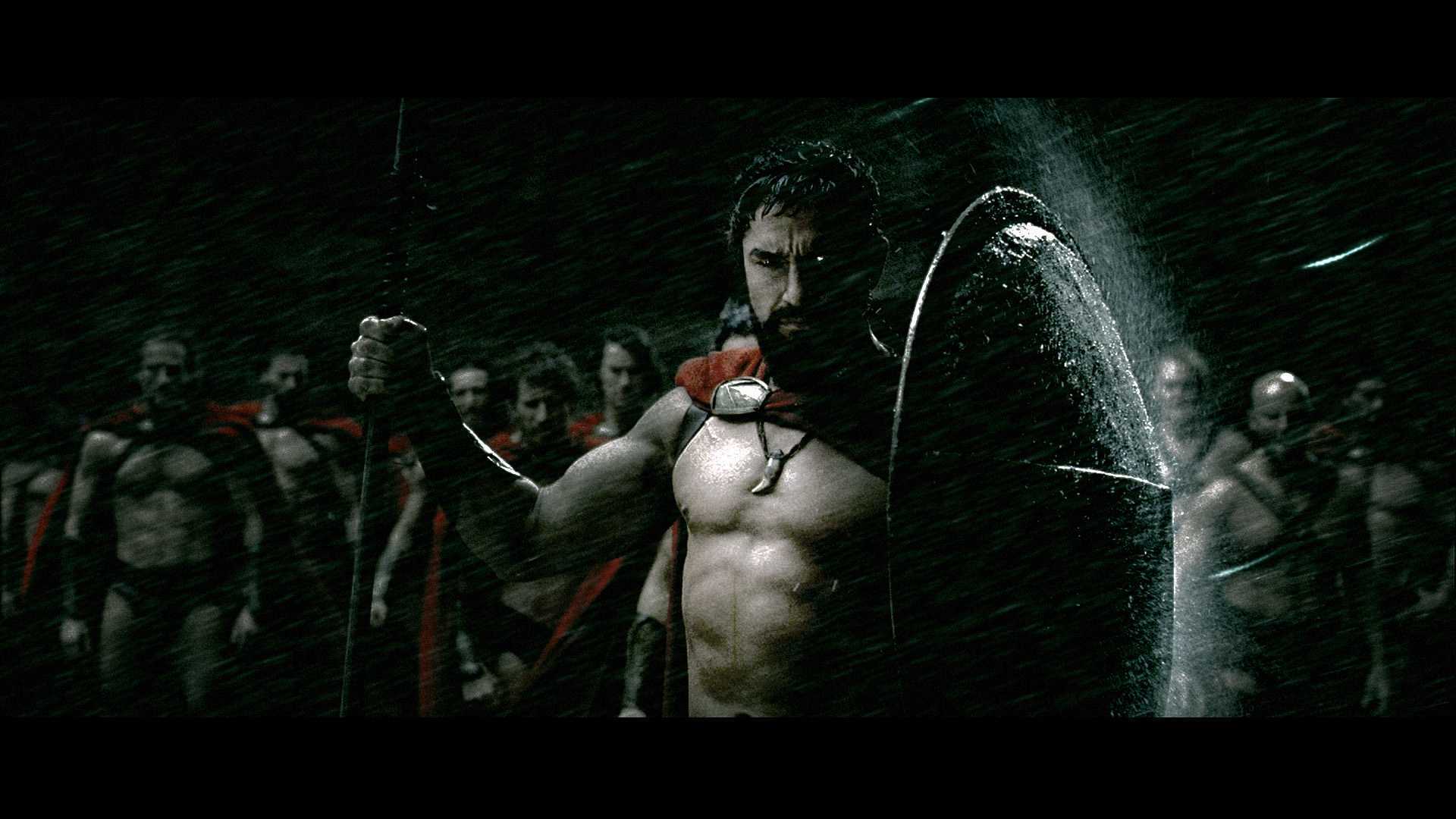
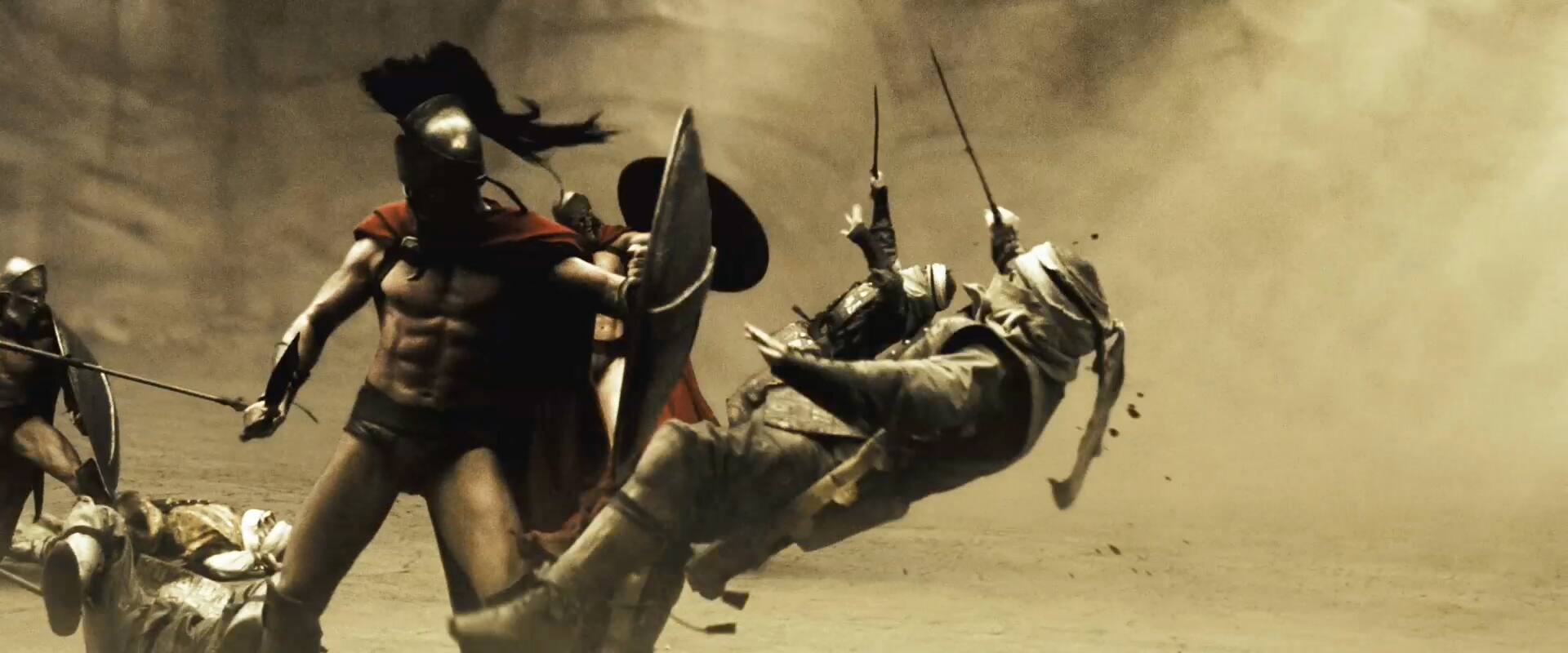
2. 300 (2007) 300 can't be considered for its historical accuracy. Yes, there were 300 elite Spartan guards who accompanied their king, Leonidas, to fend off the Persian invasion. No, they didn't dress the way they did in the movie. No, giant war rhinoceros' did not exist. No, goats cannot play flutes. 300 took a lot of liberties, and people should know that it's not a movie based on history - its a movie based on a graphic novel that was based on history.
Frank Miller, who created the Sin City series, created the 300 graphic novel. Director Zack Snyder (Dawn of the Dead, Sucker Punch, The Watchmen, Man of Steel) stepped to direct the film, basing it almost completely on the graphic novel. Snyder, and Miller for that matter, took lots of liberties with the most famous last stand in history, which I am okay with. The story is told by a Spartan warrior to a group of Spartan soldiers. Back in ancient Greece, storytellers used to slight embellish things a bit, incorporating how larger-than-enemies were seven-feet tall, enemy soldiers were beast-men, and exaggerating the size of the enemy war animals, all to the make the heroes appear as valiant as possible.
King Xerxes of Persia sends a royal emissary to basically order the subservience of the Spartans. This doesn't go over well with Leonidas (Gerard Butler), nor his wife Gorgo (Lena Heady), as can be seen in the picture to the left. Leonidas composes himself, then the Spartans toss the unarmed emissaries into a massive, bottomless pit. Thus begins the war between Sparta and the Persian war machine.
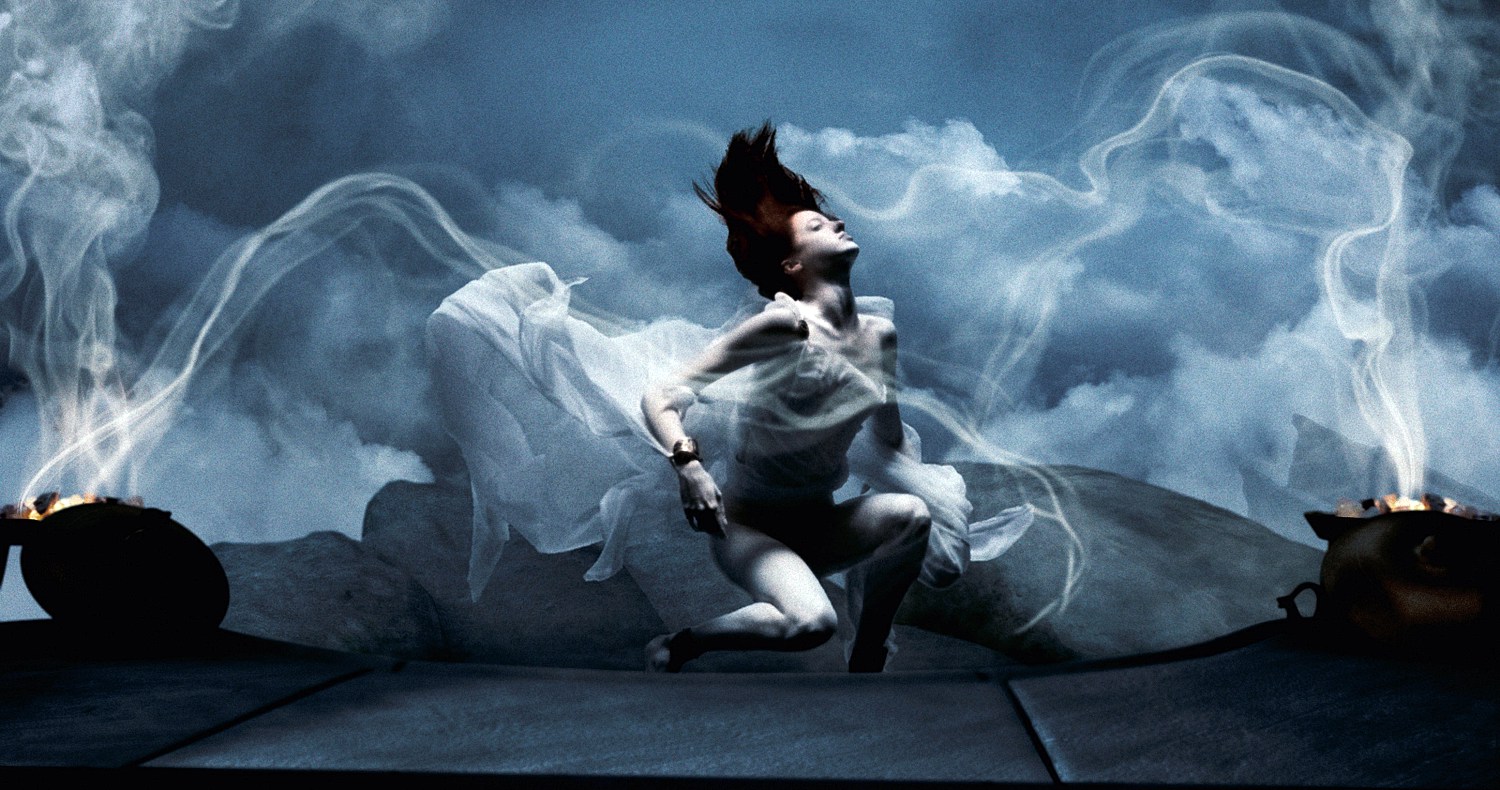
Leonidas consults the Oracle on whether or not to go to war, but doesn't get the answer he's looking for. The Ephors, a sort of ancient Spartan troupe of wise men, advise against it, and little does Leonidas know, they, along with the Spartan oligarchy (government), are being bribed by Xerxes to allow the Persian onto Greek soil. Frank Miller and Zack Snyder take some very cool liberties with the Oracle, morphing her into a young, ether-swimming holy woman, tormented by the tether of the old, nasty, boil-ridden Ephors.
Under of the guise of just taking out his elite bodyguard for a stroll, Leonidas and his 300 Spartans travel to meet the Persians at the Hot Gates, a narrow mountain pass where they can defend the borders and make the Persian numbers diminished. One of the Spartan elite is Stelios, played by Michael Fassbender, who appears on this list for a second time. This was my first exposure to Fassbender, and while Stelios is a minor character in the story, he surely takes full advantage of his subsidiary role, leaving his mark on the tyrannic Persian soldiers.
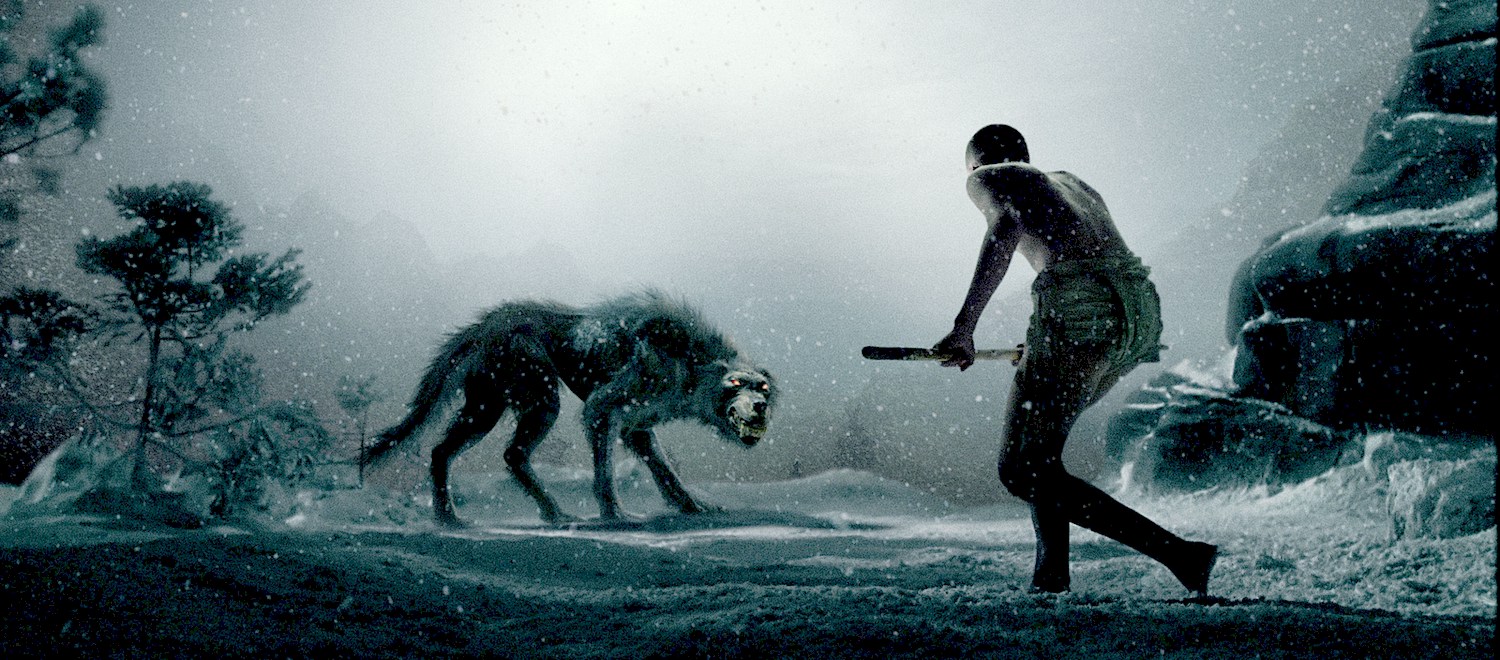
300 is a visually stunning movie. It plays out very much like a comic book, the landscapes and the horizons fantastical but grounded like an alternate universe version of the ancient Peloponnese (the landmass that Sparta was situated on). We get to see how Leonidas grew up to be so tough, having killed a massive wolf in the dead of winter when he was a mere teen. While the Spartans parade around in scant clothing, they hardly lack in their grit and overall toughness.
1. Brotherhood of the Wolf (2001) Brotherhood of the Wolf, or Le Pacte Des Loups, is an unassuming film that blossoms into one of the wildest and most rewarding cinematic experiences one will ever have. Spoken completely in French, much like A Very Long Engagement and Queen Margot, Brotherhood gives us a costume drama, a horror film, and a martial arts masterpiece all in one sitting. I know, it sounds silly, but I guarantee that it is far from it. French director Christophe Gans (Silent Hill) went to great links to bend the genres on this one, refusing for this film to fit into any particular category. I had never seen another movie like it when it released to American audiences in 2001, and I have never seen another since.
Based on the actual events that plagued the French province of Gevaudan in 1764, Brotherhood opens with the onset of the French Revolution, told by humble aristocrat, Thomas D'Apcher. He recalls how his friends, naturalist and infamous libertine, Gregoire de Fronsac, and his companion, the stoic Iroquois, Mani, arrive in Gevaudan to assist the local aristocrats with their serial slaying problem. That problem comes in the form of a string of beastly killings on women and children in the area. No one can seem to understand what is laying waste to the local peasants, but the Gevaudan wolf population certainly gets the blame. Fronsac and Mani are a little hesitant to believe it. From the findings of their investigations, the attacks are more brutal, and suggest a larger animal than what the aristocratic propaganda puts forth.
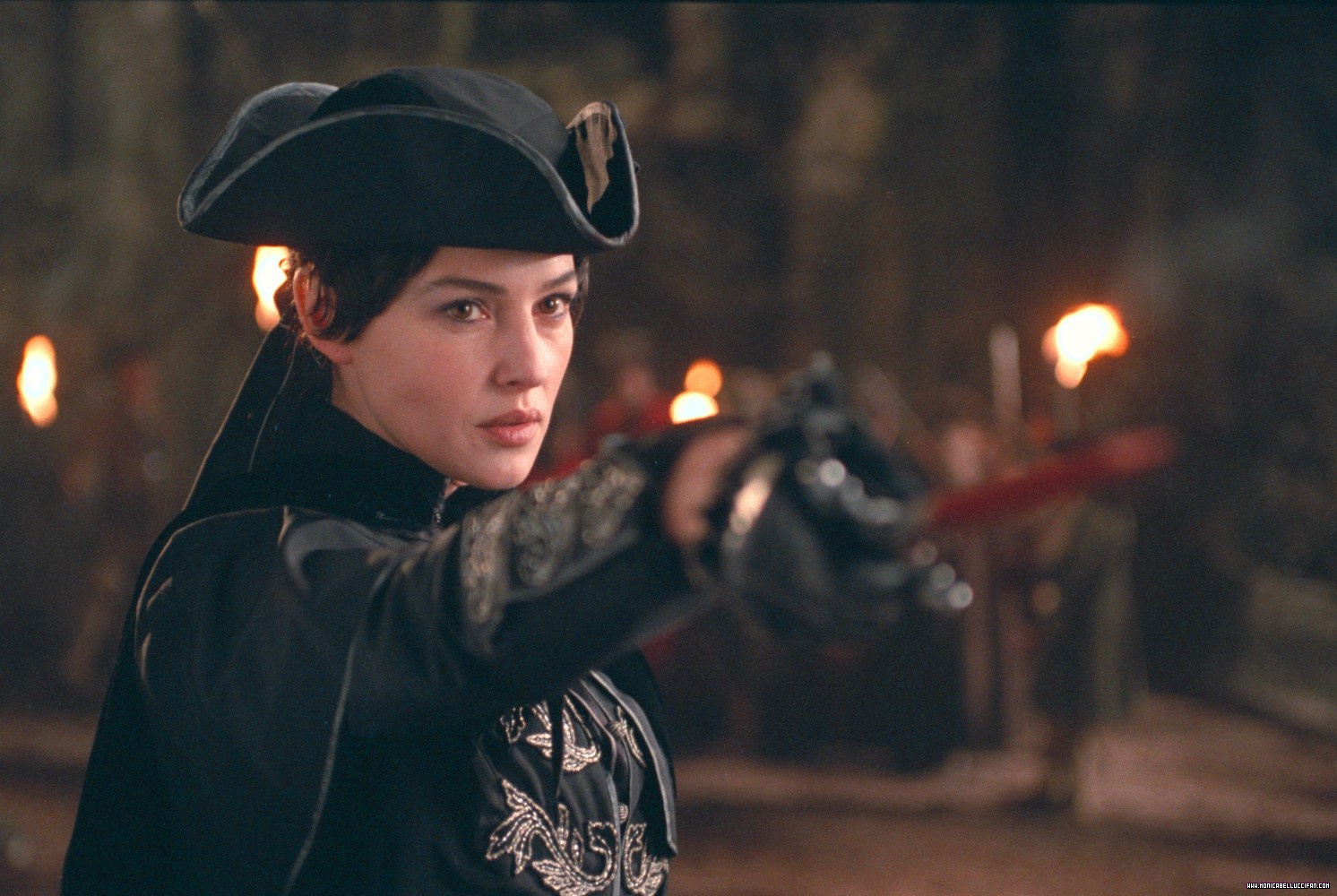
Fronsac has caught the eye of Marianne de Morangias, a pure beauty whose jealous brother, Jean-Francois (Vincent Cassel), does all he can to shield her away. Marianne also dismisses Fronsac's advances, as she knows of his reputation as a libertine. This leads Fronsac, Mani, and Thomas D'Apcher to a local brothel, where Fronsac meets French-speaking Florentine Italian Sylvia (Monica Bellucci). She seems to know more than she should, speaking short, cryptic lines on desire and a sort of non-partisan all-knowledge.
As the plot thickens, Fronsac shows us his true colors, as he for the first time displays his tendencies for fighting. He eventually takes on the Mani role, unleashing a plethora of skills with swords, guns, and a bow. He takes on a slew of French gypsies on the way to uncovering the truth about the Beast of Gevaudan - an unbelievable one that's stranger than fiction. The action is fierce, well-crafted, and even cooler when placed inside of a melodramatic costume drama. The costumes are elaborate, the dialogue is coy and witty and fast-paced, and the music is earthy and gritty. Brotherhood of the Wolf is in a genre of its own, which is why it probably tops this list. I had always hoped that based on its success, Canal Studios and Christophe Gans would once again team up for another gargantuan effort.
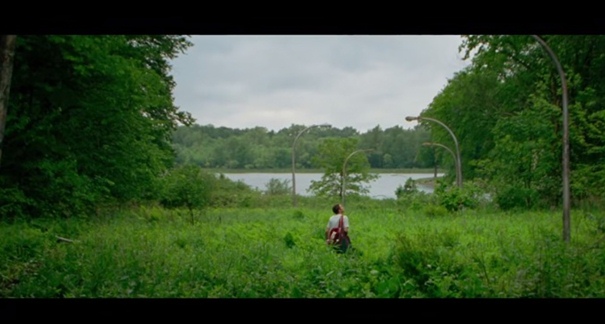 I just re-watched a movie I saw for the first time last year, Ryan Gosling's directorial debut, Lost River. The movie is not like many that have been made. It can be best described as a modern fairy tale, an urban fantasy in the midst of a lush, overgrown town that time forgot. Most of the characters go by nicknames, which are never clarified as being their nicknames. Most of the scenes are clad in lush, tall, green grass, with splashes of neon every here and there, just to remind us that it's Ryan Gosling, and that he's strong protege of Drive director, Nicholas Winding Refn.
 The movie stars Bones, a late teen fighting desperately to help his mother, Billy (Christina Hendricks), keep their home. Most of the neighborhood is being demolished, with city officials flooding one town after another to use as water reservoirs. Bones used to try to buy parts for his car, but more importantly, he's trying to save his house for his mother and toddler brother, Frankie. He goes around stripping all the copper pipes from the numerous abandoned buildings throughout the area. The problem is, the pipes have already been spoken for by Bully, who basically runs the town like a sadistic mafia boss, shouting his maniacal decrees from a microphone in his throned car. He has a chauffeur driver name Face, whom he has disfigured for failing to follow commands. And he's given the moniker Face after the disfigurement.
 Meanwhile, Billy is fighting her own battle. Her home is about to be foreclosed on by the bank with the mortgage having fallen behind, and the powers that be are about to make Lost River another reservoir. She pleads with the duplicitous bank manager, Dave, who turns her down, but offers her a job instead. She basically becomes his indentured servant, as she is introduced into a world of grotesque live performance show, where thrills come in the form of fake blood and gory scenes of morbid fantasy. Cat (Eva Mendes) is the seasoned pro in the show, who plays only a minor role in Billy's burgeoning nightmare.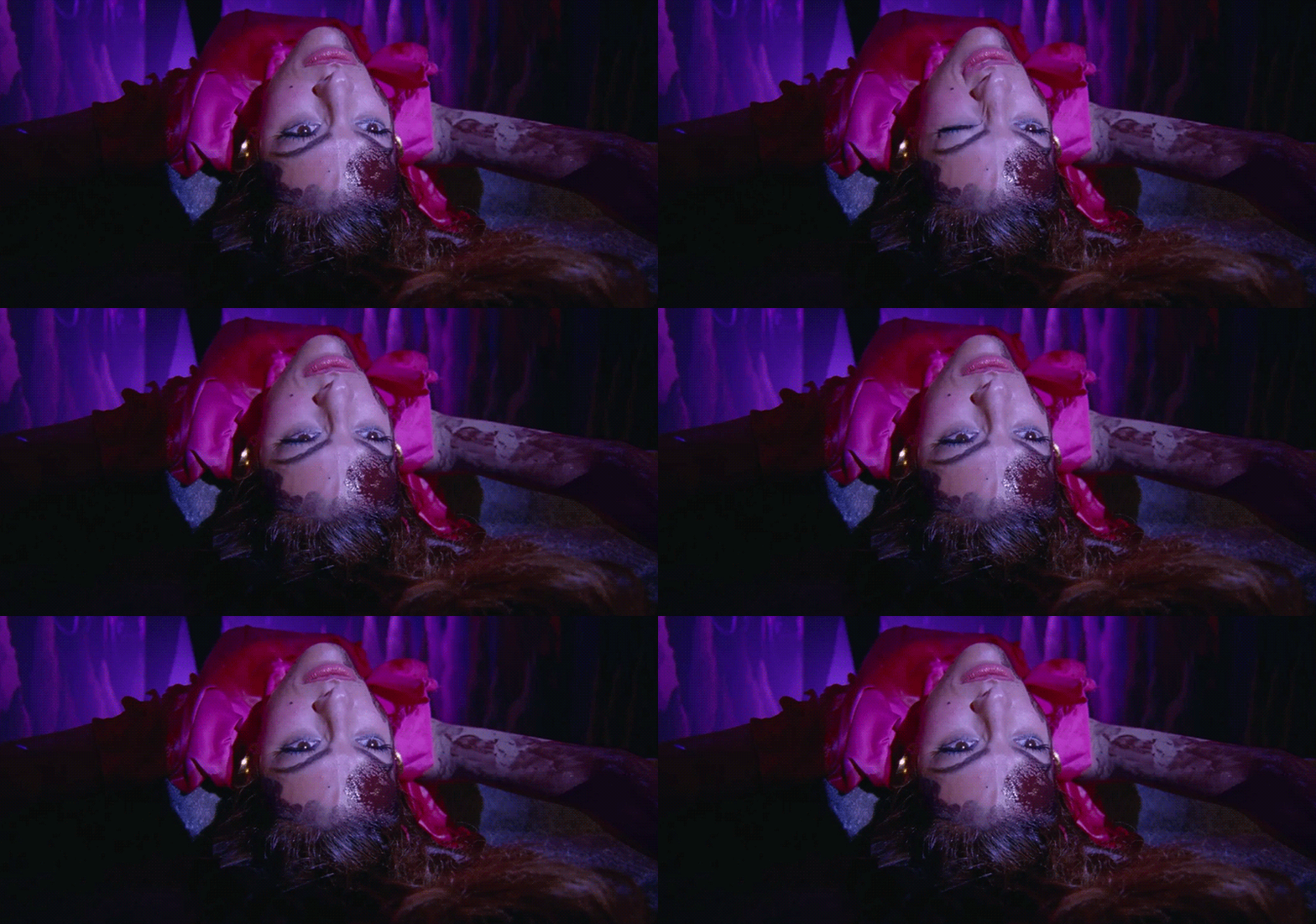
 While Billy does what she must and struggles through her own travails, Bones and Rat have to deal with Bully who is hot on their trail. He tries to get at Bones by taking horrific shots at Rat, and it's not until Bones starts to believe in the curse that he decides to do something about it. We're never told whether the curse is broken or not, but we're certainly left to assume so, with Bones standing his ground and retrieving the sunken relic from the submerged town over.























(160410192033)il_13_guerriero_2.jpg)